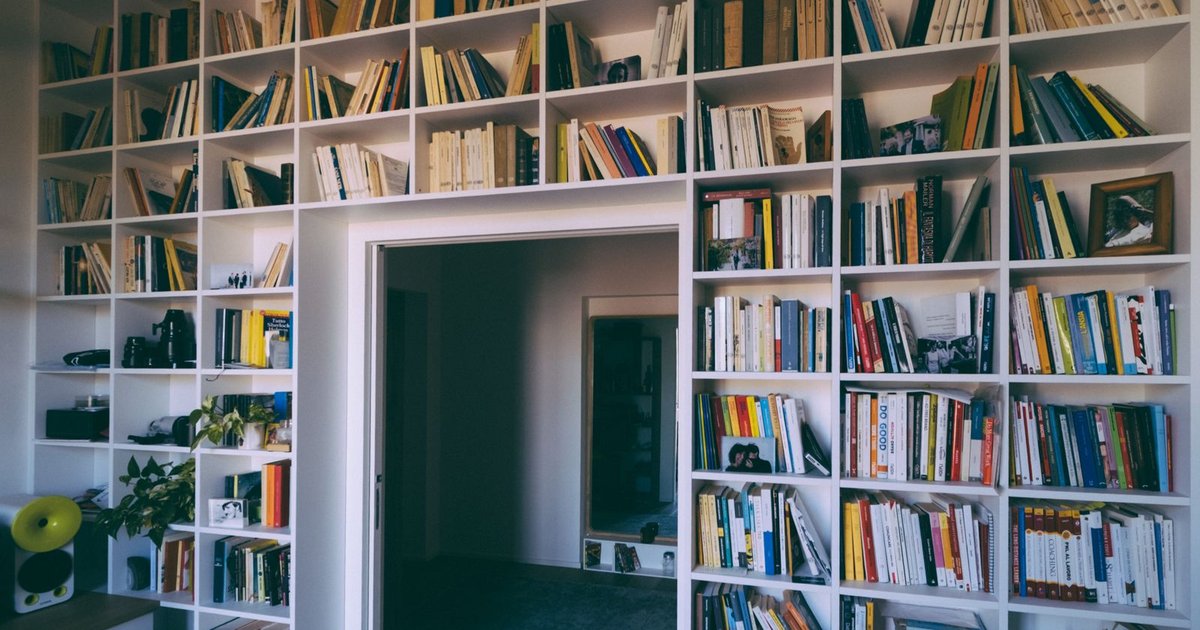
Size the shelves to the books, not the catalog photo
Shelving is sold in standard sizes because books come in standard sizes, and the fit between them is the whole game. Measure your twenty tallest books before buying or building anything; that measurement, not a showroom shelf, sets your spacing.
| Measurement | Working figure | Why |
|---|
| Shelf depth for most books | 10 to 12 inches | Trade hardcovers and paperbacks sit safely with room to pull them out |
| Shelf depth for art and coffee table books | 14 to 16 inches | Oversize books stored flat or they warp and lean |
| Vertical clearance, mass market paperbacks | About 8 inches | These run near 7 inches tall |
| Vertical clearance, trade paperbacks | About 10 inches | Most stand 8 to 9 inches tall |
| Vertical clearance, hardcovers | 11 to 12 inches | Many stand 9 to 10 inches, and you need finger room above |
| Shelf board thickness for long spans | Thicker boards or spans under about 36 inches | Loaded shelves sag in the middle over time |
Books are heavy, heavier than almost anything else a home stores by the shelf. A full shelf of hardcovers can strain a weak board and stress the wall fixings behind it, so anchor tall bookcases to wall studs, keep the longest spans supported, and put the heaviest books, atlases, encyclopedias, bound journals, on the lowest shelves where the structure is strongest and a falling book does the least harm. If you are lining a whole wall or filling a room, having a builder confirm the floor and fixings is money well spent; floors that hold a family easily can still object to a library's worth of paper concentrated along one wall.
Adjustable shelves earn their keep forever, because collections change shape: the children's shelf becomes a graphic novel shelf, the work shelf shrinks when a job ends. Fixed shelves should be the exception, set at the height of the books you know will never move.
Place the library where books survive
Books have three enemies inside a house: direct sunlight, which fades spines and embrittles paper; damp, which feeds mold and waves pages; and heat sources, which dry bindings out. So the prettiest spot, a wall of glass facing the afternoon sun, is the worst library site in the home, and the quiet north facing wall nobody wanted is the best. Keep shelves off exterior walls that sweat with condensation in winter if your climate produces it, out of bathrooms' humidity entirely, and away from radiators and fireplace heat. A room that feels comfortable to sit in for an hour, dry, shaded, and evenly temperate, is a room books can live in for decades.
Then think about the reader, not the book. A library placed where people already pause, near the morning coffee chair, beside the sofa's good lamp, gets used daily. A library exiled to the spare room gets visited. Put at least one genuinely comfortable seat inside the shelves' reach, with a side table sized for a book and a cup, and the room's purpose survives every reorganization.
Light it for reading and for the books
You need two kinds of light and they fight each other, so plan both. Reading light should be warm, shaded, and aimed at the page from beside or behind the reader's shoulder; a floor lamp with an opaque shade beside the chair does this better than any ceiling fixture. Shelf light is for finding titles: low intensity strips or picture lights along the top of a case make spines legible without cooking them. Keep direct sun off the shelves with curtains or film on the glass, and prefer LED lamps, which give off little heat and no meaningful ultraviolet compared with older bulbs. If the room has one glorious window, give it to the chair, not the books.
Organize so a book can be found in the dark
Any system you will maintain beats a perfect system you will abandon. The honest options are few. By genre and then author is the library standard and the easiest to browse with guests. By author alone suits fiction heavy collections. By color is a decorating choice that makes finding a specific book a memory test; it is defensible in a small nook and miserable at scale. Whichever you choose, add the two refinements that keep a home library usable: a reading shelf, one designated place where the currently reading and to be read books live, so they stop colonizing every surface; and a simple list, a notes app page or a notebook by the shelf, recording what you lent and to whom, because the distributed memory of a household loses lent books at a rate no one believes until it happens to them.
Leave ten percent of every shelf empty. A library with no gaps cannot grow without a full reshuffle, and the gaps are where this month's books stand face out, which is how a home library stays alive instead of becoming an archive.
Care: the ten minute month
Books ask little: dust them a few times a year with a dry cloth, working from the top shelf down, and check the backs of the lowest shelves for damp or mildew after wet seasons. Stand books upright with support at the row's end; a book leaning at an angle for a year keeps the angle. Pull a book by the middle of its spine, never by the top edge, which tears. Keep food at the side table rather than over the pages, and if a book comes home damp, stand it fanned in moving air before shelving it, because shelving a damp book in a full row is how one wet book becomes a moldy shelf. None of this is expertise. It is the same attention you would give anything you wanted to hand down.
Small spaces and small budgets
The renter's library is a format, not a compromise: one solid bookcase, anchored with removable fixings where the lease allows, a reading chair that earns its place, and the discipline of the distributed shelf for overflow, cookbooks in the kitchen, the current stack by the bed. Spend money in this order: shelving that will not sag, the chair, the lamp, and only then anything decorative. Buy shelving secondhand without shame; solid wood cases outlive their fashions, and the money saved buys the books the whole structure exists for. Grow one shelf at a time and measure the collection each year, because the library you have should be designed for the reader you are becoming, not the one you were.
The catalog: knowing what you own
Somewhere past a few hundred books, memory stops being a catalog, and the library starts buying duplicates and losing loans. The fix need not be grand. A simple spreadsheet or a notes document per shelf, title and author only, updated when books enter or leave, answers the three questions a household actually asks: do we own it, where is it, and who has it. Photograph each shelf once a year; the photos are a finding aid, an insurance record, and a pleasure in themselves. Readers who resist cataloging as bureaucracy should start with the lending list alone, the one page that records what left the house and with whom, because that single habit saves the books most worth saving, the signed, the inherited, and the out of print, which are precisely the ones friends borrow.
Designing for two heights: children in the library
A family library that ignores children becomes a room children are expelled from, which teaches them what the room is for. Design for two heights instead: the lowest shelves, the sturdiest and least precious, belong to the children's books, face out where possible, at the altitude where a four year old browses standing up. A small chair that is theirs, a lamp they may switch, and the household rule that this corner is for use rather than for show will produce readers who treat the whole room as theirs by right. Keep the fragile and the valuable high, not as a rebuke but as shelving logic, and let the children's territory migrate upward as they do, a shelf a year, until the library's map records their growth as faithfully as the door frame's pencil marks.
More home library ideas
Frequently asked questions
How deep should home library shelves be?
Ten to twelve inches deep suits the great majority of books, trade hardcovers and paperbacks included. Go to fourteen or sixteen inches only for the shelf that holds art books, atlases, and other oversize volumes, or store those flat in short stacks. Deeper shelves for ordinary books waste space and invite double rows, which is where books go to be forgotten.
How much space does a home library need?
A reading nook with one chair and a four shelf bookcase needs little more than a corner, and a wall library needs one wall. Count your books before choosing: measure a typical shelf of your collection, work out how many shelf feet you own, and plan for that plus a fifth again for growth, with ten percent of every shelf left open.
Should books be organized by color?
Only in a small collection where you can find titles from memory. Color order looks striking and searches terribly, because almost nobody remembers a book's spine color under pressure. Genre, then author, is the system that still works at two in the morning; if you love the look, limit color order to one small display shelf.
Can a home library damage floors or walls?
A concentrated run of full shelves is one of the heaviest loads in a home, so treat it seriously: anchor tall cases to studs, avoid long unsupported spans, put the heaviest books low, and have a builder check floors and fixings before lining a whole wall or filling a room. Ordinary single bookcases in good condition rarely cause trouble when anchored and not overloaded.
Where should a home library not go?
Avoid walls of direct afternoon sun, damp basements and bathrooms, spots beside radiators or fireplaces, and exterior walls that gather condensation. Sunlight fades and embrittles, damp feeds mold, and heat dries bindings. The best library wall in most homes is the shaded interior wall nobody else wanted.