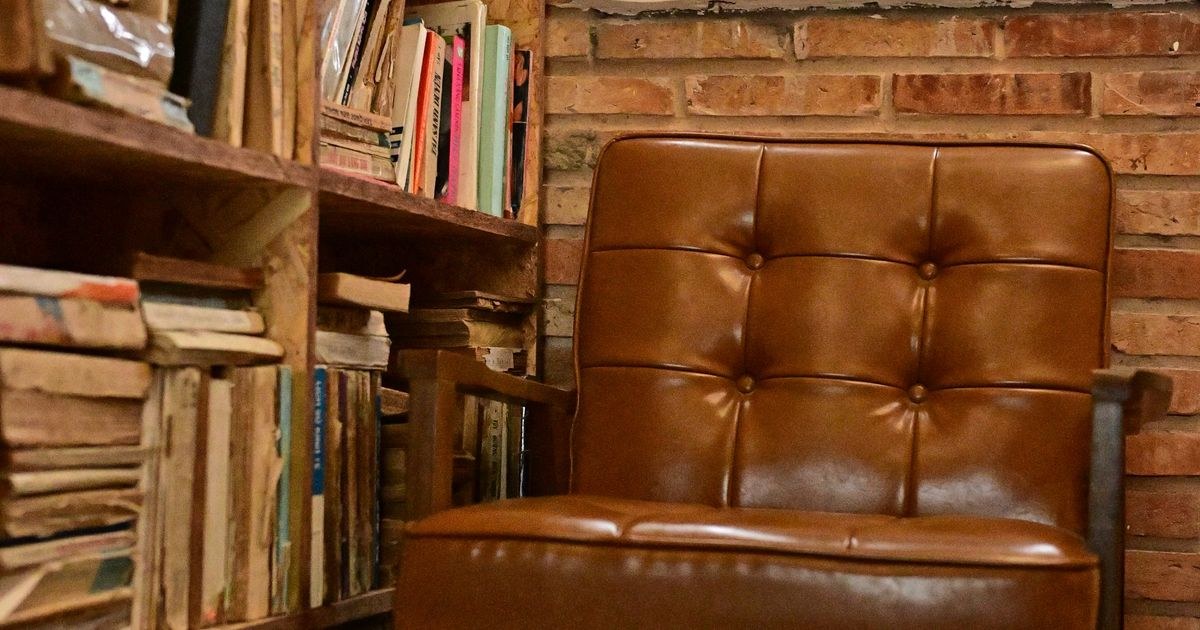
A home library sounds like a renovation. It is actually a sequence of small, cheap decisions made in the right order: claim a corner, light it properly, seat one reader well, shelve the books you own where they can be seen, and let the collection grow from sources that cost little or nothing. The households that succeed at this spend their small budgets on comfort and light, and their ingenuity on storage, because readers return to places that feel good, not to places that merely store books impressively. This page lays out the order of operations, the secondhand routes that fill shelves for pennies, and the finishing touches that make a budget corner feel like a destination rather than a compromise.
Start with the audit: space, light, and the books you already own
Before buying anything, walk the home with three questions. Where does a reader already linger, near a window, at one end of a sofa, in a spare bedroom corner? Where does daylight fall for most of the day, and which lamps already exist to borrow? And where are the books now, honestly counted: shelves, boxes, bedside stacks, the car. Most households own more books than they think, scattered into invisibility. Gathering them into one place is the first library upgrade and it costs nothing. Measure the chosen corner and note the nearest outlet, the direction of its light, and any wall long enough for a bookcase, because every later decision, shelf size, chair size, lamp type, hangs off those three facts.
The order to spend in: light, seat, shelves, books
When money is scarce, sequence is everything, and the sequence that serves readers runs light first, seat second, shelves third, books last. Light first because a badly lit corner defeats every later purchase; a decent lamp aimed over the reading shoulder transforms more reading hours than any furniture. Seat second because the reader's body is the library's real foundation: one genuinely comfortable chair, with arms at a height that supports a book, outperforms a room of elegant seating nobody sinks into. Shelves third, sized to the collection you have plus modest growth, not to an aspiration. Books last because books are the one element that can arrive free, through libraries, swaps, and sales, and because a beautiful empty library is a photograph, while a modest corner full of read books is a library.
| Budget tier | What it buys | The move that matters most |
|---|
| Under $50 | A good lamp or bulb upgrade, one cushion, library card | Light the corner you already have |
| $50 to $150 | A secondhand armchair, one sturdy bookcase | Buy the chair in person and sit in it first |
| $150 to $300 | A second bookcase, a side table, a reading blanket | Add storage only as the collection earns it |
| $300 to $500 | A better chair or loveseat, warm lighting throughout | Upgrade comfort before adding a single shelf |
Furniture routes that respect a budget
Secondhand is the budget library's natural habitat, and furniture is where it pays best. Solid wood bookcases from estate sales, thrift stores, and marketplace listings often cost less than new flat pack shelves and outlast them by decades; inspect for wobble, water damage, and shelf sag, and measure your doorway before falling in love. Armchairs should always be bought in person and sat in for a full minute with an imaginary book, because reading posture, upright enough to hold a book, supported enough to stay an hour, is a specific thing most decorative chairs fail. A side table can be a stool, a crate, or a small cabinet, anything stable at elbow height for a drink and a notebook. Paint is the cheapest transformation in the whole project: one calm colour on the corner's walls, or on a tired bookcase, unifies mismatched secondhand pieces into something that looks chosen.
Shelving without a carpenter
Where a bookcase will not fit or cannot yet be afforded, books still have good homes. Wall mounted shelves and picture ledges turn dead wall into display, and ledges suit children's books especially, covers out, which is how young readers choose. Crates and wine boxes, sanded and stacked with their openings forward, make honest modular shelving that grows one unit at a time. A rolling cart holds a rotating collection beside any chair and migrates between rooms as readers do. Underused furniture can be drafted: the top of a low dresser, a deep windowsill with bookends, the landing at the top of stairs. The governing rule is visibility. Books stored where they are seen get read; books boxed in a closet are a storage problem wearing a library's name, so any solution that keeps spines or covers in daily view beats a larger solution that hides them.
Filling the shelves for almost nothing
The collection is where patience pays compound interest. A library card is the foundation: most systems lend far beyond their buildings now, including ebooks and audiobooks, and interlibrary loan can fetch nearly anything for free with a little waiting. Little Free Libraries, book swaps with friends, and school and library sales fill home shelves at a dollar or less per book; charity shops price paperbacks as loss leaders; estate sales sell whole shelves at once. Accept free books selectively, because a home library is a curated thing, and twenty wanted books outread two hundred indifferent ones. Keep a short wants list on your phone, the titles and authors you are hunting, so that cheap encounters turn into finds instead of clutter. Children's collections grow fastest through swaps between families whose children are a year apart in age, a quiet conveyor belt that costs everyone almost nothing.
Light, warmth, and the finishing touches
With the structure in place, small comforts decide whether the corner gets used daily. Layer the light: daylight by day, one warm lamp for the evening, and no overhead glare if it can be helped. Add a blanket that lives on the chair and nowhere else, a cushion for the lower back, and a small rug if the floor is hard, because warmth is a reading feature. Keep the tools of reading at hand: bookmarks, a pencil for marginalia in owned books, a notebook for the lines worth keeping, and a coaster that protects both drink and book. A plant costs little and signals that the corner is tended. Finally, give the library one ritual, a first Sunday tidy, a new book shelf where arrivals wait to be met, a family read on a fixed evening, because rituals are what turn furniture into a place with a claim on the household's time. Keep a small donation box by the door as part of the ritual, so books that no longer earn their shelf leave gracefully to swaps and Little Free Libraries, and the collection stays the size the corner can show off rather than the size the household's guilt can store.
A worked $200 build
Here is one complete build at a realistic budget, assembled over two months of patient hunting. A solid pine bookcase from an estate sale, $45. A secondhand armchair, sat in and approved, $60, plus a washable throw, $12. A warm LED floor lamp bought new for its warranty, $38. Paint for the bookcase and one wall, $25. Bookends, a small rug from a discount store, and a plant, $20. Total: $200, with the books themselves arriving free through the library, two swaps, and a school sale. The same corner assembled carelessly, new flat pack shelves, a stylish but unsittable chair, no lamp, could cost twice as much and be used half as often. The difference is never the money. It is the order of decisions, and the refusal to buy storage before comfort.
The children's corner, on the same budget logic
Children need the same sequence at smaller scale and lower height. Their light should be safe and warm, their seat a floor cushion, a beanbag, or a small chair they can move themselves, and their shelves low enough that choosing a book never requires an adult or a climb. Picture ledges and forward facing bins beat spine out shelves for young children, because covers are how they choose. Keep the children's collection small and rotating: ten books out, the rest in a swap box that refreshes the shelf monthly, because a tight, changing selection gets read while a static wall of books fades into wallpaper. The cheapest children's library upgrade in existence is a library card used weekly, with the child choosing most of the haul; the second cheapest is a swap arrangement with one family a year ahead of yours. Spend the savings on the shared ritual, a bedtime chapter in the good chair, which is what the corner is ultimately for.
Small rooms, shared rooms, and renters
A dedicated room is the rarest version of a home library and the least necessary. In a studio or shared room, define the library by its edges rather than its walls: one chair turned slightly away from the room's traffic, a lamp that marks the territory, a cart or single bookcase, and a rug that draws the boundary. Renters can achieve all of it without a single hole in a wall, using leaning shelves, over door storage for light paperbacks, and furniture that will move house gracefully. In a family living room, a library corner succeeds when it is defended at one predictable hour, reading time, screens off, rather than all day. Even a hallway can work if it is wide enough for a chair and a ledge shelf, and hallways have one hidden virtue: the household passes its books many times a day, and books that are passed are books that get picked up.
What not to buy, however tempting
A budget survives by refusals as much as by finds. Refuse decorative book sets sold by the yard; a library built from books nobody chose is furniture, and guests can tell. Refuse a chair you have not sat in, however photogenic, and refuse any shelving whose depth wastes your narrowest wall. Refuse expensive lighting fixtures when a well aimed lamp at a third of the price does the same work, and refuse storage for books you do not own yet, the classic error that fills corners with empty shelves and obligation. Refuse, above all, to buy the finishing touches first. Throws, prints, and ornaments purchased before light, seat, and shelves are in place decorate a corner that does not yet function, and decoration without function is how budgets die beautifully. The order on this page is the whole secret: function in sequence, beauty as the reward at the end, and books arriving free the entire time.
Keeping it alive: the ten minute monthly habit
A home library decays quietly, so give it a ten minute monthly habit and it will hold its charm for years. Dust the shelves top down, because dust is the visible sign that a corner has stopped being visited. Rotate a handful of books each month, moving finished titles to the back and bringing waiting ones forward, so the shelves keep offering novelty from stock you already own. Straighten one leaning stack, repair one torn jacket with tape, and retire one book honestly outgrown to the donation box, because a library that never sheds becomes storage. Finish by sitting in the chair for the remaining minutes with whatever the rotation surfaced. The habit is maintenance and reading in the same ten minutes, which is why it survives when grander routines fail.
Frequently asked questions
What is the cheapest way to start a home library?
Gather the books you already own into one lit corner, borrow a good lamp from elsewhere in the house, and get a library card. That zero cost version delivers most of the benefit; everything after it is improvement, not permission.
Should I buy shelves or books first?
Neither. Buy light first, then a comfortable seat, then shelving sized to your real collection. Books come last because they are the one element that can arrive free, through libraries, swaps, and sales.
Are secondhand bookcases a good idea?
Usually the best idea in the project. Solid wood cases from thrift stores and estate sales often cost less than new flat pack furniture and last far longer. Check for wobble, sagging shelves, and water damage, and measure your doorways first.
How many books does a home library need?
Fewer than people think. A shelf of twenty loved, visible, reread books is a working library; hundreds of unseen books in boxes are storage. Grow the collection through the cheap routes and keep it curated, adding a shelf only when the visible collection has genuinely outgrown the last one, which keeps both the budget and the corner honest.
How do I keep a budget library from looking makeshift?
Unify with paint, keep one colour story across mismatched pieces, light it warmly, and keep it tidy and visible. Corners look intentional when they are lit, cohesive, and clearly used, whatever they cost. One more trick costs nothing: arrange the shelves with a little breathing room and one or two books displayed face out, because a shelf that is not crammed reads as curated at any budget.