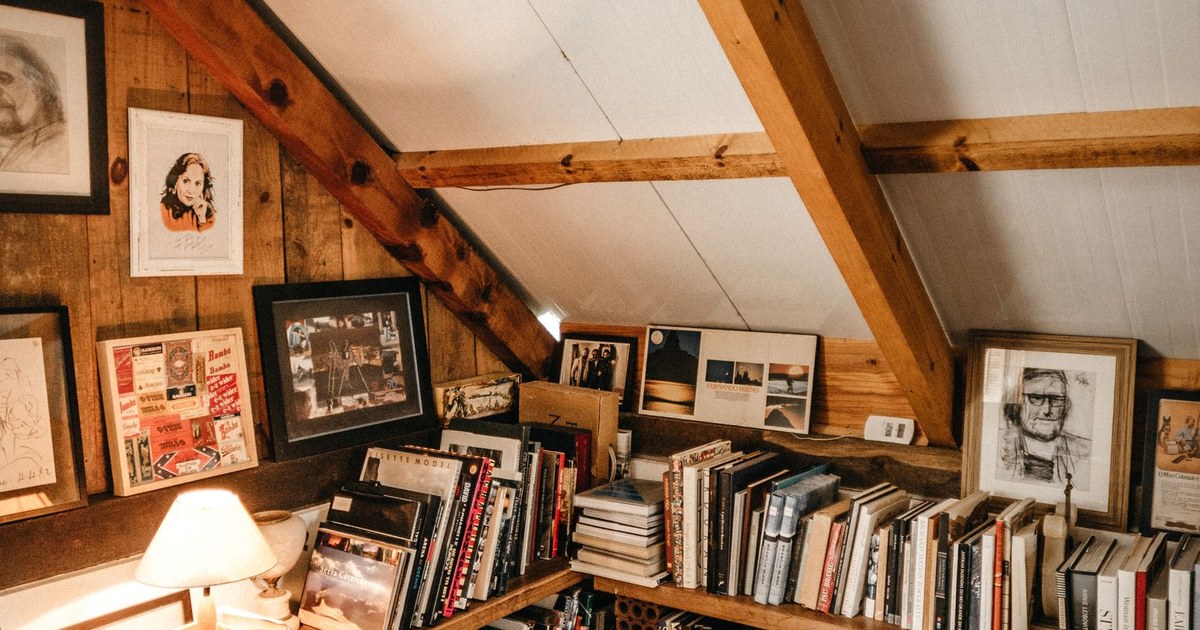
A big home library fails in predictable ways, and none of them are about taste. It fails when the shelves sag, when the sun fades the spines on the good wall, when half the collection becomes unreachable behind furniture, and when nobody in the house can find the book they know they own. The ideas below are ordered the way a real build should be: structure first, light and air second, arrangement third, and the living habits last, because a library is a system for finding and reading books, not a photograph of owning them.
Structure: Shelves That Carry Weight
Books are heavier than they look, and a full shelf of hardcovers is a serious load. Before any other decision, settle the structure:
- Fix tall shelving to the wall studs, never freestanding and unanchored, especially in a house with children or earthquakes.
- Keep shelf spans modest. Long unsupported spans sag visibly within a year under hardcovers; a center support or shorter bays cost little and save the whole wall.
- Leave the bottom shelf raised off the floor where any water risk exists, a burst pipe or a wet basement, and keep the most loved books highest and driest.
- Plan one empty shelf in every run. A library with no room to grow starts dying the day it is finished, because every new book then requires an eviction.
Where the Library Wants to Live
The best room is the one the household actually passes through, because libraries die in spare rooms nobody enters. Corners of living rooms, wide hallways, the wall around a dining room, and the space under a staircase all outperform the dedicated room that becomes storage. If a whole room is available, give it the household's second best light rather than its best: the best light in a house belongs to people, and books prefer the shade anyway, as the next section explains. Keep the library out of the kitchen's grease range and away from exterior doors that breathe weather onto the shelves all winter. A landing at the top of stairs, wide enough for a chair, is the most underused library site in the average house, passed a dozen times a day and owned by nobody's furniture plan.
Light: For Readers, Against Books
Reading light and book light are enemies, and a good library separates them. Daylight should reach the chairs generously and the spines barely: ultraviolet fades cloth and dust jackets unevenly, and a south or west facing wall of glass will bleach a collection in a few summers. Put the seating in the light and the shelving on the walls the sun visits least, or fit shades you will actually close. For evening, the formula is one warm lamp per chair, positioned over the reader's shoulder, plus low ambient light so the room feels inhabited rather than interrogated. Avoid downlights aimed at shelving as a design feature; they cook the top edges of the books below them and glare off every glossy jacket.
Air, Dust, and the Enemies List
Books want the conditions people want, slightly drier: stable temperature, moderate humidity, and air that moves a little. The enemies, in order of the damage they actually do in homes, are damp, which feeds mold that spreads book to book; direct sun; dust ground into page edges by neglect; and pests in houses where books share walls with kitchens and garages. The defenses are boring and complete. Keep the library in the house's conditioned core rather than in attics, garages, or against uninsulated exterior walls. Dust the tops of books twice a year with a soft brush, working away from the spine. Leave a finger's width of air behind the books rather than packing them to the wall, and never pack a shelf so tightly that removing one book requires force, because that force is applied to the weakest spines in the row.
Arrangement: A System Someone Else Can Use
Arrange for the finder, not for the photograph. The households that read their libraries sort by some mixture of subject and affection that every member can explain: fiction by author in one run, subjects grouped where the household's real interests cluster, children's books at children's height in the room children use, and a single shelf, honored by everyone, for the books currently being read and the next three in line. Color sorted shelving photographs beautifully and finds nothing; it survives in houses where the library is decor, and dies in houses where it is equipment. Whatever system you choose, write it down on a card inside a cupboard door, because the day a guest, a teenager, or a future you cannot find a book, the system either exists on paper or does not exist at all.
The Catalogue Habit
Past a few hundred books, memory stops being a catalogue, and the household starts buying duplicates and losing loans. The fix is one modest habit, chosen from three levels. The lightest is a shelf photograph each January, which at least settles arguments about what the library held. The middle level is a simple list, a spreadsheet or a notebook by the door, where arrivals and loans are written as they happen; loans are where big libraries quietly bleed, and a loans column with names and dates is the single highest value page in the whole system. The fullest level is a cataloguing app that scans barcodes, worth it for collectors and for insurance documentation, and unnecessary for everyone else. Choose the lightest level you will actually maintain, because a neglected full system is worth less than a kept simple one, and review the loans column every few months with friendly reminders. Books return to households that ask.
Seating, and the Rule of Two Chairs
A library with one chair is a study. A library with two is a social room, and social rooms get used. Place two genuinely comfortable chairs, not decorative ones, with a small table between them and a lamp each, and the room will start collecting the household's best hours: a parent and a teenager reading different books in companionable silence, guests who drift in after dinner and stay. Add a footstool before you add a third chair. Keep one throw blanket in the room through the winter. These are not styling notes; they are the difference between a library that is visited and one that is merely owned, and they cost less than a single run of shelving.
The Build Order, If You Are Starting Now
| Phase | Do this | Why this order |
|---|
| One | Choose the room and measure the walls | Every later decision is sized by this one |
| Two | Structure: anchored shelving, modest spans, one empty shelf per run | Weight and growth are settled before books arrive |
| Three | Light: seating in daylight, spines out of it, a lamp per chair | Retrofitting light after shelving is miserable |
| Four | Move books in by the arrangement system, and write the system down | The system must exist before the shelves fill |
| Five | Start the catalogue habit at its lightest level | Day one is the only easy day to start |
| Six | Two chairs, a table, a blanket | The room becomes social, and therefore used |
A Library That Ages With the Household
The collection a household builds at thirty is not the one it needs at fifty, and a big library earns its room by evolving on purpose. Children's books should migrate downward and outward as children grow: the picture books that survive become a grandparent shelf, kept deliberately small and ruthless, while the rest go to younger cousins and school libraries while they are still wanted somewhere. The student shelf of cheap paperbacks faces its reckoning in the same years, and the honest rule is that a book unread for a decade in three different houses has given its answer. Working collections change shape too: the cookery shelf swells and thins with enthusiasms, the professional shelf dates fastest of all and should be weeded hardest, because last decade's technical manual is not a classic in waiting. Schedule the evolution rather than letting it happen by overflow: one shelf reviewed each season, with three exits honored, keep, pass on, and release. A library pruned on schedule stays a working instrument. A library that only grows becomes, in the end, the storage problem this page's first section warned about, with better furniture.
Frequently asked questions
How many books make a home library big enough for these ideas?
The system matters from about two hundred books upward, which is where memory stops cataloguing reliably and where weight, light, and loans start doing quiet damage. Below that, a shelf and a chair need no philosophy. Above a thousand, add the barcode level catalogue and an insurance conversation. The ideas scale because they are about structure and habits rather than about size: the anchored shelf, the written system, and the loans column protect a wall of books exactly as they protect a room of them.
Is a dedicated library room better than shelves in a living room?
Usually not, and the reason is traffic. Libraries die in rooms nobody passes through, however beautiful, and flourish on walls the household brushes against daily. A living room wall with two good chairs will be read in more than a dedicated room visited on weekends. Choose the dedicated room only if the household genuinely lacks wall space elsewhere, or if the collection needs the door: rare books, a smoker's household, or small children at the pull everything down stage, and even then, put a chair in it and use it weekly yourself to keep it alive.
How do I stop family members taking books and never returning them?
You do not stop the taking; borrowing is the library working. You stop the forgetting, with the loans column: a notebook or list by the door where every departing book is written with a name and a date, by the borrower, as a house rule that applies to the owner too. Then review it every few months and ask, warmly and specifically. Most books are not stolen; they are shelved in other people's houses by people who fully intend to return them, and a named date turns intention back into a plan.
What is the worst mistake in a big home library build?
Packing the shelves completely full on day one. It looks like abundance and functions as a wall: no room to grow, no air behind the books, removal by force, and every new arrival triggering an eviction argument until arrivals quietly stop. The empty shelf in every run is the cheapest insurance in this whole page. The second worst mistake is its cousin, arranging by color, which converts a working library into a backdrop and guarantees that finding a book requires remembering its spine instead of its author.
How do I protect valuable books without turning the library into a vault?
Give the genuinely valuable few a better microclimate inside the same room: the interior wall, away from sun and exterior damp, in boxes or behind glass if they are fragile, and handle them with clean dry hands rather than gloves, which reduce grip and tear more pages than they save. Photograph them for the catalogue, and record them for insurance. Everything else in the library should stay touchable, lendable, and readable, because a library whose books cannot be used has optimized itself out of its only purpose.