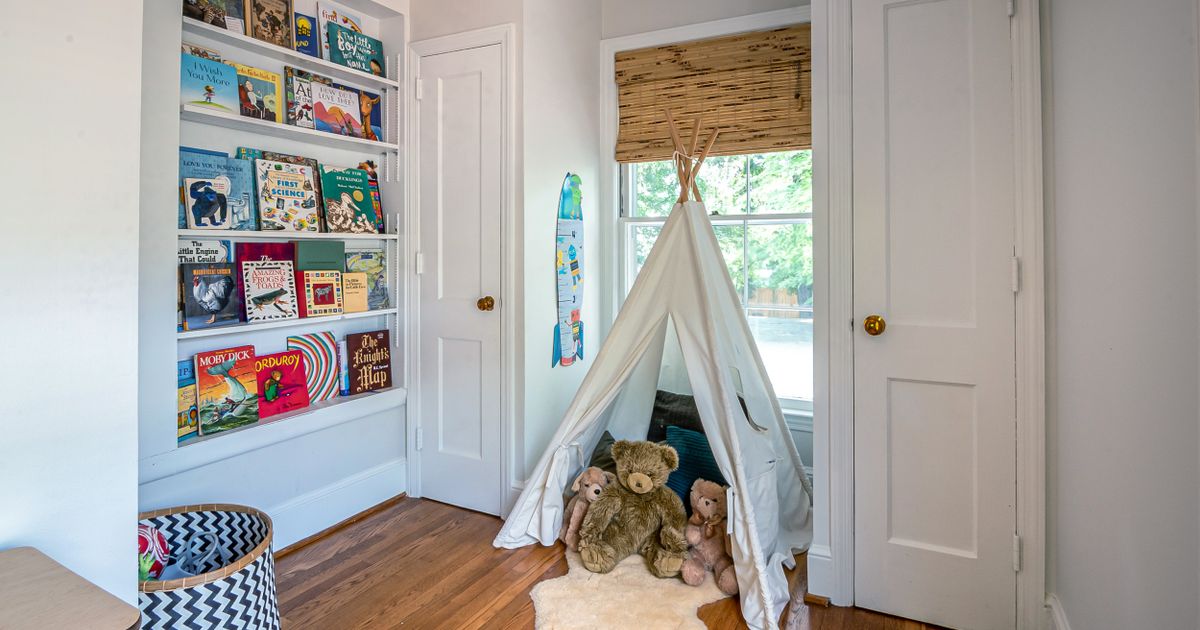
Children choose books the way they choose everything else in a shop: by cover, at their own height, from a small set they can actually survey. A home library for kids succeeds when it is built on that behaviour instead of against it. The grand adult arrangement, tall shelves, spines out, hundreds of titles in rows, is precisely the arrangement a five year old cannot use, because she cannot reach it, cannot read the spines, and cannot hold two hundred options in her head. This page sets out the kids library system that works: forward facing display, a rotating basket of five to ten books, height bands matched to age, and the safety rules that low shelving still has to obey. Build this, and the library stops being furniture the child visits and becomes a machine that puts the right book in her hands every day.
Forward facing display: covers out, not spines
A child browsing covers is not being superficial. The cover is the only part of the book she can read fluently, and publishers know it, which is why children's covers carry the story's promise in pictures. Forward facing display, in a sling shelf, a picture ledge, or a shallow bin, lets her shop the way the books were designed to be shopped. Keep the displayed set small. Five to ten covers, fully visible, is a choice a young child can make with pleasure; forty covers is a wall she stops seeing. When a displayed book has been chosen and read to pieces, promote it to the ordinary shelves with ceremony and bring a fresh cover forward. The display is the library's shop window, and like a shop window it works because it changes.
The rotating basket: five to ten books, refreshed on a rhythm
Beside the display, keep a basket, crate, or low bin holding the current rotation, five to ten books the child may take freely, carry anywhere, and live with for a week or two. Rotation is the system's engine. Books return from the basket to the main shelves without sadness because the child learns the rhythm: favourites come back around, and new arrivals appear where the old friends were. Refresh the basket on a fixed day, ideally with the child helping choose from the deeper shelves, because choosing next week's books is itself a reading lesson disguised as a treat. Include, every rotation, one book slightly above her current level to grow into, one beloved reread for comfort, and one nonfiction title, because young children's appetite for facts is real and perishable and most home libraries starve it by accident.
Height bands by age: the shelf grows with the child
Set the library at the child's height, not the room's. For toddlers, everything lives at floor level, in bins and baskets that cannot tip onto small climbers and board books that survive being carried by their covers. For preschoolers, add one low shelf within standing reach, with the display ledge at eye height, because a four year old chooses with her eyes at the height her eyes actually are. For early school years, raise the working shelf, introduce spine out shelving for the chapter books arriving in her life, and keep the basket, because even a confident seven year old reader still browses by cover when she is tired. The library that grows by bands never needs rebuilding, only adjusting, and each adjustment is a small ceremony that tells the child her reading is taken seriously in this house.
| Age band | Main storage | Display | What to include |
|---|
| Toddler | Floor bins, board books | One cover at a time on a ledge | Sturdy books, wordless books, family photo books |
| Preschool | Low shelf plus basket | Ledge of five covers at eye height | Picture books, rhyme, one facts book per rotation |
| Early school | Low spine out shelves plus basket | Basket of five to ten, child refreshed | Early readers, first chapter books, poetry, nonfiction |
| Older child | Full shelves at her height | Her own chosen display shelf | Series in order, reference, the growing personal collection |
Safety rules for low shelving
Low does not mean casual. Anchor every shelving unit to the wall, including the small ones, because children climb what they cannot reach and a low bookcase full of books is heavy enough to injure. Keep the heaviest books, the atlases and collected editions, on the lowest level or in another room entirely. Check baskets and bins for splinters, sharp corners, and handles that trap small fingers. Leave the floor in front of the library clear, because children read where they browse, sitting down in the traffic path with a book open, and a library that people trip around becomes a library people route around. Light the corner properly, a lamp at the child's shoulder height rather than a ceiling light behind her, so that the place she settles is also a place her eyes can work.
Where to put it: the corner that already exists
A kids library does not need a room. It needs a corner with three qualities: it is where the child already spends time, it can hold a chair, cushion, or rug at child scale, and it is near enough to adult life that reading there feels sociable rather than exiled. The corner of a living room beats a beautiful dedicated space down the hall, because young children read where their people are. Add the smallest possible signals of place: the basket, the ledge, a cushion that means reading when it is on the floor. Siblings of different ages can share one corner happily if the bands are respected, the toddler's bins at floor level, the older child's shelf above, each child's territory legible at a glance, which prevents the daily border disputes that make parents abandon the whole arrangement.
Keeping it alive: weeding, gifts, and the library card
A kids library chokes on kindness if nobody weeds it. Board books outgrown, duplicates from well meaning relatives, and the one joke book read four hundred times all compete with the rotation for space and attention. Weed twice a year, with the child where her age allows, passing outgrown books to younger cousins, charity shops, and the little free library down the street, and frame it as the books going to work elsewhere rather than being discarded. Route gifts into the system: ask gift givers for titles from the child's current band, or for the honour of choosing with her at a bookshop, which produces fewer duplicates and better memories. Above all, pair the home library with the public library card. The home shelves hold the beloved and the reread; the public library supplies the endless rotation the basket craves, twenty new covers a month at no cost, which is what keeps a small home system feeling abundant.
Reading furniture at child scale: cushions, light, and the lap
The corner's furniture deserves the same deliberateness as its shelves. A child reads longest where her body is properly held: a cushion firm enough to sit on rather than sink into, a small chair with feet supported, or the corner of a sofa with a lamp at her shoulder, since children, like adults, abandon places that hurt. Keep a lap available. The youngest readers do their most important reading against an adult, and a kids library designed only for solo reading has designed out its own foundation, so the corner should include one adult sized seat, comfortable enough for the fortieth reading of the same book, because that seat is where the habit is actually built. Add a small rug to define the territory and absorb the sound of a child reading aloud to herself, which the household should treat as the corner's music and protect accordingly, never hushing it in favour of the room's tidiness.
Books that earn their place: what a small collection must contain
Curation is the parent's real work, and a small collection has non negotiables. It needs rhyme and rhythm, because predicting language is early reading's engine. It needs wordless books, where the child narrates and learns that stories live in sequence, not only in print. It needs nonfiction with real photographs, animals, vehicles, the body, the weather, because fact hungry children are a type, not a phase, and they are underserved by fiction only shelves. It needs at least one poetry collection, read in dips. It needs books in the family's other languages where the family has them, shelved without ceremony among the rest. And it needs the child's own productions, the stapled epics from school, given shelf dignity, because a library that contains her own book teaches her what books are for more directly than any purchased title can.
When the system meets a child who will not use it
Some children ignore a beautiful corner for months, and the correct response is diagnosis, not despair. Watch what the child does instead: the child who builds with books may need the nonfiction shelf deepened; the child who performs the stories aloud is using the library exactly right and needs an audience more than a system; the child who carries one book everywhere has chosen her rotation of one, and the parent's job reduces to feeding that book's neighbours onto the ledge. Change one variable at a time, the stock, the light, the hour, the company, and keep the corner standing through the experiments without commentary about its neglect. Children arrive at reading by more doors than adults remember, and a library that waits, stocked and lit, is doing its job even in the weeks it looks unused.
The library corner across a childhood: from first board book to first novel
Plan the corner as a ten year citizen of the house and its changes become a family calendar. In the board book years it is bins and a cushion. In the picture book years the ledge and basket arrive, and the child begins refreshing the rotation with opinions that must be honoured or the system loses its citizen. In the chapter book years the spine out shelf appears and the first personal collection forms, the series she owns rather than borrows, kept in order with a librarian's severity she applies to nothing else in her room. Somewhere in those years the adult seat gets used less, then differently, for reading side by side in companionable silence, which parents consistently report as one of the great unadvertised pleasures of the whole enterprise. Do not dismantle the corner when she seems to outgrow it. Raise its shelves, deepen its stock, and let it mature into the household's second reading place. Libraries, like the readers they build, are not finished at seven.
Grandparents, gifts, and the duplicate problem
Every kids library has a shadow collection: the books that arrive from loving relatives, well chosen, duplicated, or five years off the child's band. Handle the shadow with grace and system. Keep a simple wishlist, by band and current passion, where gift givers can be pointed without a lecture, and update it at birthdays with the ceremony of a state document. Receive everything with thanks, then sort without the giver present: this season's books to the rotation, next band's books to a labelled box that becomes a treasure chest at the right birthday, duplicates to the pass along pile, where they will delight a younger cousin and free your shelf in the same motion. The child should see the sorting as curation, the library's normal metabolism, never as judgment on the giver, and a grandparent who is handed the wishlist, and then told, truthfully, that their chosen book was read to pieces, becomes the system's best supplier rather than its cheerful saboteur.
More home library ideas
Frequently asked questions
How many books does a kids home library need?
Fewer than most parents fear. A working system of a small display, a rotating basket of five to ten, and a modest shelf of keepers outperforms a crowded bookcase of hundreds, because the child can survey, choose, and finish. Depth belongs to the public library; the home library's job is curation.
What is the best shelf for a toddler's books?
A low, anchored, forward facing sling shelf or sturdy floor bins. Toddlers choose by cover and carry books bodily, so board books at floor level, in containers that cannot tip, serve them best.
How often should I rotate the books?
Weekly or fortnightly works for most families, on a fixed day the child learns to expect. Refresh with the child choosing from the deeper shelves where possible, keeping one comfort reread and one stretch book in every rotation.
Should picture books and chapter books share the space?
Yes, in bands. Keep the current reader's working books at her height and the next stage's books visible slightly above or beside them, where they advertise the future without crowding the present.
How do I stop the kids library spreading across the whole house?
Give books one home corner and one travelling basket, and run a nightly two minute return. Books may visit any room, which children need, but they sleep in the library, which the system needs.