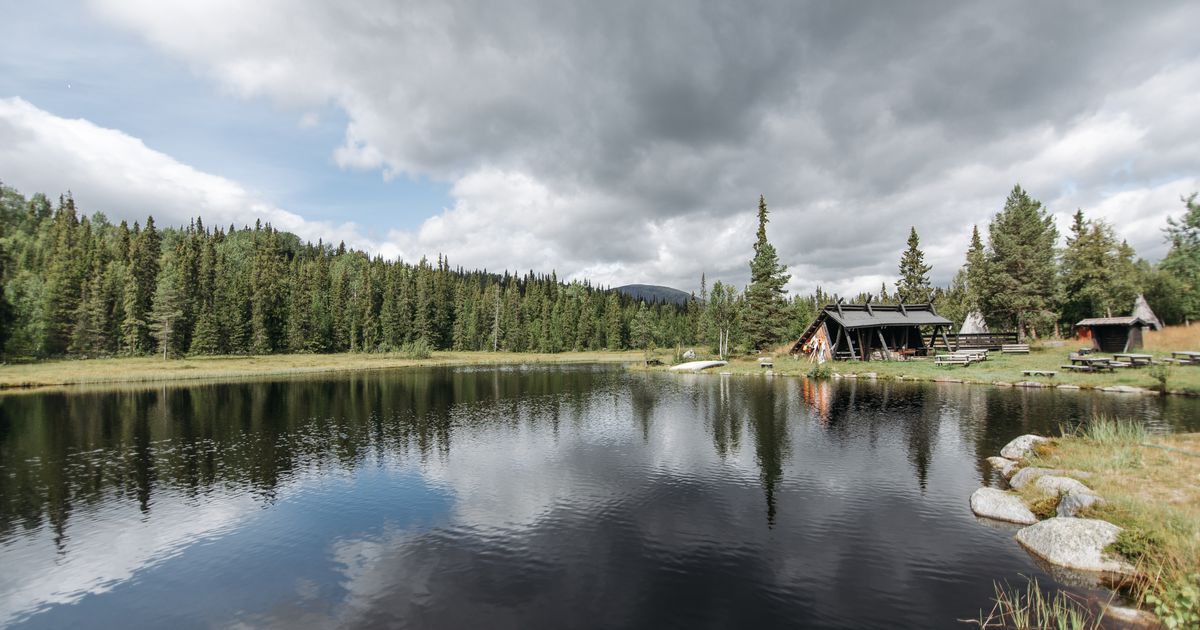
The God of the Woods by Liz Moore opens on an empty bunk. Barbara Van Laar, a teenager at the Adirondack summer camp her wealthy family owns, is gone, and her disappearance reopens the family's buried wound: her older brother Bear vanished from the same woods a generation earlier and was never found. Moore tells the story through many voices and two timelines. This guide sequences the meeting case by case, the new disappearance first and the old one second, with both solutions held for a marked spoiler ending.
Riverhead Books published Moore's novel on July 2, 2024, and the publisher's records give the hardcover at 496 pages; it became a bestseller and a fixture of year end lists. Moore sets the book at a real kind of place, an Adirondack great camp turned summer camp on a banking family's estate, and runs it on two clocks fourteen years apart: Barbara Van Laar vanishes from Camp Emerson in August 1975, and her brother Bear vanished from the same grounds in 1961 and was never found. Clubs should settle one piece of housekeeping first: the novel's timeline jumps are labeled by month and year, and a reader willing to flip back to the chapter headings will never be lost for long.
How to Use This Guide
Keep the two disappearances in separate columns until the book itself merges them. The first movement covers Camp Emerson, Barbara's bunk, and the Van Laar household, and it is safe for readers through the opening sections. The second movement follows Judyta's investigation, the staff's secrets, and Bear's case reopening, and it assumes the middle of the book. The final movement sits behind the spoiler marker and handles both solutions and the last chapters. One discipline improves every conversation about this novel: when a theory is offered, the theorist names whose account it depends on, since Moore distributes the truth among narrators with very different reasons to edit it.
Who's Who: A Refresher
Barbara Van Laar is the missing camper, a defiant girl raised in a house of portraits and silence. Bear Van Laar is her brother, who vanished as a boy and became the family's ghost. Alice Van Laar is their mother, medicated and grieving inside a marriage that runs on appearances. Louise is Barbara's counselor, a local girl whose own troubles make her the first suspect in everyone's mind. Judy Luptack is the young investigator assigned to the case. Tracy is Barbara's bunkmate and friend, holding facts she is afraid to spend. Vic Hewitt is the groundskeeper who knows the family's ground and its secrets better than anyone.
First Movement: The Empty Bunk
- A counselor finds the bunk empty and her first fear is blame. How does Moore use Louise's panic to show the class machinery of the camp, where the owners' child is missing and the local girl is already guilty?
- Barbara is described as difficult by nearly everyone who raises her. Collect the evidence the book actually gives. Is she troubled, or simply unwilling to perform the family's script?
- Camp Emerson sorts children by money while pretending the woods make everyone equal. Where did you see that sorting happen, in bunks, jobs, friendships, and romances?
- Tracy knows more than she says. What is she protecting, Barbara, herself, or the friendship, and what has the adult world taught her about the price of telling?
- Judy's investigation keeps bending around the Van Laar name. Track the small deferential moments. Which one most changed what the case was allowed to find?
Second Movement: The Older Case and the Family
- The earlier disappearance was closed around a convenient suspect, the handyman Carl Stoddard, whose family has lived under the accusation ever since. What did the town gain by settling on him, and what did it refuse to examine?
- Alice's chapters are soaked in pills, drink, and managed grief. How does the book distribute sympathy between a mother who lost a son and a mother who could not see her daughter?
- The family house is called Self-Reliance, a name that becomes harder to read straight as the book goes on. Who in this novel is actually self-reliant, and who merely owns the word?
- Moore gives the woods themselves a point of view, indifferent and complete. How does the land judge the people who claim to own it?
- The title names a god. Collect the candidates as you read: a person, a place, a family story, a fear. Which candidate did you believe in by the middle of the book?
Third Movement: The Solutions (Spoilers)
Stop here if you have not finished. The questions below assume the ending.
Spoiler marker: everything past this line assumes the ending, so anyone protecting the last chapters should stop here and take the closing ritual instead.
- Bear was never taken. He drowned by accident, and the family had Vic bury the truth along with the boy so the name would survive. Which is the novel's greater crime, the accident or the cover-up, and who in the family carries each?
- Vic kept the secret for a generation and served the family that asked it of him. Is he a villain, an employee, or another of the woods' casualties? What did loyalty cost him, and what did it buy?
- Barbara is alive, and her disappearance turns out to be an escape she engineered rather than a crime committed against her. How does that reversal change the meaning of every search scene you read before it?
- In the end, who is the god of the woods: the family that owns the land, the people who know it, or the girl who walked into it and chose it over the house?
The Adirondack Great Camps, in Brief
The Van Laars' Preserve belongs to a documented American species worth knowing before the final movement. In the late nineteenth and early twentieth centuries, wealthy families built what the Adirondacks call great camps, sprawling rustic compounds of lodges, boathouses, and staff quarters around the region's lakes, designed to look like wilderness while running like hotels. The architecture performed humility, bark and twig outside, while the service economy inside was industrial in scale, and the local population's year was organized around the summer people's season. Moore's novel inherits that whole arrangement and updates it: the camp for children is the great camp's democratic costume, and the town of Shattuck still lives by the season's wages and the season's silences. Hold the history lightly but firmly during the investigation talk. The estate's power to edit its own story is not a novelist's invention; it is the great camps' founding technology, the purchase of a landscape large enough that the truth could be kept inside the fence, and Moore simply asks what happens when two children are the price of the quiet.
Closing Ritual
Close in the woods, at the boundary the novel keeps crossing. Ask each member to name one rule of the Van Laar world, spoken or unspoken, that they would break first if the family's survival depended on it, and one they would keep even at that price, in a sentence each. The book is an inventory of such rules, about money, silence, girls, and land, and the table's two lists will show, more plainly than any verdict on the ending, what your group believes a family is allowed to protect and what it is not.
If Your Club Liked This One
Long Bright River by Liz Moore (2020). Two sisters in Philadelphia, one a police officer and one lost to addiction, circle a series of murders. It is Moore's previous novel and the obvious next meeting: the same patience, the same class geography, and the same refusal to let an institution narrate itself.
The Berry Pickers by Amanda Peters (2023). A Mi'kmaq girl vanishes from the Maine blueberry fields in 1962, and two families carry the loss for decades. It pairs with Bear's disappearance almost exactly in era and structure, and its shorter length makes it a kind companion piece on stolen children and official indifference.
Mystic River by Dennis Lehane (2001). A boy is taken by men posing as police, and twenty five years later a murder reunites his childhood friends on both sides of the law. Read it for the boys' version of Moore's materials: a disappearance that organizes every adult life downstream of it.
Themes to Keep in Play
The estate's two workforces. The Van Laars own the Preserve, and the town of Shattuck staffs it, camps, kitchens, and secrets alike. Whenever a scene charms, ask whose labor is holding the charm up, because Moore never lets the question rest for long.
Daughters priced, sons mourned. Bear's loss is the family's public religion while Barbara's aliveness is treated as an administrative problem. Track the difference in budgets, emotional and financial, since the novel's feminism is written in ledger entries.
Stories as inheritance. Every generation of Van Laars receives a version of 1961 edited for its protection. Keep asking who edited the version each character is acting on, because the plot is mostly people obeying different drafts of the same story.
Running the Meeting: Timing and Trouble Spots
Two full hours; the book is long and the room will have theories. Camp and household take thirty five minutes, the investigation thirty five, a break, then forty behind the spoiler marker, and ten for the closing rules round. Trouble spots: first, the timeline's jumps will have genuinely lost some members; the leader should offer a two minute orientation, using the chapter headings as the map, before the second movement rather than letting confusion masquerade as criticism. Second, the class material can turn into a seminar; keep it tethered to scenes, especially the kitchen and staff passages, where Moore does her arguing. Third, the two solutions invite scorekeeping; question thirteen gives the Bear verdict its full hearing, and the leader should insist the Barbara solution be discussed first, since the novel's priorities are exactly that order.
Two Vanishings, One Estate, in One Paragraph for the Leader
Leaders should frame the novel as a story about who gets searched for. Bear Van Laar's disappearance mobilized an estate, a police force, and a family's fortune, and produced a legend. Barbara's mobilizes a young investigator whom the institution keeps underestimating, a bunk of girls whose testimony adults discount, and a town that knows more than it is asked. Moore's structure, alternating eras and narrators, is that contrast made formal: the past arrives in polished family versions, the present in working notes. Judyta is the novel's instrument because she is the first person in either era to treat every witness, counselor, cook, camper, as a source rather than as staff. Put searching at the center and the ending's two solutions divide correctly: one case was closed by the people who owned the story, and the other is opened by the people who were never asked to tell it.
Scene Anchors: Five Pages to Argue From
The empty bunk. Barbara's bed is found made and vacant at morning count, and the camp's machinery wakes slowly. Anchor the institutional argument here, where the response's speed is itself evidence.
The self reliance speech. Camp Emerson teaches wealthy children to survive in woods their hosts' children work in. Use it to open the class argument with the novel's own brochure language as the exhibit.
Bear's last known day. The 1961 sections reconstruct a boy through the memories of people who edited themselves. Keep the versions separate in discussion; their differences are the data.
Tracy at the margins. Barbara's bunkmate watches, notes, and is largely unasked. Return to her whenever testimony is debated, since the novel's theory of evidence lives in her treatment.
The final chapters' disclosures. Two solutions arrive by different roads, one archival and one confessional. End the spoiler talk by comparing the roads, not just the destinations.
One Question for the Whole Evening
If one question must organize the evening, ask this: who was allowed to look for these children, and who was only allowed to grieve for them? Sort the cast by permission, family, police, staff, campers, the town, and notice that the categories predict what each person finds better than their intelligence does. Moore's novel is finally about jurisdiction over the truth, and a group that maps the permissions has drawn the book's real estate map, the one underneath the Preserve's fences.
More book club guides
Frequently asked questions
What is The God of the Woods about?
In August 1975, Barbara Van Laar, the teenage daughter of the banking family that owns Camp Emerson in the Adirondacks, vanishes from her bunk. Fourteen years earlier her brother Bear disappeared from the same estate and was never found. A young investigator, Judyta Luptack, works both cases against the family's management of its own history.
Do you need to read The God of the Woods in order?
Yes, and the chapter headings are your map. Moore alternates between 1961 and 1975 and among several narrators, labeling each section by month and year. Readers who check the heading before each section rarely stay lost.
When was The God of the Woods published?
Riverhead Books published it on July 2, 2024, at 496 pages in hardcover. It was Moore's fifth novel and became a bestseller and a frequent year end list selection.
Does this guide spoil the ending of The God of the Woods?
The camp and investigation movements discuss both disappearances without their solutions. Only the final movement, behind a clear spoiler marker, covers what happened to Bear, what happened to Barbara, and how the two answers rhyme.
Is The God of the Woods a good book club pick?
It is an excellent long novel for a group that likes to work. Expect the strongest talk around the estate's class machinery and around which of the two solutions the room finds just, since Moore clearly weights them differently.