Where the Crawdads Sing by Delia Owens asks a book club to hold two novels at once: the story of a girl who raises herself in a North Carolina marsh, and a murder mystery that puts her on trial as a woman. Groups tend to spend the evening on the mystery and rush the marsh, which is a loss, because the marsh is the argument the mystery is built on. This guide sequences the meeting in three movements so both get air: the childhood, the town and its judgments, and the ending, with the spoiler questions clearly marked at the end.
G. P. Putnam's Sons published Owens's first novel on August 14, 2018; it became a Reese's Book Club pick and one of the bestselling novels of its decade, though its editions paginate so variously, 368, 370, and 384 pages all circulate, that this guide argues from scenes instead of page numbers. Owens spent decades as a wildlife scientist in Africa before writing fiction, and the marsh in this book is not scenery but a credentialed witness, described with a field biologist's patience. Clubs should also know the novel's two clocks in advance: Kya's life runs forward from 1952, while the investigation of Chase Andrews's death runs through 1969 and 1970, and the book braids them tighter as it goes.
How to Use This Guide
Give the marsh its share of the evening on purpose, since groups reliably over schedule the murder. The first movement covers the childhood, the departures, Tate's teaching, and Jumpin' and Mabel's protection, and it is safe for readers through the early chapters. The second movement takes up Tate and Chase, the town's judgment, and the trial's construction of Kya, and it assumes the middle of the book. The final movement sits behind the spoiler marker and handles the verdict, the necklace, and the poems. A useful rule for the trial talk: members must distinguish what the jury heard from what the reader knows, because the novel's fairness, and its cheat, both live in that gap.
Who's Who: A Refresher
Kya Clark is the Marsh Girl, abandoned by her family one by one and raised by the marsh itself. Tate Walker is the boy who teaches her to read and the love she measures everyone against. Chase Andrews is the town's golden boy, her later lover, and the man found dead under the fire tower. Jumpin' and Mabel run the bait shop and become the parents the marsh could not be. Jodie is the brother who left, and who returns carrying the truth about their mother. Tom Milton is the retired lawyer who defends Kya when the town has already convicted her.
First Movement: The Marsh Childhood
- Kya's family leaves one by one, her mother first and her father last. Which departure did you find hardest to forgive, and does the book want you to forgive any of them?
- The marsh is described as a space of light that raised her. In what ways is it a better parent than the people who left, and in what ways is that a sad illusion?
- Kya survives by selling mussels and reading the marsh like a text. How realistic did you find her survival, and does your answer change what the book is doing?
- Tate teaches Kya to read. Why is literacy, rather than rescue, the gift that changes her life?
- Jumpin' and Mabel protect Kya quietly for years, including from the authorities. What do they risk, and why do you think they never simply took her in?
Second Movement: Love and Judgment in Barkley Cove
- Compare Tate and Chase as Kya experiences them. What does each man want from the marsh, and what does that reveal about what each wants from her?
- Kya learns about relationships from watching fireflies, whose females flash false signals to lure males to their deaths. Where does that lesson steer her rightly, and where does it fail her?
- Barkley Cove calls Kya wild and dirty while buying her bait and reading her books. What does the town gain from keeping her an outsider?
- The trial turns on who the jury believes Kya is. How did the prosecution use her childhood against her, and what did Tom Milton understand about the town that the evidence could not say?
- Kya publishes her nature books under her own name and her poems under another. Why does the book give her two names, and which one is the real author?
Third Movement: The Ending (Spoilers)
Spoiler marker: everything past this line assumes the ending, so anyone protecting the last chapters should stop here and take the closing ritual instead.
- The verdict arrives before the truth does. Were you satisfied by the acquittal on the evidence presented, and should a jury's job be the same as a reader's?
- Tate finds the shell necklace after Kya's death and understands what it means. Did the revelation change your judgment of Kya, of Tate, or of the trial?
- Tate returns the necklace to the marsh rather than telling anyone. Was that loyalty, cowardice, or the book's final lesson about wild things?
- Kya's poems, published as Amanda Hamilton's, are the voice she hid her whole life. Why does the book wait until she is gone to let her speak plainly?
The Real Marsh Behind the Fiction
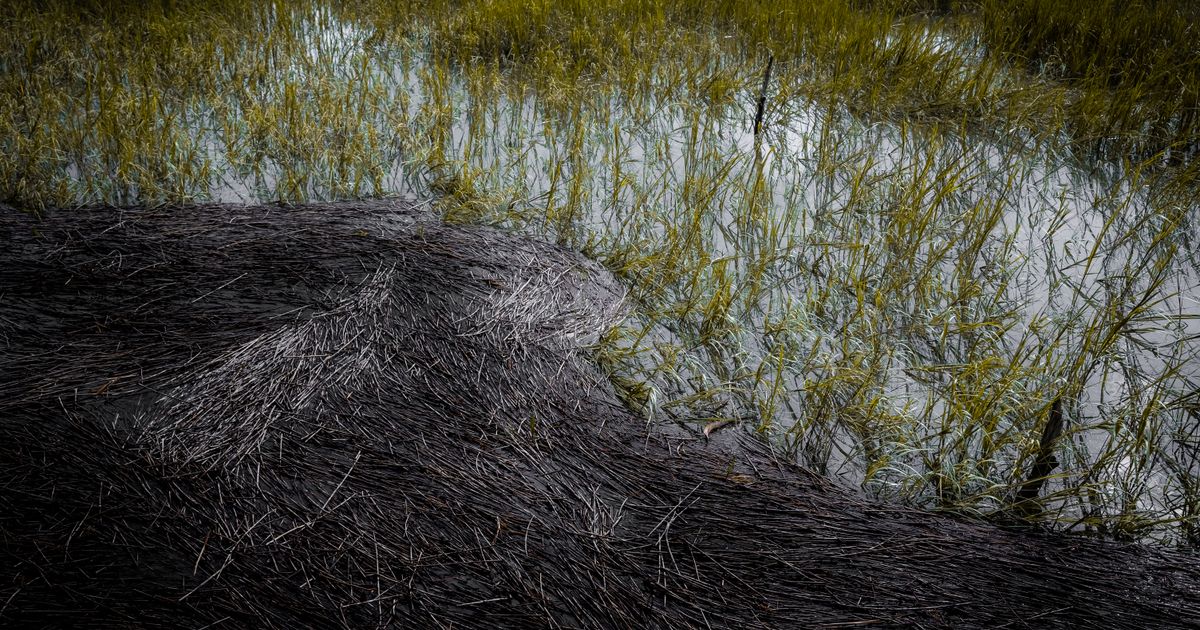
Owens's marsh is invented street by street but ecological fact by the acre, and a short grounding in the real system deepens every scene. North Carolina's coastal plain holds vast tidal marshes where cordgrass flats flood and drain twice a day, sorting creatures by how much salt and exposure each can bear, so that the marsh is less a place than a schedule of tolerances. That schedule is Kya's true curriculum: she learns who eats whom, who signals honestly, who hides, and when the water will cover the evidence, in an environment that punishes inattention immediately and rewards observation with food. It also explains the novel's moral geometry. The town judges by category because categories are cheap; the marsh judges by behavior because behavior is all that survives there. When the room reaches the trial, that contrast is worth stating aloud, since the book's whole case against Barkley Cove is that it refused to adopt the evidentiary standards of the swamp it looked down on.
Closing Ritual
Close with the marsh itself, in inventory. Go around the table and let each member name one living thing from the novel, a firefly, a heron, a mussel bed, a gull, and the one fact or behavior of it that Kya learns from, in a single sentence. No symbols allowed until the round is complete. Owens wrote a book in which a girl is educated by paying exact attention to creatures, and a room that has practiced her attention for two minutes, out loud, understands her education better than a room that has only debated her verdict.
If Your Club Liked This One
The Frozen River by Ariel Lawhon (2023). A Maine midwife and healer in 1789 is called to examine a dead man found in the ice, and her diary becomes evidence in the trial that follows. It pairs with Owens on a woman whose competence a courtroom must be taught to hear, and this site's guide for it makes a natural companion meeting.
Go As a River by Shelley Read (2023). A teenage girl in 1940s Colorado survives abandonment, a forbidden love, and a river's flood, and builds a life in orchard country. Read it for the same curriculum: landscape as parent, town as judge, and a heroine priced by people who never watched her work.
Demon Copperhead by Barbara Kingsolver (2022). A boy narrates his own raising by foster systems, football, and opioids in Lee County, Virginia. It matches Kya's story as its male, inland mirror: a child the institutions failed, telling the record straight at last, in a voice the institutions never expected.
Themes to Keep in Play
The marsh as parent and text. Kya is raised by an ecosystem and educated by reading it, so the nature writing is her family history and her schooling in one. Whenever a scene seems like decoration, ask what lesson Kya banks from it for later use.
Two names, two authors. Kya publishes science under her own name and poems under Amanda Hamilton's, splitting the self the town made unspeakable from the self that could be read. Track which experiences are assigned to which byline, because the division is her autobiography in code.
The town's need for a Marsh Girl. Barkley Cove requires an outsider to define its inside, and profits from Kya's bait, books, and scandal alike. Keep asking what the town would lose if it admitted she was simply a neighbor.
Running the Meeting: Timing and Trouble Spots
Two hours, and guard the first movement's share jealously. The marsh childhood takes thirty five minutes, love and judgment thirty five, a break, then thirty five behind the spoiler marker, and ten for the closing inventory. Trouble spots: first, the trial will try to become the whole meeting; the jury versus reader rule in this guide exists to keep it proportionate and honest. Second, the neglect chapters are described plainly and some members will have lived versions of them; the pass rule applies, and the leader should watch for the member who goes quiet rather than the one who argues. Third, the ending's revelation tempts the room to retry Kya on the spot; question twelve gives that impulse its hearing, and the leader should insist it wait its turn behind the marker.
Raised by a Marsh, Judged by a Town, in One Paragraph for the Leader
Leaders should establish Owens's wager at the outset: she writes a murder mystery in which the detective work is done by natural history. Kya survives by the same skills the plot later puts on trial, reading signs, understanding predation, knowing which creatures signal falsely and which sing true, and the firefly lesson in the second movement is the book's thesis disguised as a nature note. The town, by contrast, judges by costume and address, and the trial is simply that method wearing robes. That is why the poems matter structurally and not just as a twist delivery system: Amanda Hamilton is the one citizen of Barkley Cove who was allowed to observe the marsh without being observed back, and her voice is what Kya's whole life sounds like when nobody is grading it. Frame the evening around observation, who is permitted it and who is only subjected to it, and the verdict argument becomes the book's real subject instead of its interruption.
Scene Anchors: Five Pages to Argue From
The mother walking away. A small girl watches the last of the shoes disappear down the lane. Anchor every forgiveness argument here, where the departures begin and the book's emotional debt is opened.
Tate's reading lessons. A boy trades literacy for mussels and patience on the water. Use it to mark the novel's claim that teaching, not rescue, is the intervention that compounds.
The firefly signal. Females flash false invitations to lure males to their deaths, and Kya takes notes. It is the most consequential paragraph in the book; require it in evidence during the Chase argument.
Jumpin' and Mabel's counter. A bait shop quietly feeds, clothes, and shields a child the town prefers as a rumor. Return here whenever Barkley Cove's conscience is totaled.
The shell necklace found. After Kya's death, Tate reads an object the way she taught him to read everything. End the spoiler talk inside his reading, and his silence afterward.
One Question for the Whole Evening
If one question must rule the evening, ask this: who in this novel actually knows Kya, and what is their evidence? Work the table through Tate, Jumpin', Mabel, Jodie, Chase, the jury, and the reader, and make each answer cite observations rather than feelings. The resulting map is Owens's indictment and her love letter at once: the people who watched longest and closest knew her best, and the institutions that watched her as a category never stood a chance, which is either the book's comfort or its warning, depending on where your group lands.
More book club guides
Frequently asked questions
What is Where the Crawdads Sing about?
Kya Clark, abandoned by her family in a North Carolina marsh, raises herself by selling mussels, learning to read from a local boy, and studying the marsh until she becomes a published naturalist. In parallel, the town of Barkley Cove investigates the death of Chase Andrews, its golden boy, and the Marsh Girl becomes its suspect.
What does the title Where the Crawdads Sing mean?
It is a phrase Kya's mother used for the far, wild place where creatures behave by their true natures, beyond the town's rules and watching. The novel treats it as the marsh's moral geography, the place Kya is from in every sense that matters.
When was Where the Crawdads Sing published?
G. P. Putnam's Sons published it on August 14, 2018. It was a Reese's Book Club pick and became one of the decade's bestselling novels; its many editions paginate differently.
Does this guide spoil the ending of Where the Crawdads Sing?
The childhood and judgment movements discuss the trial without its outcome's meaning. Only the final movement, behind a clear spoiler marker, covers the verdict, the shell necklace, and what Tate understands after Kya's death.
Is Where the Crawdads Sing a good book club pick?
It is one of the most reliable picks of its era, because every reader arrives with a verdict and the book is built to complicate verdicts. Expect the marsh lovers and the mystery readers to need the leader's help sharing the evening, which this guide schedules deliberately.