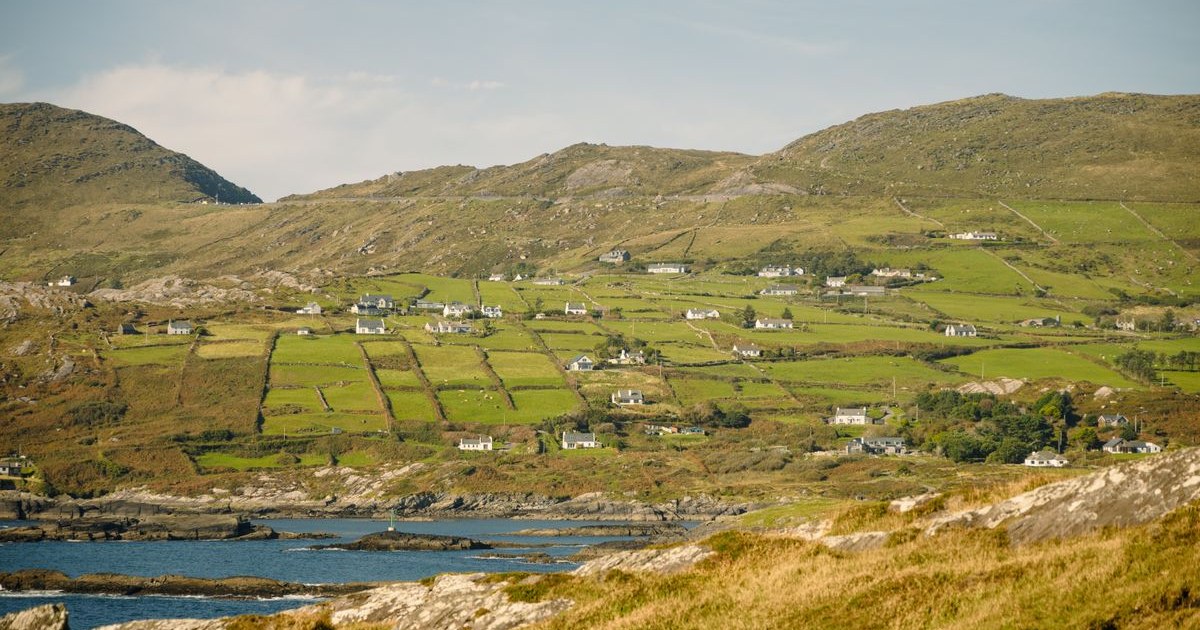
Land by Maggie O'Farrell, her tenth novel, published by Knopf in the United States and Tinder Press in the United Kingdom in June 2026, is set on a windswept Irish peninsula in 1865, in a country still emptied and haunted by the Great Hunger. Tomas, a cartographer employed by the British Ordnance Survey, spends his days mapping Ireland and anglicizing its Gaelic place names to feed his family, until an unsettling encounter in a copse, and another at a holy well, sends him off course entirely, and the shock runs through his wife Phina and their children, Liam, Enda, Rose, and Eugene, for the rest of the novel. Tomas begins a second, secret map, a true map drawn from myth, memory, and spiritual significance, set against the official one. Book clubs argue about the maps first and about the children leaving longest, because this is finally a novel about emigration: what it costs a family to scatter across the earth, and what the land itself remembers when the people are gone. This guide sequences the meeting in three movements: the survey and the land, faith, music, and leaving, and the scattered ending, with spoilers clearly marked in the final movement.
How to Use This Guide
Members will disagree about the magical elements, so let that argument breathe early rather than saving it, because it colors every later judgment about Tomas. The first movement covers the survey, the encounter, and the two maps, and is safe for readers a third of the way in. The second movement takes up faith, Enda's music, and the family's savings and leavings, and assumes the middle chapters. The third movement, behind the spoiler marker, handles the scattering itself and the ending's transformation, and is for finishers only. The refresher below restores a large family and its neighbors. Keep returning talk of maps and home to named scenes as you go: the copse, the well, the ship. The pass rule applies as always, and it matters here for members whose own families carry emigration stories, which in many rooms is most of them.
Who Is Who: A Two Minute Refresher
Tomas is the father, a mapmaker working for the British survey, who is changed completely by what he meets in the copse and at the holy well, and who begins, in secret, a true map of his own, drawn from the land's older knowledge. Phina is his wife, whose backstory in the Great Hunger years explains the family's ferocious will to survive, and who saves with Tomas, in secret, for one child's passage overseas. Liam is the son who works beside his father from the age of ten, is frightened by the change in him, and later leans toward the priesthood and its certainties. Enda is the daughter who plays the fiddle brilliantly and refuses, at any cost, the confined future being arranged for her. Rose is the daughter who holds the family together and cares for everyone else first, the still center the others leave from. Eugene is the nonverbal son whose kinship with the land runs deeper than speech and whose choices close the book. The widow is the unnamed neighbor who steadies the family, especially after loss. Father Joseph is the priest who tries to discipline and suppress Tomas's native spirituality. Bran is the family's loyal dog.
Movement One: The Survey and the Land
- Tomas works for the British Ordnance Survey, mapping Ireland and replacing Gaelic place names with English ones, in order to feed his family. Where does providing end and collaborating begin for a man in his position, and does the novel judge him for it, or refuse to?
- The land itself behaves like a central character in this novel, remembering what people forget and keeping what they lose. Which scene first convinced you of that, and what exactly did the land do there that a setting should not be able to do?
- What happens to Tomas in the copse and at the holy well changes him completely. Did the magical elements feel at home inside this famine haunted, historically grounded story, or did they sit uneasily beside its realism, and what does your answer do to the rest of the book?
- Tomas begins a true map based on myth, memory, and spiritual significance, set against the official British map he is paid to draw. Inventory what each map records and what each one leaves out, and say which map a stranger would need to actually know the place.
Movement Two: Faith, Music, and Leaving
- Father Joseph tries to discipline Tomas's spirituality, while Liam, the son, moves toward the church and the priesthood. How do father and son end up on opposite sides of the same faith, and which of them does the novel treat as the true believer?
- Enda's fiddle playing is her gift, her heritage, and her way out of the future arranged for her. What does her music preserve of the place she is leaving, and what does it cost the family when talent becomes a ticket away?
- Phina and Tomas secretly save for one child's passage overseas, believing it offers a better future than the peninsula can. Is saving for a single child's escape an act of love, of favoritism, or of despair, and how would the unsaved children answer?
- Rose holds the household together while her siblings dream of leaving, and the novel watches her do it without comment. Does the book honor that care as a life's work, or quietly treat staying as the smaller life, and which scenes decide it?
Movement Three: The Scattering
Spoiler marker: everything past this line assumes the ending, so anyone protecting the last chapters should stop here and take the closing ritual instead.
- Enda takes on Liam's identity and sails for Canada, where hardship follows her into service in other households, though her music eventually finds an audience. Was her journey a tragedy, a liberation, or one confinement traded for another at a higher wage?
- Eugene, carried aboard the ship with the departing family, jumps and swims back to Ireland, unable to leave. What does his return say about what home means in this novel, and about the limits of every plan the parents made?
- The siblings scatter across continents and never reunite, and the one reunion the book allows, between Rose and Enda, arrives tense and brief. Why does O'Farrell refuse the reunion readers want, and what does that refusal claim about emigration itself?
- Eugene's final transformation, into a gruagach, a nature spirit of the place, closes the book on an openly anti realist note. Did that ending feel earned by everything the land has done before it, or did it abandon the human story too soon, and how did the table's magic skeptics and believers divide?
Closing Ritual
Close with place names. Ask each member to name, in one sentence, a place their own family left, or a place name they know that was changed, shortened, or translated, and what was lost or kept in the change. Members with no such story may name a place they would map differently than the maps do. Then have the leader read the family's names aloud, Tomas, Phina, Liam, Enda, Rose, Eugene, as a roll of the scattered, and let the list stand as the ending, the way a muster stands for people who will not gather again.
If Your Club Liked This One
Hamnet by Maggie O'Farrell. Her celebrated novel of Shakespeare's family and the son whose name echoes in Hamlet, built from the same materials: grief, a household, and history pressing at the windows. It pairs with Land on parents, children, and what survives of the lost.
Brooklyn by Colm Tóibín. An Irish girl emigrates to New York in the nineteen fifties and builds a life she must then choose against home. Read it alongside Land for the emigration argument at its quietest and most exact, one generation on.
Star of the Sea by Joseph O'Connor. A famine ship crosses to America in 1847 carrying emigrants, secrets, and a murderer. It matches this novel's historical ground, the Hunger itself, and shows the crossing Tomas's children repeat a generation later.
Themes to Keep in Play
Two kinds of map. The survey records ownership and names; Tomas's true map records meaning and memory. Whenever discussion turns to plot, ask which map the scene belongs to, because the novel's whole argument is in the difference.
Leaving as inheritance. The parents survived the Hunger and bequeathed their children a world where departure is the family trade. Track how each child receives that inheritance differently, as ticket, sentence, or refusal.
The one who stays. Rose's staying is the family's load bearing wall, and the book's judgment of it is deliberately withheld. Keep her in the room whenever the leavers' stories grow romantic.
Running the Meeting: Timing and Trouble Spots
Two hours, unhurried. Spend ten minutes on the refresher, twenty five on the survey movement, and thirty on faith, music, and leaving. Break before the spoiler marker, then thirty minutes on the scattering and ten for the ritual. Trouble spots: first, the magical elements will split the room into believers and skeptics from the first movement; that split is productive, so protect it, and require both sides to argue from scenes rather than from taste. Second, the Great Hunger background needs one plain minute of context from the leader early, dates and scale only, so that later arguments about the parents' choices rest on shared ground. Third, place name politics can pull the talk into general history; let it run briefly, then return to Tomas at his desk with two maps in front of him, which is where the politics becomes a man's daily bread.
The Survey's Names, in One Paragraph for the Leader
The Ordnance Survey of Ireland was a real enterprise, and its work of mapping the island and standardizing its place names, rendering Gaelic names into English forms, remains one of the most debated cultural acts of the nineteenth century, because a name on a map decides what a place is called by everyone who comes after. O'Farrell puts her hero inside that enterprise, neither villain nor rebel at first, but a skilled man feeding his family with the work, which is what makes his second, secret map an act of conscience rather than a hobby. The survey's field parties were a familiar sight in nineteenth century Ireland, men with chains and instruments measuring other people's townlands, and O'Farrell is careful to make Tomas good at the work and proud of its precision before she makes him doubt it. That pride matters: a man who merely endured the job could walk away from it cleanly, while a man who loved its accuracy must betray something in himself to keep his second map, which is why the secret costs him sleep. Leaders should give the table that grounding before the first movement's questions: it converts Tomas's dilemma from a fantasy premise into a recognizable one, the employee whose daily task quietly erases the world he loves, keeping a truer record at home by night.
Scene Anchors: Five Pages to Argue From
The copse. Tomas meets something in the trees that the survey has no symbol for, and the novel's realism opens. Every later argument about the magic starts here, so make members describe exactly what the scene does and does not show.
The holy well. Water, pilgrimage, and an older Ireland surface inside the official one's territory. Anchor the faith argument here, where Tomas's spirituality stops being private.
The two maps side by side. Tomas's official sheets and his true map embody the book's whole dispute about what knowledge is. Keep this contrast in reach all evening; it answers more questions than any other.
The savings. Phina and Tomas count out the passage money in secret, choosing which child's future to fund. It is the family's economics and its heartbreak in a single quiet scene.
The ship. Departures, a disguise, and a boy in the water swimming the wrong way, toward home. End the spoiler talk here; the scattering, and everything it claims about emigration, is in this sequence.
One Question for the Whole Evening
If the room needs one spine, ask this: what does the land know that the maps, both of them, cannot hold? Make every member answer with a scene, and notice how the answers migrate from Tomas to Eugene as the evening deepens. That migration, from the father's instruments to the son's silence, is the novel's own journey, and naming it together is the meeting's real destination.
More book club guides
Frequently asked questions
What is Land by Maggie O'Farrell about?
In Ireland in 1865, a mapmaker for the British Ordnance Survey is transformed by an encounter with the old, spiritual life of the land, and begins a secret true map, while his family's children face the era's defining choice: stay, or emigrate.
Is Land based on real history?
Its ground is real: the Ordnance Survey's mapping of Ireland, the anglicizing of Gaelic place names, and the long aftermath of the Great Hunger all happened. Tomas and his family are O'Farrell's inventions living inside that history.
When was Land published?
Land is Maggie O'Farrell's tenth novel, published in June 2026 by Knopf in the United States and Tinder Press in the United Kingdom, and it became a New York Times bestseller.
Does this guide spoil the ending of Land?
Only the third movement does, behind a clear spoiler marker, and it covers the children's scattering and the closing transformation. The earlier movements stay with the survey, the family, and the decisions to leave.
Is Land a good book club pick?
It is a rich one for clubs that like historical fiction with a mythic pulse. Expect the longest arguments about the maps, about which child the parents saved, and about whether the ending's magic is the book's glory or its gamble.