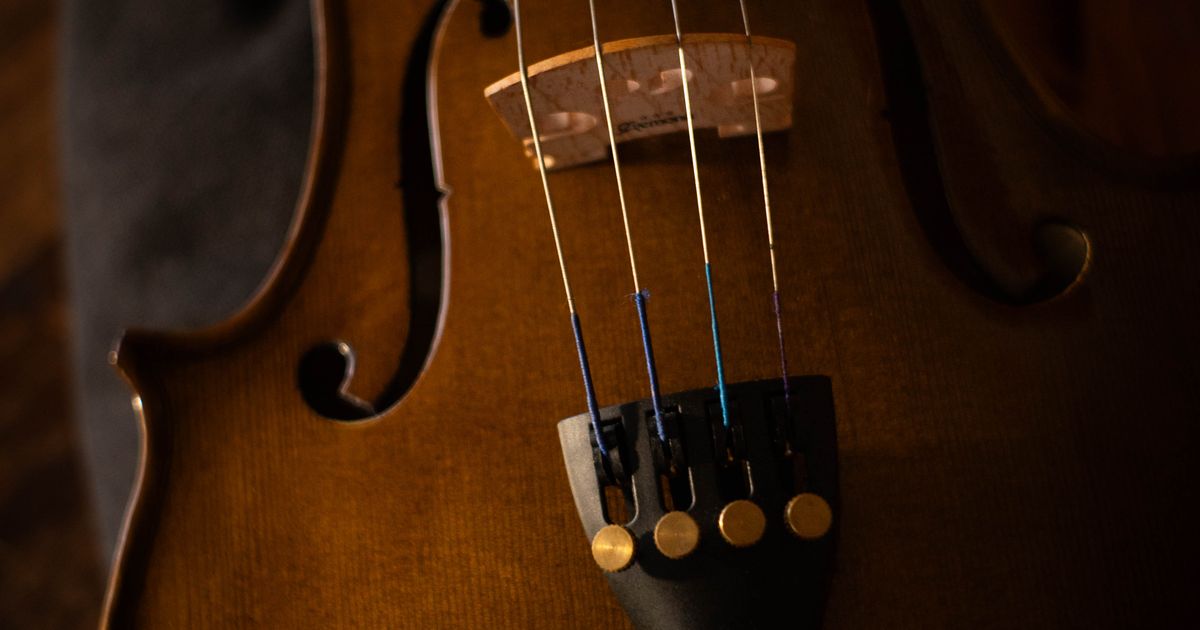
The Violin Conspiracy by Brendan Slocumb follows Ray McMillian, a young Black violinist from rural North Carolina whose life seems mapped out for him. His mother wants him to stop making a racket and get practical work, money for a suitable instrument does not exist, and the classical music world meets him with racism at every level. Then the beat up fiddle his grandmother gave him is identified as a priceless Stradivarius, inherited from his ancestor Leon Marks, who received it from the man who enslaved him. Ray's career takes off, two families lay claim to the instrument, and on the eve of the Tchaikovsky Competition the violin is stolen, a ransom note for five million dollars left in its place. This guide sequences the meeting in three movements: the fiddle and the family, mentors and claims, and, in the marked spoiler movement, the theft and the competition.
Anchor Books published Slocumb's debut on February 1, 2022, and it was chosen as a Good Morning America Book Club pick; listings paginate the editions differently, so this guide discusses the novel without leaning on a page count. Slocumb is himself a Black classical violinist and a longtime music educator, and the author's note confirms that several of the novel's ugliest scenes draw on his own experience, a fact this guide saves for the final movement because it changes how those scenes should be weighed. The book is three machines in one binding: a family saga about an inherited instrument, a profession novel about breaking into classical music, and a theft mystery with a ransom note, and a good meeting keeps all three running.
How to Use This Guide
Run this meeting like a recital program, in the order the book performs. The first movement covers the family fiddle, Grandma Nora, and Leon Marks's legacy, and it is safe for readers through the opening chapters. The second takes up Janice's mentorship, the rival claims to the violin, and the profession's daily weather, and it assumes the middle of the book. The final movement sits behind the spoiler marker and handles the theft, the thief, and the competition. One discipline matters all evening: quote scenes precisely. This novel's argument about racism is built from accumulated specifics, and discussion that floats into generalities lets both the book and the room off too easily.
Who's Who: A Refresher
Ray McMillian is the violinist, disciplined and certain that he is a musician first. Grandma Nora is the grandmother who gave him the fiddle and believed in the music. Ray's mother wants security for her son and opposes the violin, then covets its value. Janice is the professor and mentor who takes an active interest in Ray. Leon Marks is Ray's enslaved ancestor, whose playing and dignity thread through the family story. Nicole is Ray's girlfriend, a fellow musician. Mikhail Lezenkov is his Serbian rival at the competition.
| Person | Relation | Watch for |
|---|
| Ray | Violinist | Discipline, defiance |
| Grandma Nora | Grandmother | Faith, generosity |
| Ray's mother | Mother | Fear, appetite |
| Janice | Mentor professor | Advocacy, standards |
| Leon Marks | Ancestor | Legacy, dignity |
| Nicole | Girlfriend | Intimacy, ambition |
First Movement: The Fiddle and the Family
- Ray insists that among all the facets of his identity, he is a musician first. What does that ordering give him, and what does it cost him?
- Grandma Nora and Ray's mother hold opposite attitudes toward his music, one generous and one hostile. How do those two attitudes build the musician Ray becomes?
- The family fiddle turns out to be a Stradivarius. Before anyone discusses money, what does the discovery change about how Ray hears his own playing?
- Leon's story reaches Ray across generations: an enslaved man whose music was his voice and his survival. How does that inheritance shape Ray's sense of what the violin is for?
- Ray grows up poor in a field where instruments, lessons, and travel all cost money. Which barrier struck you as most decisive, talent's price or the profession's gatekeeping?
Second Movement: Mentors, Claims, and the Profession
- Janice, a Black professor, takes an active interest in Ray when few others do. Who is the Janice in your own life, and what exactly did her belief make possible here?
- Two claims close in on the violin: Ray's own family, who feel owed a share, and the Marks family, who say their ancestor's instrument was taken. Did either claim have right on its side?
- The novel strings together everyday humiliations, a wedding performance that turns ugly, a shakedown in Baton Rouge, alongside institutional slights. Why does Slocumb need both scales of racism?
- Ray borrows a replacement violin from Mischa and discovers that instruments have personalities. What does that episode claim about the bond between a performer and one instrument?
- Nicole shares Ray's creative life, and their compatibility is part of his steadiness. How did you read their relationship as competition pressure builds?
Third Movement: The Theft and the Competition (Spoilers)
Spoiler marker: everything past this line assumes the ending, so anyone protecting the last chapters should stop here and take the closing ritual instead.
- The violin is stolen on the eve of the competition and held for a large ransom, with investigator Alicia pursuing the leads. Who did you suspect, and how did the layered timeline feed or frustrate your guessing?
- When the thief is finally named, the betrayal lands inside Ray's closest circle. Which earlier scenes changed meaning for you, and did the book play fair?
- Ray must compete on a borrowed instrument and prove that the great musician was in him, not in the Stradivarius. Did his performance at the competition answer the book's central question?
- Slocumb's author's note reveals that the wedding scene and the Baton Rouge shakedown draw on his own experiences. How does that change the weight of those scenes, and of his closing thought that together we are a symphony?
The Tchaikovsky Competition, in Brief
The prize Ray is preparing for is real, and knowing its shape sharpens the final movement. The International Tchaikovsky Competition has been held in Moscow every four years since 1958, named for the composer, and it remains one of classical music's great career making examinations, the contest that announced Van Cliburn to the world at its first edition. Violinists compete through successive rounds of set repertoire before juries whose verdicts can redirect a life, which is why the novel's stakes are documentary rather than inflated: a strong showing does not merely flatter a young soloist, it re-prices him to every orchestra and manager watching. Slocumb sets his borrowed instrument chapters against that machinery deliberately. Ray is not preparing for a recital. He is preparing to be measured, in public, by the profession that has spent the whole novel declining to measure him fairly, and the book's question is whether the measurement can be survived on musicianship alone when the instrument in his hands is not the famous one.
Closing Ritual
Close with music rather than verdicts. If your room allows it, play a few minutes of a piece named in the novel while members write down, privately, the name of the person who first treated their own talent as real. Then invite anyone who wishes to name that person aloud, in one sentence, with no elaboration required. Slocumb's book is a ledger of such people, grandmothers, teachers, rivals, partners, and the meeting honors it best by acknowledging that every reader in the room is also the product of somebody's belief, offered early and against the odds.
If Your Club Liked This One
Symphony of Secrets by Brendan Slocumb (2023). Slocumb's second novel uncovers a stolen legacy in American music, as a scholar finds that a celebrated composer's work was taken from a Black woman. Read it next for the same argument at archive scale: who gets credited, and who does the crediting.
The Personal Librarian by Marie Benedict and Victoria Christopher Murray (2021). Belle da Costa Greene builds the Morgan Library while passing in a profession that would expel her for her identity. It pairs with Ray's story on excellence performed under surveillance, and on mentors who open doors at personal risk.
Virtuoso by Yelena Moskovich (2020). A fractured, feverish novel of prodigies, rivalry, and desire in the classical music world. Choose it if your group wanted the competition chapters stranger and darker, and the music itself treated as an obsession.
Themes to Keep in Play
The instrument and the musician. Everyone in the book, family, rivals, thieves, keeps pricing the violin, while the novel keeps asking where the music actually lives. Whenever a scene assigns value, ask whether it is pricing wood, story, or hands.
Gatekeeping at two scales. Slocumb alternates institutional exclusion with street level humiliation, auditions and committees on one page, slurs and shakedowns on the next. Keep both scales in view; the book's claim is that they are one system with two accents.
Claims of kinship and ownership. Two families sue over the violin while a third claim, Leon's, predates the paperwork. Track what each claimant believes ownership means, because the verdicts in discussion usually reveal the listener's own definition.
Running the Meeting: Timing and Trouble Spots
Allow two full hours; this book generates talk at every level. The fiddle and family movement takes thirty five minutes, mentors and claims thirty five, a break, then thirty five behind the spoiler marker, and ten for the closing music. Trouble spots: first, the racism scenes can land as personal testimony for members who have lived versions of them; the pass rule applies, and no one should be asked to certify a scene's realism for the room. Second, the ownership lawsuit invites armchair law; keep verdicts tied to what the novel shows each family doing, not to what a court might do. Third, the thief's identity tempts an early guessing game that flattens the middle; park guesses in writing at the break and grade them, kindly, in the final movement.
Where the Music Lives, in One Paragraph for the Leader
Leaders should frame the novel as an experiment the author runs on his hero: give a musician an instrument so valuable that the world stops hearing him and starts appraising it, then take the instrument away on the eve of the performance that decides his career. Everything Slocumb believes is in that design. Ray's family, his rivals, and his thieves all treat the Stradivarius as the talent's container, and the competition chapters exist to prove the container theory wrong in public. Janice is the counterweight, the one professional who appraised the hands first. Put that contrast at the center and the lawsuit, the ransom, and the romance all become versions of one question, asked by different people with different manners: what is a Black musician's excellence worth when it cannot be separated from the man and sold? The book's answer is performed, not stated, which is why the closing ritual uses music instead of conclusions.
Scene Anchors: Five Pages to Argue From
Grandma Nora's gift. A beat up family fiddle changes hands with a blessing rather than a price. Anchor every later valuation against this scene, where the violin's worth is entirely in its use.
The appraisal. Experts announce that the fiddle is a Stradivarius, and the room's relationship to Ray changes audibly. Use it to mark the moment the instrument starts being heard instead of him.
The wedding performance. A paid engagement curdles into humiliation in front of an audience. It is the novel's most cited scene for a reason; require precision about what exactly is said and done.
The borrowed violin. Ray prepares for the competition on Mischa's instrument and learns its foreign personality. Keep it central in the final movement, since it rehearses the book's thesis in private.
The competition stage. A borrowed instrument, a watching profession, and a career in the balance. End the spoiler talk here, where the experiment reaches its public result.
One Question for the Whole Evening
If one question must govern the evening, ask this: at each stage of the book, who is allowed to say what Ray's playing is worth? Follow the authority as it moves, grandmother, mother, teacher, appraisers, lawyers, thieves, judges, and notice that Ray himself is rarely the one consulted. The room's argument about the ending usually turns out to be an argument about whether the competition finally transfers that authority to the musician, or merely rents it back to him for one night.
More book club guides
Frequently asked questions
What is The Violin Conspiracy about?
Ray McMillian, a young Black violinist from North Carolina, discovers that the fiddle his grandmother gave him is a priceless Stradivarius once owned by his enslaved ancestor. As his career rises, two families claim the instrument, and on the eve of the Tchaikovsky Competition it is stolen and held for a five million dollar ransom.
Is The Violin Conspiracy based on the author's life?
The plot is fiction, but Slocumb is a Black classical violinist and educator, and his author's note confirms that scenes including a wedding performance and a police shakedown in Baton Rouge draw on his own experiences. The final movement of this guide takes up what that changes.
When was The Violin Conspiracy published?
Anchor Books published it on February 1, 2022. It was Slocumb's debut novel and a Good Morning America Book Club pick.
Does this guide spoil who stole the violin?
Not until the final movement, behind a clear spoiler marker. The family and profession movements discuss the claims and the theft's setup without naming the thief or grading the competition.
Is The Violin Conspiracy a good book club pick?
It is a rich one, because groups can argue the mystery, the lawsuit, and the profession in a single evening. Expect the strongest feelings around Janice's mentorship and around what the ending claims a borrowed instrument can prove.