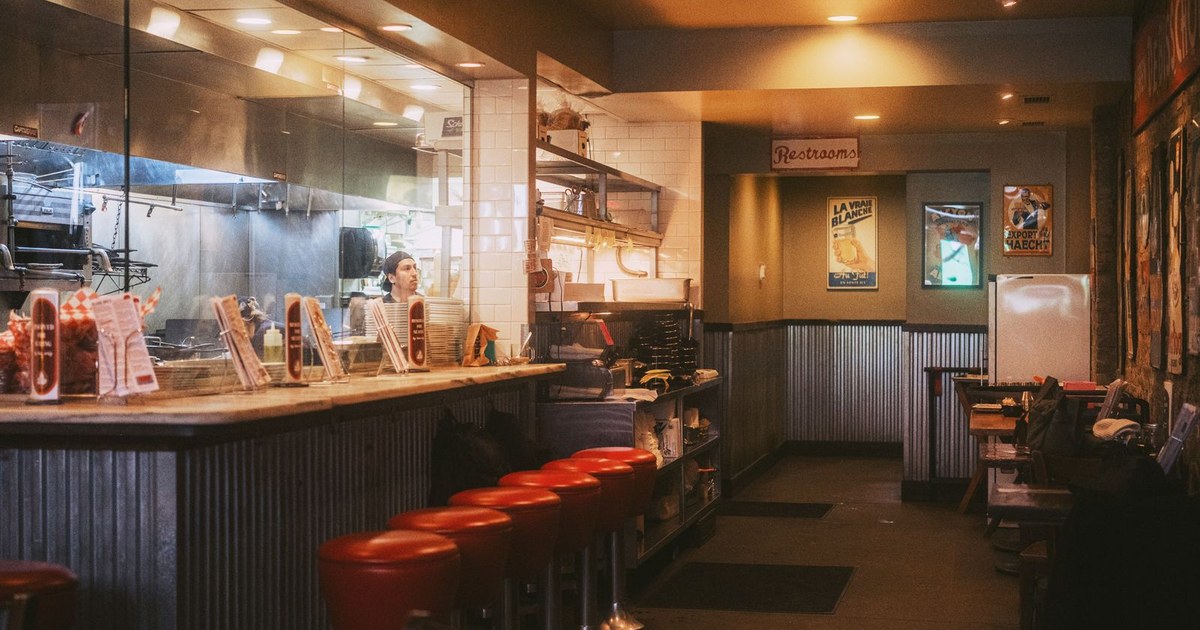
The Emperor of Gladness by Ocean Vuong, published by Penguin Press in May 2025 and chosen for Oprah's Book Club, is the novel this season's clubs will either love without reserve or argue about until the chairs are stacked, and both responses honor it. It opens on a bridge in East Gladness, a fictional Connecticut town of mills and highways, where Hai, a nineteen year old Vietnamese American college dropout in recovery from opioid addiction, is standing on the railing of King Philip's Bridge when an old woman's voice calls out from the riverbank below. Grazina is a Lithuanian widow in the early weather of dementia, living alone in a house full of her century, and the interruption becomes an arrangement: Hai moves in as her caretaker, telling his mother, who believes he is away at medical school, nothing true at all. Around that household the novel builds its second family, the crew of HomeMarket, a fast casual chain where Hai works reheating food engineered to taste like a Thanksgiving somebody's grandmother made. Vuong, the poet of On Earth We're Briefly Gorgeous, writes prose that behaves like poetry and a plot that behaves like weather. The questions below are paced for a book whose ending members will describe differently from one another, because the book intends exactly that.
How to Use This Guide
Run this meeting slowly, which is a deliberate instruction: Vuong's novel rewards readers who linger, and the leader should protect at least two passages to be read aloud, chosen by members in advance. The first two movements discuss the bridge, the household, and HomeMarket without pressing the ending. The third movement is fenced less for plot than for interpretation, since what members believe finally happens, and what it means, is the argument the book was built to start. Appoint one member to track the novel's lies, Hai's to his mother, Grazina's to time, HomeMarket's to its customers, because the book's ethics live in that ledger.
Who Is Who: A Two Minute Refresher
Hai is the center, nineteen, a dropout and a recovering addict whose tenderness and whose dishonesty are the same organ, and whose narration carries the novel in a voice pitched between confession and lullaby. Grazina is the widow on the riverbank, a Lithuanian immigrant whose dementia is dissolving a century of survival, Soviet occupation, emigration, widowhood, into a present tense she furnishes with whoever is in the room. Hai's mother is present mostly as the recipient of his lies, a woman working, worrying, and believing in a medical school that exists only in her son's reports home. BJ is Hai's manager at HomeMarket, an amateur wrestler building a second life in the ring with the same body the restaurant is using up in the first. The HomeMarket crew, dishwashers, cooks, and servers drawn from every diaspora the town contains, forms the novel's chorus and its warmest argument about what work can hold.
Movement One: The Bridge and the House
- The novel begins with an interrupted suicide and refuses every convention of the scene: no drama of rescue, just an old woman's voice treating a boy on a railing as a neighbor being foolish. What does that refusal establish about the book's whole method, its belief in how people are actually saved?
- The arrangement between Hai and Grazina is an exchange, shelter for care, struck between two people concealing the terms from everyone who loves them. How does Vuong write the ethics of that bargain so that it reads as mercy rather than exploitation, and where does the prose admit the danger inside it?
- Hai's lie to his mother, the medical school that does not exist, is the novel's foundational fiction, maintained in calls and visits with an artist's care. Before judging it, examine its craftsmanship: what does lying at this level cost him daily, and what exactly is he buying with it for her and for himself?
- Grazina's dementia is rendered from inside her century, her memories arriving with more reality than the kitchen she stands in. How does Vuong handle her consciousness so that she remains a person rather than a device, and which scenes give her an authority the sane characters cannot match?
Movement Two: HomeMarket
- HomeMarket sells reheated food dressed as home cooking, Thanksgiving flavor as a manufactured product, and Hai's job is to plate nostalgia he did not make. Unpack the metaphor the novel builds there: what is the difference, in Vuong's accounting, between feeding people and performing feeding, and who in the book does each?
- The crew sequences, the shifts, the jokes, the shared food and shared precarity, are the novel's happiest pages. What is Vuong claiming about workplaces as chosen family, and how does he keep the claim honest by pricing the labor, the wages, the bodies, in the same scenes?
- BJ's wrestling, a manager rehearsing glory in a ring while managing decline in a restaurant, could be played for pathos and is not. How does the novel distribute dignity among its workers' second lives, and what does BJ's ring have in common with Grazina's house and Hai's lies?
- Addiction runs under the middle chapters as weather rather than plot, Hai's recovery a daily condition rather than a cured past. How does Vuong write craving and abstinence so that they function as the book's bass note, and where does the HomeMarket's abundance of food answer it?
Movement Three: The Lies Come Due
Spoiler marker: everything past this line assumes the ending, including the fate of Hai's arrangement with Grazina and of his mother's belief.
- The household's arrangement cannot survive Grazina's decline, and the novel's closing movement tests what care actually obliges when the person cared for can no longer hold up her end of the fiction. Does Hai's conduct in the final stretch acquit him of the book's opening lie, or reveal what the lie was always for?
- Hai's mother and her medical school belief stand at the novel's moral center, offstage. When the truth's bill finally comes due, in whatever form each member believes it arrives, how does the book distribute the cost between the liar and the beloved he was protecting, and is that distribution just?
- Members will leave this book with different accounts of its final pages, what literally happens to Grazina, to Hai, and to the household on the river. Compare two accounts from the room. Is the openness a failure of plotting or the novel's thesis about how lives like these are known, partially, lovingly, and too late?
- Vuong came to the novel from poetry, and the prose keeps behaving like poems, images carrying arguments that scenes decline to make. Judged whole, does The Emperor of Gladness earn its method, a story about people the official record barely holds, told in the only register that could hold them? Or does the beauty ever stand where an explanation should be?
Closing Ritual
This novel is full of people feeding each other under false pretenses that turn out to be true ones. Close by asking each member to name one dish, real and specific, that has been used in their own life to say something that could not be said outright, in a single sentence. The room will eat well in imagination, and the exercise lands the book's central metaphor at the table where it belongs.
If Your Club Liked This One
On Earth We're Briefly Gorgeous, Vuong's first book, a novel in the form of a letter from a son to his illiterate mother, is the essential companion, and clubs will find Hai's lies to his mother prefigured there in their raw form. Martyr! by Kaveh Akbar gives the club another young addict narrator, an Iranian American poet in Indiana, funnier and more plotted, and the pairing produces the season's best argument about beauty and explanation. The Namesake by Jhumpa Lahiri offers the immigrant household in a classical register, a son, a name, and a mother's distance, for groups that want the theme at lower temperature.
Themes to Keep in Play
Care is the first theme, and the novel defines it against rescue: nobody in this book is saved in a single act, but several people are kept, fed, bathed, lied to kindly, and shown up for, and Vuong's argument is that keeping is the larger verb. A leader can reopen any slow stretch by asking what act of maintenance the current scene performs and who it is performed for. The second theme is the kind lie, which the book refuses to sort into virtue or sin: Hai's medical school, Grazina's rearranged past, HomeMarket's Thanksgiving, all fictions that feed someone, and the novel keeps asking what a lie costs the liar rather than the lied to. The third theme is the empire of the title, gladness as a small, defended territory, a house, a shift, a crew, held against a century that has done its worst to everyone inside it. The emperor of that territory, the book suggests, is whoever keeps the table set.
Running the Meeting: Timing and Trouble Spots
Ninety minutes, unhurried: ten for the refresher and the lies ledger, twenty five for the bridge and the house, thirty for HomeMarket, twenty for the fenced closing movement, five for the ritual, with two read aloud passages placed wherever the room's energy needs them. Trouble spot one is the plot audit, members prosecuting the novel's openness as unfinished business; the third movement's questions convert that frustration into the book's intended argument about partial knowledge. Trouble spot two is the beauty debate, whether the prose's lyricism honors its working class subjects or decorates them, which is a real argument with real evidence on both sides and should be given time rather than settled. Trouble spot three is addiction and dementia arriving as members' own family histories. The book will find them. Keep the discussion on Vuong's pages, let members pass freely, and let the closing ritual's food talk lower the room's temperature at the end.
Vuong's Method, in One Paragraph for the Leader
Vuong is a poet first, the author of Night Sky with Exit Wounds before he was a novelist, and his fiction keeps the poet's instruments: the image as argument, the sentence as breath, the scene arranged by association as much as by chronology. His first book was a letter to a mother who could not read it; this one is built around a son whose mother believes a letter he never sent, and leaders can use that continuity when the room asks whether the lyric method is decoration. In Vuong the style is the epistemology: people like Hai and Grazina are known the way poems know things, exactly and partially at once, and the novel's refusal of a settled ending is the method being honest about its object.
Scene Anchors: Five Pages to Argue From
First, the bridge and the voice from the riverbank, an interruption that establishes the book's whole theory of rescue in two pages. Second, the first evening in Grazina's house, the arrangement being struck among her furniture and her century, two strangers negotiating a household. Third, a HomeMarket shift at full stretch, the crew in motion and the reheated Thanksgiving going out like communion, the novel's happiest machinery. Fourth, BJ in the ring, the manager's second life at full dignity, the book's argument about workers' interior lives in a single set piece. Fifth, the closing pages behind the fence, where the household's account is settled in whatever currency each member believes the book finally uses. A room arguing from these five points will cover care, lying, and labor without flattening a strange and tender novel into its summary.
One Question for the Whole Evening
If the evening allows one question only, let it be this: who in this novel is telling the truth, and does the book think truth is the point? Hai lies to his mother and is the most honest narrator imaginable about everything else. Grazina's memory lies to her hourly and produces the book's wisest sentences. HomeMarket lies on every plate and feeds a town. The first movement shows lying as care, the second as labor, the third as inheritance. A room that can hold the paradox without resolving it has read Vuong the way Vuong asks to be read, and will leave arguing about gladness, which was the assignment.
More book club guides
Frequently asked questions
Is The Emperor of Gladness autobiographical?
It draws on Vuong's world, a Vietnamese American family in Connecticut, a mother's work, a son's queer and literary becoming, as his earlier books did, but it is a novel, with invented characters and a fictional town. Readers of On Earth We're Briefly Gorgeous will recognize the materials and should expect them transformed rather than transcribed.
Who is Grazina in The Emperor of Gladness?
An elderly Lithuanian widow living alone near the river in East Gladness, in the early stages of dementia, whose call from the riverbank interrupts Hai's suicide and whose house becomes the novel's center. Her century, Soviet occupation, emigration, America, is the book's deep background and its measure of survival.
Do these questions spoil the ending?
The first two movements discuss the bridge, the household, and HomeMarket. The third movement is fenced with a spoiler marker and covers the closing movement's events and meanings, which members reliably describe differently from one another. The fence protects interpretation as much as plot, so leaders should enforce it even in a room of finishers until the third movement opens.
What is HomeMarket in the novel?
A fictional fast casual restaurant chain selling reheated food engineered to taste like a home cooked Thanksgiving, where Hai works alongside a crew drawn from the town's many diasporas. The restaurant is the novel's second household and its central metaphor for the difference between feeding people and performing feeding.
How does The Emperor of Gladness compare with On Earth We're Briefly Gorgeous?
The earlier book is a letter novel, a son addressing his mother directly, shorter and more concentrated. The Emperor of Gladness is a full social novel built on the same materials, mothers, sons, work, and language, with a wider cast and a warmer center. Clubs often read them in sequence and argue about which form serves Vuong better.