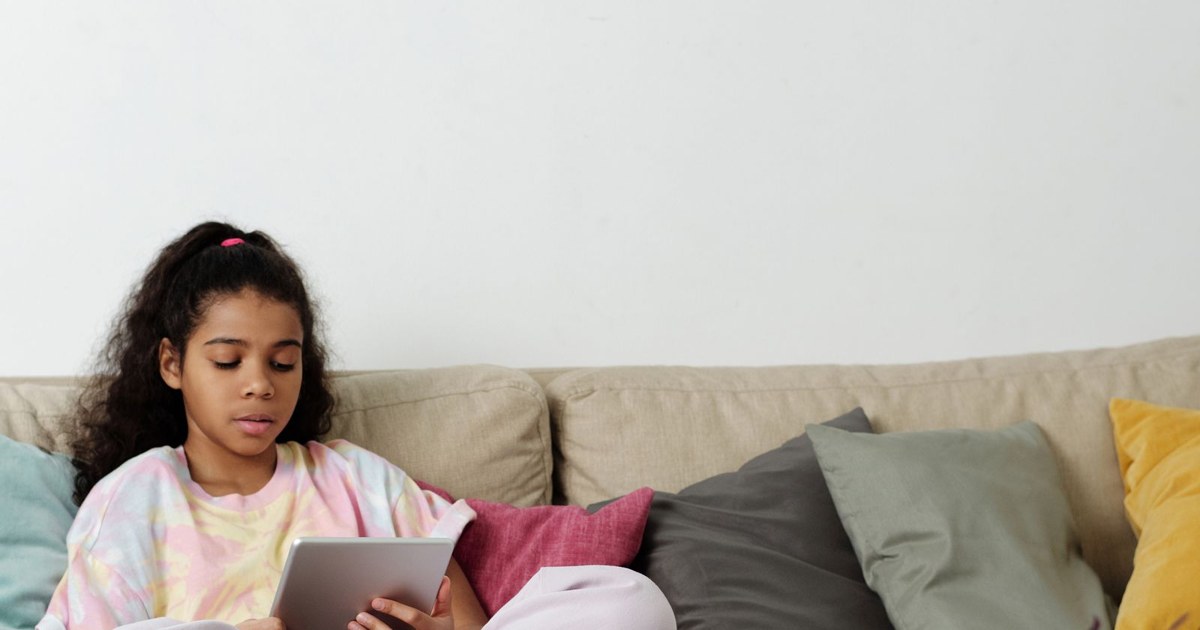
Kindle Unlimited is a borrowing library wearing a bookstore's clothes: a monthly subscription that lets a household borrow up to twenty eligible ebooks at a time and return them with a tap. For children's books, that model is close to perfect, because children burn through short books the way they burn through growth spurts. The catch is that the catalog is enormous, uneven, and different in every country, so the value is not in the subscription. It is in knowing what to borrow. The eight categories below are the reliable veins in the children's catalog, with the specific series and searches that consistently surface good books, plus the settings that keep a child inside the children's shelf and a parent inside the budget.
Before you borrow: the ten-minute setup
Three settings decide whether Kindle Unlimited works for a family or merely bills it. First, turn on the child profile or parental controls on the reading device, so browsing stays inside age-appropriate shelves and purchases require an adult. Second, learn the badge: books in the program carry the Kindle Unlimited mark on their store pages, and only badged books borrow free; everything else is a purchase waiting for an unwary tap. Third, decide the device. A tablet with the Kindle app gives color picture books their due, while an e-reader's grayscale screen serves chapter books well and picture books poorly. Picture book households should read on the tablet. Chapter book households can use anything.
The eight reliable veins in the catalog
1. Early reader series with deep backlists. Short leveled series are where the subscription pays for itself fastest, because a child reads one in a sitting and wants the next tonight. Search by reading level and series name, borrow in fives, and let the child graze. A month of early readers bought singly would cost more than the subscription; borrowed, they are the catalog's best arithmetic.
2. Picture books from established illustrators. The children's picture book shelf in Kindle Unlimited mixes classics that rotate through the program with a long tail of self-published titles of wildly varying quality. The reliable filter is the illustrator: search names your child already loves from print, and treat unknown titles as auditions, read together once before handing them over.
3. Chapter book series for ages six to nine. This band is the catalog's strength. Long-running series with dozens of volumes appear in the program regularly, and a child who finds one has reading material for a season. Borrow the first volume of three series rather than ten volumes of one, and let the child's sequel requests allocate the rest of your twenty slots.
4. Nonfiction for fact hunters. Animal books, space books, and record-style collections are abundant and often genuinely good, since facts age better than attempts at story. Children who resist fiction frequently devour these. Search by animal or topic plus the words for kids, and preview for reading level, because the band runs wide.
5. Read-along and audio-paired titles. Some Kindle Unlimited children's titles pair the ebook with narration, marked on the store page, so a child can hear the book while following the words. For emerging readers this pairing is the single most valuable feature in the program: it converts car rides and quiet time into reading practice without an adult performing.
6. Workbooks and activity books. Phonics practice, handwriting, and puzzle books appear in the catalog in quantity. They borrow as well as any title, which suits their nature, since a workbook's value is in a few weeks of use. Borrow these rather than buying, always, and return them when the unit is done.
7. Seasonal and holiday shelves. The catalog leans into every holiday with themed children's collections, and borrowing makes seasonal reading free instead of a yearly purchase of books that matter for three weeks. Build the habit of a holiday shelf refresh: it teaches children that reading has seasons, like everything else they love.
8. The first book of everything. Use the twenty slots as a tasting program. First volumes are the catalog's cheapest experiment: borrow widely across genres, note which three series produce sequel requests, and concentrate there. A household that treats Kindle Unlimited as a discovery engine with a small permanent core gets ten times the value of one that hoards borrowed titles it never opens.
Managing the twenty-borrow limit
Twenty sounds like plenty until a series reader borrows a shelf. The discipline that works is a monthly reset: once a month, return everything finished, keep only the current reads and the child's declared favorites, and refill the freed slots with first volumes and library holds that have not yet arrived. Finished books kept in the borrow list are the subscription equivalent of a library fine: pure waste. Teach the child the return ritual early, since the reader who manages her own borrows is also learning that books are a flow, not a hoard, and that lesson transfers directly to the public library.
Kindle Unlimited and the public library, side by side
The honest comparison flatters both. The library is free, curated by professionals, and stronger in award-winning picture books and new releases; its costs are holds, waits, and due dates. Kindle Unlimited is instant, bottomless in the series bands, and always open at 9 p.m. when a child needs the next volume; its costs are the subscription and a catalog no librarian filtered. Most reading households end up using both: the library for the canon and the new, the subscription for volume, series depth, and emergencies. If the budget forces a choice, keep the library habit and treat the subscription as a seasonal purchase, activated for summer and long holidays when reading volume peaks, and paused in the school year's busiest months.
Finding quality in an unfiltered catalog
The public library's children's shelf was chosen by professionals; Kindle Unlimited's was chosen by an upload button, and a parent browsing it needs the filters a librarian would have applied. Four signals separate the shelf's wheat quickly. Publisher: a recognized children's publisher or a named imprint beats an anonymous upload, every time. Reviews with specifics: praise that mentions the story's actual events outranks praise that mentions only cuteness and value. Previews that survive reading: open the sample and read three pages aloud; the books that fail, fail audibly, in rhythm and in sense. And series behavior: a quality series keeps its characters, reading level, and care consistent across volumes, while a content farm's volumes wobble in all three. Apply the four signals for a month and the catalog's geography becomes familiar: a reliable core of perhaps a few hundred titles your household trusts, surrounded by a tail you have learned to sample before serving.
Profiles, sharing, and the household rules
Set the subscription up as a household system rather than a personal one. Children's profiles on the family's devices keep each child's shelf, progress, and recommendations separate, which matters once two children share the twenty slots and opposite tastes. Agree the family rules in advance, in writing if the children are old enough to enjoy enforcing them: borrowed slots are shared property, finished books are returned at the monthly reset, and no one returns a book someone else is mid-way through without asking, an offense children police with gratifying severity. Where the subscription is shared between two adults' accounts through a household arrangement, confirm which account actually holds the borrows before a trip, since offline reading follows the borrowing account's devices. None of this is complicated, but all of it is easier decided at the kitchen table than at the airport gate.
A note on ages and stages inside the catalog
The catalog's children's section spans board books to young adult novels with no fence between them, and the browsing parent is the fence. Work by stage rather than by the store's broad children's label. For toddlers and preschoolers, restrict browsing to picture books you preview together, since this band of the catalog contains the most variable quality and the shortest books, which a small child exhausts in a week of bedtimes. For early readers, the leveled series shelf is the whole game, and the borrow limit should be spent there in bulk. For chapter book readers, first volumes and series depth, as described above. For readers nine and up, the catalog's middle grade band is rich but genuinely mixed in content maturity, so the preview habit should survive even as the child browses independently: agree that new authors get a parent preview of the first chapter, a rule children accept readily when it applies to the household's books generally rather than to their judgment specifically.
What your child keeps when a book goes back
A reasonable parental worry deserves a straight answer: when a borrowed book is returned, the reading position, highlights, and notes your child made are, in the ordinary course of things, preserved in the Kindle account's records and reappear if the book is borrowed again, though families should treat that as a convenience rather than a vault and copy out anything precious, a list of new words, a favorite passage for a school project, before returning a beloved title. The deeper keeping is elsewhere anyway. A child who has grazed forty borrowed books in a summer owns their combined effect permanently: the vocabulary, the story shapes, the knowledge that books are abundant and returnable and that her taste is a thing she is allowed to develop by trial. Kindle Unlimited's real product for a family is not any title in its catalog. It is permission to sample without penalty, which is the condition under which young readers find the books that make them readers.
The subscription's quiet second job: reading insurance
Families discover, usually on a trip, that the subscription has been doing a second job all along. A borrowed shelf of twenty titles, synced to a tablet, is reading insurance against every disruption childhood schedules: the delayed flight, the rained-out holiday, the sick day that begins at dawn with a child too miserable for school and exactly miserable enough for stories. Print books cover these hours too, but only the ones someone remembered to pack, in the right number, at the right levels, for the right children. The synced shelf is all of those by construction. This is not an argument for subscribing year-round; the earlier sections make the honest case that volume decides that question. It is an argument for timing: a subscription activated before the summer's travel and the winter's sick season earns its keep in hours that never appear in a finished-books count, the hours when a story was simply there, at 30,000 feet or at 3 a.m., because a parent had borrowed ahead.
Frequently asked questions
How many children's books can we borrow at once on Kindle Unlimited?
Up to twenty eligible titles at a time on one subscription, shared across the household's devices and profiles. The limit counts everything borrowed, including a parent's novels, so families that read heavily in both directions manage the list together. Returning a book frees its slot immediately, and there is no penalty or fee for returning books early and often.
Are the famous children's series on Kindle Unlimited?
Some are and some are not, and the roster changes as publishers move titles in and out of the program, which is why this guide recommends veins and searches rather than promising specific titles forever. Long-running chapter book and early reader series are the most consistently available band. Check the Kindle Unlimited badge on any title's store page before counting on it, and never buy a book you expected to borrow without checking the badge first.
Is Kindle Unlimited worth it for one child?
It depends on volume. A child reading a book a day, which is normal for early readers and series readers at their peak, makes the subscription cheaper than buying within the first week of the month. A child reading a book a week is better served by the free public library. The honest test is one month: borrow freely, count the finished books, and compare against their purchase price before the renewal decision.
Can my child read Kindle Unlimited books on a tablet we already own?
Yes. The Kindle app runs on ordinary tablets and phones, and a child profile or parental controls can keep browsing inside appropriate shelves. Color picture books look best on a tablet screen. An e-reader works well for chapter books but renders picture books in grayscale, which flattens exactly the art young children read by, so households with picture book readers should stay on the tablet.
What happens to borrowed books if we cancel?
Borrowed titles leave the library when the subscription ends, including any book a child is mid-way through, so finish or note the current series before canceling. Highlights and notes behave according to the usual Kindle rules, but the books themselves are rentals in the full sense. Families who pause for the school year often time the pause to a series ending, which is the cleanest break point.