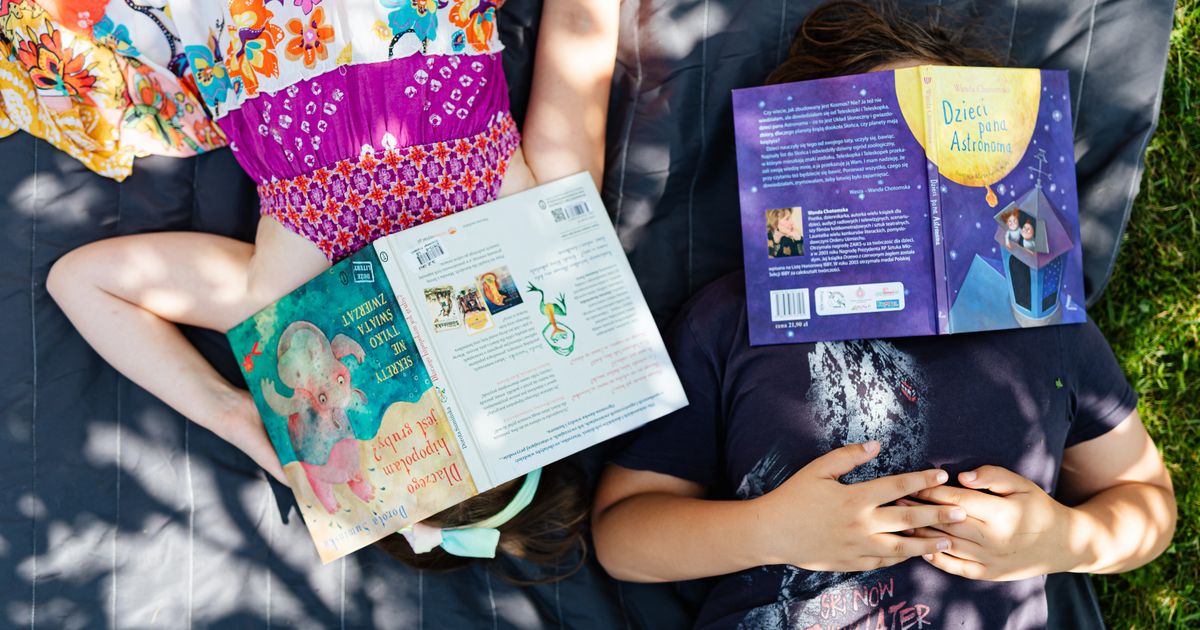
A kindergarten summer reading list has a different job from every other list on this site. The reader cannot yet read, so the list is really for the pair, the child on the lap and the adult doing the voices, and its goal is not coverage but habit: a summer of short, joyful, repeated reading that sends a child back to school in September loving books more than she did in June. The picks below are read aloud picture books chosen for that work, funny, tender, rhythmic, and built to survive the fortieth reading, which is the true test of any book for this age. A simple summer rhythm follows the picks, plus guidance on rereading, library trips, and the gentle art of stopping while the child still wants more.
How this list is built
Every pick is a real picture book by a named author, chosen for read aloud performance as much as for story. Five year olds listen with their whole bodies, so these books move: they chant, they accumulate, they pause for predictions, they end with a laugh or a hug rather than a lesson. Page counts in the table come from the publishers of the editions named, HarperCollins, Penguin Random House, Scholastic, Simon and Schuster, Hachette, and Candlewick among them, because a summer planned in sittings needs honest lengths. Page counts for picture books are given as the publishers list them for those editions, and the sitting estimates in this page count a sitting as one book read at a kindergartner's pace, with talk, which no page count alone predicts.
The picks: funny first
Dragons Love Tacos by Adam Rubin, illustrated by Daniel Salmieri and published by Dial, is the list's comedy anchor: dragons adore tacos, despise spicy salsa, and the catastrophe that follows a labelling error is told in a voice that makes adults laugh while performing. The Book with No Pictures by B. J. Novak, published by Dial, turns the reader into the joke, a book with no pictures at all that forces the grown up to say ridiculous things, and children request it with a glee that tells you everything about who holds power in a read aloud. Interrupting Chicken by David Ezra Stein, published by Candlewick, is the bedtime negotiation as literature: a little chicken who cannot let a story reach its sad part, interrupting every tale her father starts, which every parent in the room will recognize as documentary.
The picks: rhythm and rhyme
Giraffes Can't Dance by Giles Andreae, illustrated by Guy Parker-Rees and published by Orchard, gives the summer its rhythm text: Gerald the giraffe, knees crooked and legs thin, finds the music he can dance to, in rhymes that carry a reader who stumbles. Chicka Chicka Boom Boom by Bill Martin Jr. and John Archambault, illustrated by Lois Ehlert and published by Simon and Schuster, is the alphabet as a slapstick pile up, and a summer of it will quietly install letter names before school asks for them. Rhyme at this age is not decoration. It is prediction machinery: the child who can finish the line is already reading in the only way that matters yet, anticipating language before it arrives.
The picks: tender, for the end of the day
The Rabbit Listened by Cori Doerrfeld, published by Dial, is the list's heart: a child's block tower falls, a parade of animals offers fixes, and a rabbit simply stays and listens, which is the whole of its wisdom. Last Stop on Market Street by Matt de la Peña, illustrated by Christian Robinson and published by G. P. Putnam's Sons, takes a bus ride across a city with a grandmother who answers every complaint by finding the beauty in it, and it ends in a soup kitchen with the question of service raised so gently a five year old can carry it. Goodnight Moon by Margaret Wise Brown, illustrated by Clement Hurd and published by HarperCollins, closes the list and the day: the great green room, the ritual of naming and bidding goodnight, a book so familiar to so many families that reading it is less like reading than like singing the family song.
The picks at a glance
| Book | Author | Pages | Best moment |
|---|
| Dragons Love Tacos | Adam Rubin | 40 | Any time energy is high |
| The Book with No Pictures | B. J. Novak | 48 | When the adult is willing to be silly |
| Interrupting Chicken | David Ezra Stein | 40 | Bedtime, for negotiators |
| Giraffes Can't Dance | Giles Andreae | 32 | Rhyme and movement breaks |
| Chicka Chicka Boom Boom | Bill Martin Jr. and John Archambault | 40 | Alphabet play |
| The Rabbit Listened | Cori Doerrfeld | 40 | After a hard day |
| Last Stop on Market Street | Matt de la Peña | 32 | Slow evenings, big questions |
| Goodnight Moon | Margaret Wise Brown | 32 | The last book of the night |
The eight books add up to 304 pages in the editions named. Keep that total in the calculator below only as a curiosity for the adult; the real summer unit is the sitting, not the page.
The summer rhythm: little, daily, and stop early
Anchor reading to a moment that already exists, after breakfast, before bath, in the hammock after lunch, because habits attach to cues, not to intentions. Read one book from the list and let the child choose a second from the shelf, because choice is half the curriculum at five. Reread without apology: the request to hear Dragons Love Tacos for the ninth time is not a failure of variety but the deepest learning on offer, as the child moves from following the plot to performing it, correcting your deliberate errors, and finishing lines before you reach them. Stop while she still wants more, one book short of her limit, so that tomorrow's reading is approached hungry. Visit the public library weekly if you can, not to replace this list but to let her browse at her own height and carry home her own choices, however inexplicable, in her own bag.
Talking about books: the questions that are not a quiz
What a kindergartner learns from a picture book depends heavily on the talk around it, and the talk has a craft. Ask questions the book makes interesting rather than questions that test: what do you think happens next, asked at the page turn, teaches prediction, the earliest comprehension strategy there is. Ask her to find things in the pictures, the hidden detail, the character's face changing, because picture reading is real reading at five and Stein's and Robinson's illustrations reward it richly. Retell together afterward, badly on purpose sometimes, so she corrects you, because correcting a retelling is sequencing, memory, and confidence in one game. Above all, follow her questions rather than delivering yours: the five year old who asks why the grandmother in Last Stop on Market Street gives everything away has found the book's heart herself, and the adult's whole job in that moment is to wonder alongside her, not to explain. A summer of such talk, ten minutes a day, is a comprehension curriculum no worksheet matches.
When the summer wobbles: short attention, mixed ages, and screens
Real summers resist the plan, so build the plan to bend. For the child whose attention runs in minutes, shorten the unit rather than abandoning it: half a book now, half after lunch, is a complete success at five, and Stein's Interrupting Chicken, built from interrupted stories, is practically designed for her. For mixed age siblings, let the older child perform the funny books for the younger, Novak's above all, since reading aloud to a sibling is fluency practice disguised as power, and the kindergartner receives the story at a beloved voice's pace. For screens, refuse the war and use the calendar instead: reading anchored to a daily moment, after breakfast, before bath, does not compete with afternoon screens because it never meets them. And for the fortnight where everything collapses, travel, illness, visitors, keep only the last book of the night standing. Goodnight Moon has carried families through worse summers than yours, and a habit reduced to one ritual book for two weeks is a habit preserved, ready to grow again when the house calms down.
Building the wider summer shelf at the public library
This list is a spine, not a ceiling, and the public library is where the summer grows its ribs. Go weekly if life allows, and let the visit have a shape the child can learn: she chooses two books by cover alone, you choose one from this list's neighbours, and one book is a wild card from the nonfiction shelves, because five year olds' factual appetites, for volcanoes, diggers, sharks, and the body, are real and the picture book nonfiction written for them is superb. Ask the children's librarian for the shelf this list lives on; every library keeps its read aloud gold together, and a librarian who hears that a child loved The Rabbit Listened will hand you three more books in its family with an accuracy no algorithm has yet matched. Bring home the haul in her own bag, let her shelve it in the summer corner, and let the library books mix with the owned ones without ceremony. The distinction between borrowed and owned matters to adults. To the reader of five, a book is a book, and the summer's abundance is the lesson.
Keeping a summer record she can see
End the summer with something to show for it that is not a test. Keep the record physical and hers: a paper chain with a link for every book finished, grown across a doorway until August's chain touches the floor; a shelf photograph in June and another in September with the summer's pile stacked by her own hands; the library bag, retired with honours. Let her dictate the summer's verdict, favourite book, funniest page, the one she would give a friend, and write her words on the inside cover of the keeper copy. These artefacts do the work report cards cannot: they make a summer of listening visible to the listener as an achievement with her name on it. Then send her back to school with one owned book from this list in her bag for the first week's quiet moments, Goodnight Moon's calm or Rubin's laughter as her bridge, and the habit this list was built to install will cross the threshold with her, which was the point of the summer all along.
Choosing her own: the child's picks and why to honour them
One discipline governs the library trips this page prescribes: her choices count. The book she pulls from the shelf for reasons no adult can reconstruct, the cover, a dog's expression, a colour, goes in the bag beside your curated selections, every time, without a veto except for genuine unsuitability. The reasoning is developmental, not sentimental. Choosing is the first act of a reading life, the moment a book becomes hers rather than assigned, and children whose choices are honoured browse more, carry more, and finish more than children whose bags are curated for them. Her picks will sometimes be inexplicable and occasionally dire, a tie in of a toy, a joke book read to atoms, and both outcomes teach: the dire book, finished and judged by its owner, is a critic being born. Your list sets the summer's floor. Her choices set its ceiling, and summers, like readers, are remembered by their ceilings.
Running the list across a whole summer
Eight books is a gentle shelf, and the way a family paces them matters more than the order they are read in. One workable rhythm gives each book its own week, with the first reading early in the week and a return visit a few days later, because five year olds ask for the same book again precisely when adults are ready to move on, and that second reading is where the vocabulary and the jokes land. Keep the current book physically separate from the waiting ones, on a windowsill or beside the breakfast table, so the week's story stays present without becoming wallpaper. A simple paper chain or a row of stickers gives the summer a visible shape: one link per finished book lets a child watch the shelf turn into a chain, and the finished chain is a better souvenir than any log.
Library timing deserves one practical note. Place holds on the second half of the list in early July rather than all at once in June, so the books arrive spread across the summer instead of expiring together in a pile during the busiest weeks. If a title on the list is checked out everywhere, swap in another book by the same author rather than a random substitute; the voice stays familiar, which is half of what makes the list work at this age.
More reading lists
Frequently asked questions
How much should a kindergartner read over the summer?
A short daily sitting matters more than any total: one or two picture books read aloud, most days, with talk and rereading. The habit and the pleasure are the curriculum; volume takes care of itself.
Should my child be reading these books herself?
Not necessarily. Kindergarten summers are for listening, predicting, rhyming, and loving books. Some children decode early and may read parts; most are doing exactly the right work from the lap.
Is rereading the same book a problem?
It is the opposite. Rereading is how young children move from plot to language, memorizing lines, spotting print, and taking over the performance. Let the child choose the repeats and make your own mistakes for her to catch.
How do I keep summer reading from feeling like school?
Keep it short, funny first, anchored to a pleasant moment, and stop while she wants more. No logs unless she loves them, no questions that feel like a quiz, and let her choose at least half of what is read.
What if my child will not sit still for a whole book?
Shorten the sitting, not the standard. Read while she draws or builds, choose high energy books like Dragons Love Tacos, and stop mid book without drama. Stamina grows across the summer in minutes, not in lectures.