This page collects book club discussion questions for Good Dirt by Charmaine Wilkerson, published by Ballantine Books in January 2025, the second novel from the author of Black Cake. Good Dirt follows the Freemans, one of the few Black families in an affluent New England community, across two centuries of family history, from 1803 to the present day. At the family's heart sits Old Mo, a stoneware jar made by an enslaved potter ancestor and carried through generations as the Freemans' most treasured possession, until the night it was shattered, the night Ebby Freeman's older brother Baz was killed in the family's home when Ebby was a child. The adult Ebby, whose broken engagement has made her private grief newly public, retreats to France, and there, far from the town that watched her family for decades, the jar, the killing, and the question of what a family owes its own history begin to press on her together. The questions below run in three movements: the family and the jar first, then history and the house that held it, and only after a clearly marked spoiler line, the night itself and the ending. There are no model answers. Wilkerson built this novel out of what families display and what they bury, and a good meeting should dig in both places.
Before the meeting: how to run this one
Name the spoiler line out loud before the first question. Good Dirt is constructed like the jar at its centre, in pieces a reader assembles slowly, and members arrive at very different stages of assembly. The first two movements are safe for anyone who has read the opening movements of the novel and knows the family's public story. Protect the third movement absolutely. This is also a book where members' own family objects will enter the room whether invited or not, so invite them deliberately: ask each member to name, in one sentence at the start, the object their own family treats as irreplaceable, and let those objects sit on the table, in imagination, for the whole evening. The discussion of Old Mo will be twice as honest for it.
First movement: the Freemans and the jar
- The Freemans are wealthy, prominent, and watched. How does Wilkerson use the town's attention, admiring, envious, and suspicious by turns, to shape what this family can show and what it must hide?
- Old Mo is a working jar made by enslaved hands that became a family's crown jewel. What does the novel gain by placing its treasure in an object of labour rather than in land, money, or a portrait?
- Ebby grows up as the sister of a murdered brother in a house where the tragedy is both famous and unspoken. How does Wilkerson show grief being managed, by Ebby, by her parents, by the town, and whose management did you believe most?
- The jar's history reaches back to an enslaved potter whose name and skill survive only through the object. What is Wilkerson saying about how Black family history is preserved in America, and about what is lost when the archive is a thing rather than a document?
- Ebby's broken engagement exposes her to a public curiosity she has spent her life avoiding. Why does the novel need her private life to become gossip before its real story can start?
- Compare the Freemans' public story of themselves, success, dignity, endurance, with the private one the novel assembles. Where did the gap between the two move you most?
Second movement: history, the house, and France
- Wilkerson ranges from 1803 to the present, moving among generations. Which historical movement did your group find most necessary, and which character from the deep past stayed with you longest?
- The Freeman house is both a home and a stage: the family lives in it and performs itself inside it. How does the house shape the night at the novel's centre, and how does it shape everything the family does afterward?
- Ebby's retreat to France removes her from the town's gaze for the first time in her life. What becomes possible for her there, in love, in memory, in plain daily living, that New England never allowed?
- The novel is interested in who gets to tell a family's story: the family, the town, the press, the museum. Which teller does Wilkerson trust least, and did you agree with her by the end?
- Black Cake, Wilkerson's first novel, also turned on a family object and a buried history. Members who have read both: what is she refining here, and where does Good Dirt strike out somewhere new?
Pause here, before the spoiler line, and take up the objects members named at the start. Ask the room what their own families' Old Mo would be, and what its breaking would mean, and notice how the answers divide between the object's value and the story's. That division is the hinge of the novel's final movement, and a group that has felt it in their own lives will argue the ending properly.
Third movement: the night and the ending (spoilers)
Everything past this line assumes the book is finished. Announce it out loud. A member who has not reached the end deserves to meet these turns on the page rather than across your table.
- Return to the night Baz was killed and the jar was shattered. With the full account now assembled, whose version of that night does the novel finally stand behind, and what did Wilkerson make you revise from your first understanding of it?
- The shattering of Old Mo and the killing of Baz happen together, and the family thereafter treats the two losses in strikingly different registers. Why can the Freemans mourn the jar in ways they cannot mourn the boy, and what does that substitution cost each of them?
- Ebby's choices at the novel's close, about the jar's remains, about France, about what of the family story will be told and by whom: which choice did your group argue over hardest, and what does the argument reveal about what each member thinks an heirloom is for?
- Does the novel believe a family should repair its broken inheritance or learn to live among the pieces? Find the passage your group would cite for each answer, and test which reading the final pages support.
- The title names dirt: soil, clay, earth, and also gossip, scandal, the dirt on a family. Which meaning does the ending leave uppermost for you, and has the novel changed what the word carries?
The question to close on
Every family keeps something it cannot replace and tells a story it cannot fully verify. Close by asking each member, only as far as they are willing, what their family displays and what it buries, and whether the two are ever, as they are for the Freemans, the same object. Wilkerson's novel suggests that the displayed thing and the buried thing are usually one thing seen from two sides, which is why this book follows people home. If your club keeps a list of novels that turned a meeting into a family conversation, expect this one to be proposed for it before the evening ends.
If your club wants to go deeper: pairing and context
Clubs that finish Good Dirt hungry usually hunger in one of two directions. For the object as archive, pair the meeting with a short museum visit or a member's report on how institutions now handle objects made by enslaved artisans, whose makers were rarely named and whose work was long credited to owners. The discussion of Old Mo sharpens considerably once a room understands how many real jars sit in collections with their makers unrecorded. For the family thread, the natural companion is Black Cake itself, and clubs that read the two novels in sequence can watch a major novelist develop her central preoccupations, inheritance, secrecy, food and craft as memory, across two books. Neither pairing is required. The novel carries a full meeting on its own, and the hungriest groups are often the ones that simply stay with the jar.
Hosting notes: clay, food, and the second conversation
Host this one with the hands in mind. A pottery studio's seconds sale, a member's own thrown bowl as the table's centrepiece, or simply serving the evening's food from the oldest dish anyone owns gives the room a working object to think with. Keep the food unfussy and abundant, the kind of cooking families actually hand down, and if your club assigns roles, give one member the spoiler line as a spoken duty, announced twice, because this novel's pieces assemble late and the line protects real pleasure. Consider closing the meeting by asking who will keep the group's own record of the night, a photograph, a note, an object, since a novel about what survives deserves a meeting that decides, deliberately, what of itself will survive.
The potter's craft: what the room should know about Old Mo
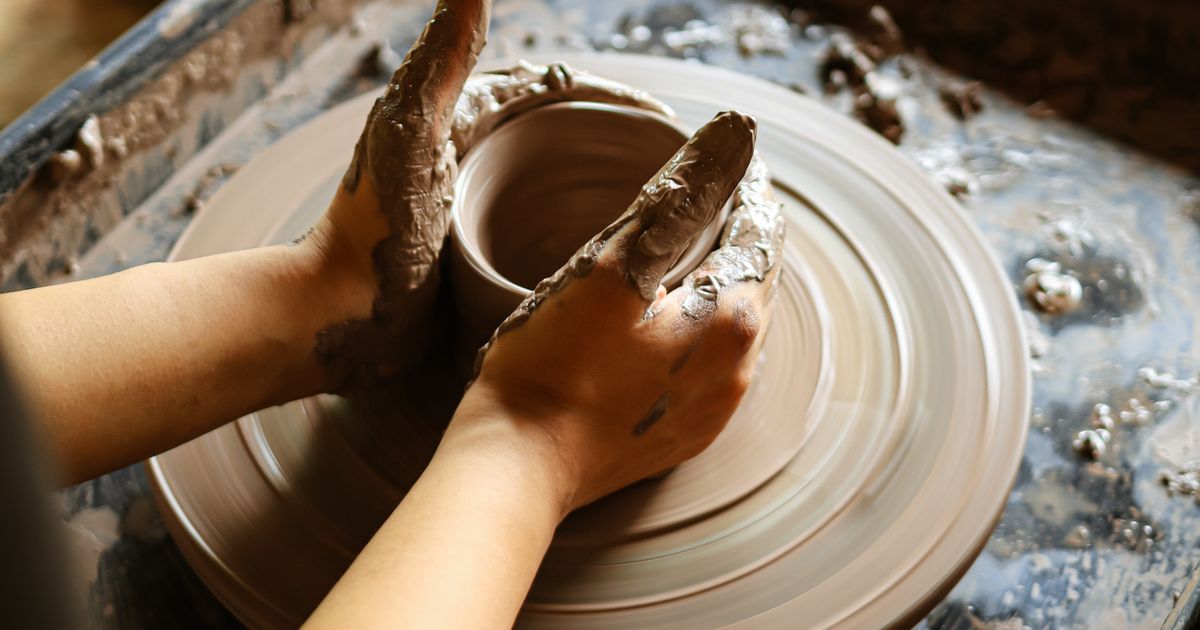
Give one member, before the meeting, the job of reporting briefly on the real tradition behind the jar: the stoneware pottery of the American South, including the alkaline glazed tradition of South Carolina's Edgefield District, where enslaved potters produced storage jars of remarkable size and skill, most unsigned, a few, most famously those of the potter known as Dave, later recognized as David Drake, bearing verses inscribed in the clay. A room that understands that real jars like Old Mo exist, that their makers were artists whose names were usually erased, and that such vessels now sit at the centre of museum rethinking about credit and ownership, will discuss Wilkerson's fictional jar with a steadiness that pure plot talk cannot reach. Keep the report to ten minutes and place it in the second movement, where the jar's deep history is the subject, and let members handle, if anyone owns one, any piece of handmade pottery at the table while it is given. Clay holds a room's attention the way paper cannot.
Whose story is it: museums, memory, and the Freeman inheritance
The novel's late questions about where the family's history belongs, in the house, in a museum, in the family's own keeping, deserve a movement of their own in any club with the appetite, because they are the questions American families and American institutions are actively negotiating. A museum offers preservation, scholarship, and a public, and asks in return for custody, interpretation, and the right to tell the story its way. A family offers continuity of meaning, the object still warm with use and memory, and risks fragility, dispute among heirs, and the slow loss of context as generations thin. Wilkerson refuses to make either custodian simply right, and your group should resist the refusal's opposite temptations: the sentimental answer that objects belong with blood, and the institutional answer that preservation outranks belonging. Ask instead what each custodian owes the maker, the enslaved potter whose hands are the reason anyone is arguing, and notice how rarely, in the novel and in the room, he is the first person the argument remembers.
A note on the title, for the member who always asks
Somebody in every club asks about the title, and Good Dirt rewards the question more than most. Dirt is the clay the potter worked, the soil of the family's New England ground, and the ground of graves; it is also what a community trades in when it gossips, the dirt on a family, and what an investigator digs for. Wilkerson's genius is to make the same substance carry the family's dignity and its scandal: the dirt that made the jar is the dirt the town throws, and the novel keeps asking which handling of it, the potter's or the gossip's, a family should answer. Spend five minutes on it in the first movement, before the plot thickens, and members will hear the word working for the rest of the evening, in the text and in their own contributions, which is what a title is for.
More book club guides
Frequently asked questions
What is Good Dirt by Charmaine Wilkerson about?
It follows the Freemans, a prominent Black family in New England, and Old Mo, a stoneware jar made by an enslaved ancestor and treasured for generations, after the night the jar was shattered and Ebby Freeman's brother Baz was killed. Ebby's retreat to France as an adult opens the family's buried history.
Is Good Dirt a sequel to Black Cake?
No. It is a standalone second novel, published by Ballantine Books in January 2025, though it shares Black Cake's preoccupations with family objects, buried history, and what children inherit without being told.
Can our club discuss Good Dirt if some members have not finished?
Yes, with the structure on this page. The first two movements use the family's public story and the jar's history. Only the third movement, behind the spoiler line, requires a finished book.
What are the main themes for discussion?
Inheritance and what objects carry, grief that is managed rather than spoken, the gaze of a community on a prominent Black family, whose telling of a family story counts, and whether broken inheritances should be repaired or kept as pieces.
Who are the central characters?
Ebby Freeman, who was a child when her brother was killed and the jar shattered, her parents, and the generations behind them, reaching back to the enslaved potter whose hands made Old Mo.