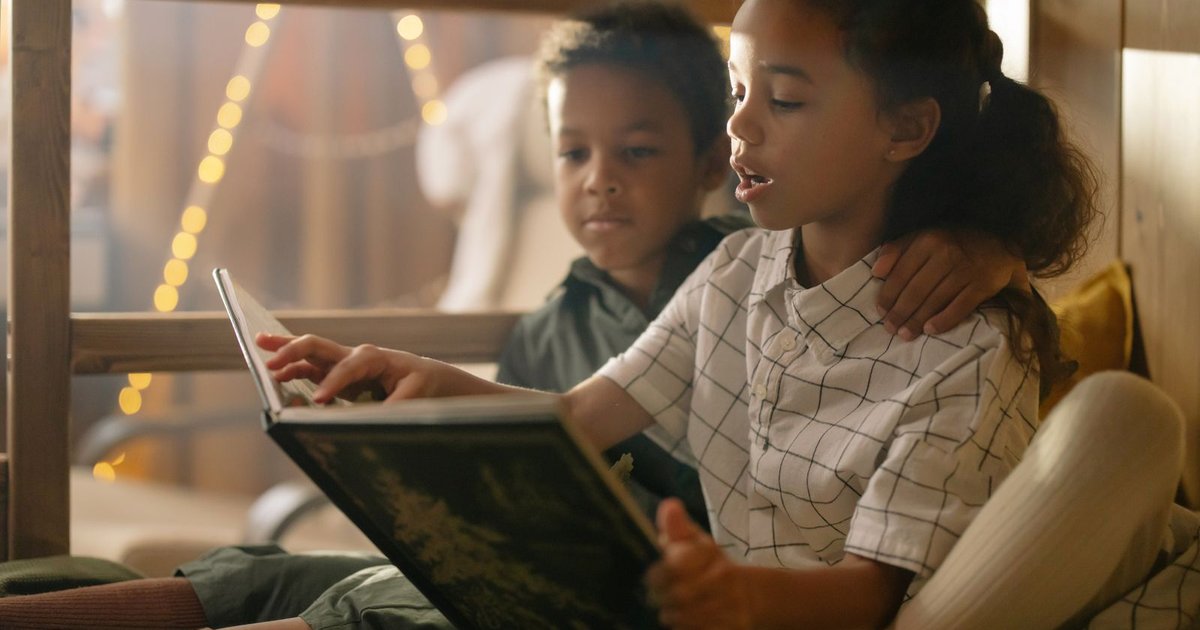
Second grade is the year the training wheels come off. A second grader can hold a plot across a week of bedtimes, follow two characters through a real problem, and finish a book of 150 pages feeling like a mountaineer. The mistake adults make is jumping from first grade series straight to the big middle grade shelf, skipping the rich band of chapter books written exactly for seven and eight year olds: longer chapters, smaller type, real stakes, and illustrations that support rather than carry. This guide lists chapter books for 2nd graders by series, with each opener's author, year, and page count for the edition named, organized from the gentle end of the band to the first true novels.
The list at a glance
| Series opener | Author | Year | Pages | Best second grade reader |
|---|
| Mercy Watson to the Rescue | Kate DiCamillo | 2004 | 80 | The reader finishing first grade favorites |
| Dragon Masters: Rise of the Earth Dragon | Tracey West | 2014 | 90 | The reader who wants a quest with training wheels |
| The Princess in Black | Shannon Hale and Dean Hale | 2014 | 96 | The reader who still wants color on every spread |
| Zoey and Sassafras: Dragons and Marshmallows | Asia Citro | 2017 | 96 | The young scientist |
| The Kingdom of Wrenly: The Lost Stone | Jordan Quinn | 2014 | 128 | The gentle fantasy reader |
| Ivy and Bean | Annie Barrows | 2006 | 136 | The friendship and mischief reader |
| The Mouse and the Motorcycle | Beverly Cleary | 1965 | 158 | The reader ready for a classic |
| Charlotte's Web | E. B. White | 1952 | 184 | The reader ready for a real novel |
| Ramona Quimby, Age 8 | Beverly Cleary | 1981 | 190 | The reader who loves a funny, true school story |
| The Wild Robot | Peter Brown | 2016 | 279 | The strong reader ready to leap |
Page counts are for these editions: Candlewick Press for Mercy Watson and Princess in Black, Scholastic Branches for Dragon Masters, Little Simon for Kingdom of Wrenly, Chronicle Books for Ivy and Bean, Innovation Press for Zoey and Sassafras, and HarperCollins for The Mouse and the Motorcycle, Charlotte's Web, Ramona Quimby, and The Wild Robot's publisher Little, Brown. Years are first publication years. Page counts follow the same publisher edition convention used across this site.
The bridge shelf: second grade's home base
Dragon Masters is the series second grade teachers reach for first, and its design explains the loyalty: 90 page volumes, a chapter book's structure with an early reader's support, and a premise, ordinary kids chosen to train dragons at a king's castle, that makes a seven year old feel the story is about them. Rise of the Earth Dragon opens the series with Drake, a farmer's son, and Worm, the dragon nobody else wanted, and the volumes escalate gently in length and stakes. Mercy Watson and Princess in Black remain home base books in second grade even though strong first graders can read them: rereading a loved series at a new level of fluency is not standing still, it is where expression, voices, and speed are built. Zoey and Sassafras earns its place on the bridge shelf for a different reason: its science is real. Zoey's hypotheses sometimes fail, her notebook matters, and the series quietly teaches a second grader that being wrong on paper is part of finding out, which may be the most valuable lesson any book on this page delivers.
The friendship and funny shelf
Ivy and Bean is the friendship series of the band: two girls who were never supposed to be friends, one quiet and one a force of nature, generating schemes that fill 136 pages with the exact social weather of second grade. Annie Barrows writes mischief with consequences but without cruelty, and the books are funny in the way second graders are funny, which adults underestimate at their peril. Ramona Quimby, Age 8 is the shelf's masterpiece and the funniest true book here: Ramona's family is short of money, her father is back in school, her mother works full time, and Beverly Cleary turns an egg cracked on a head and a silent reading period into literature. A second grader can read it alone by spring; a second grader who has it read aloud in autumn will ask for it again alone, which is the ideal sequence. The Mouse and the Motorcycle completes the shelf with a different Cleary register: a mouse, a toy motorcycle that runs on the sound pb-b-b-b, and a boy in a hotel room, a fantasy so domestic it feels like a secret the reader's own house might hold.
The first true novels: Charlotte's Web and The Wild Robot
Charlotte's Web is where second grade ends and reading begins in earnest. At 184 pages with chapters that assume stamina, it asks a young reader to hold Wilbur's danger across weeks and to sit with an ending that does not rescue everyone. E. B. White's sentences are the finest prose on this page, and children hear it even when they cannot say it: the book sounds like truth. Send a second grader here when the bridge shelf is being finished in a night or two, and expect the ending to need a conversation; that conversation is not a problem with the book, it is the book working. The Wild Robot is the modern leap: 279 pages, a robot surviving on an island by learning from animals, in chapters so short and propulsive that a strong second grader can finish it in a week of bedtimes. Peter Brown's Roz asks the questions this age group is secretly asking, about kindness as a survival strategy and what a parent is, and the sequels wait for the reader who finishes hungry.
Placing your second grader on the shelf
Use the finish test. A second grader finishing a Dragon Masters volume in two sittings and asking for the next is placed correctly; the same child laboring over The Wild Robot for a month is not behind, they are misplaced by one shelf, and the fix is a step sideways into Kingdom of Wrenly or Ivy and Bean, not a push forward. Keep two books running all year: one series book the child owns, and one stretch book shared with an adult, read aloud or in turns. The stretch book is where vocabulary and stamina grow fastest, precisely because the adult carries the hard parts. The checklist on this page lists all ten openers in shelf order, so a family can mark a child's progress across the year from bridge to first novels without ever making the child feel measured.
Nonfiction and graphic novels: second grade's second engine
Second grade runs on two engines, and series fiction is only one of them. The second is the paired pull of nonfiction and graphic novels, which catch the readers fiction misses and feed the ones it holds. Nonfiction at this age means the browsable kind: animal records, disaster and rescue accounts, space and dinosaur compendiums with captions doing the teaching, read in any order and abandoned mid chapter without penalty. Its skill is different from fiction's and just as real: a second grader who can work a table of contents, read a caption against its photograph, and find a fact they came for is doing research in embryo, and teachers can spot these readers by October. Graphic novels are the other half of the engine: Dog Man and its kin, at 240 pages of panels, demand sequencing, inference, and stamina, and they convert more reluctant second graders than any prose series on this page. Run the two engines together deliberately. A week that contains a Dragon Masters volume, a graphic novel, and twenty minutes inside a shark compendium is a complete second grade reading diet, and the child living on it is not behind the fiction only reader; by every measure teachers trust, they are ahead.
The second grade library visit, run like a professional
Teach a second grader to work a library and you have built a reader who can feed themselves. The professional visit has a route. First, the returns, performed by the child, because the ritual of giving books back is what makes the collection feel like a system rather than a shop. Second, the series shelf, for the next volume of the current world, found by the author letter the child has learned to navigate. Third, one browsing shelf only, chosen in advance, animals this week, jokes next, because a seven year old turned loose on the whole children's floor will browse forever and choose nothing. Fourth, the librarian question, rehearsed in the car: I finished this, what do readers like me read next? Second graders who ask that question receive, over a school year, a personal education from the best recommendation engine in the building. End every visit with the child carrying their own card and their own pile. Ownership of the process is the curriculum; the books are its homework, and the checklist on this page, ten openers in shelf order, is the map the visits will gradually cover.
When second grade reading stalls
Stalls at seven and eight have signatures, and each signature points to its fix. The child who reads willingly but retains nothing is usually decoding at the edge of capacity, spending every resource on the words and keeping none for the story; the fix is a step sideways to a more illustrated series and a richer read aloud diet, not comprehension questions after every chapter, which teach a child that books are interrogations. The child who finishes everything instantly and remembers it all is under placed, a happier problem, cured by Charlotte's Web or The Wild Robot and a librarian told to stretch them. The child who will not start is the commonest case and the most misread: starting friction at this age is usually about the size of the commitment a new book represents, and the cure is structural, a series already loved, a graphic novel's easy entry, a first chapter read aloud by an adult who then becomes mysteriously busy. Diagnose by signature, fix the structure, and keep the child's identity as a reader out of the conversation entirely; at seven, that identity is still wet cement, and every adult sentence about it sets.
One more habit pays for itself all year: the two chapter preview. Before a second grader commits to a new series, read the first two chapters together, aloud or in turns, and let the child deliver the verdict with the book still returnable to the library pile without ceremony. Two chapters is the honest sample size at this age, long enough for the world and the voice to declare themselves, short enough that abandoning costs nothing. Series chosen this way have a finish rate adults consistently underestimate, because the child was a party to the choosing.
End the second grade year with one deliberate ritual: reread the first book of the year, the Dragon Masters or Mercy Watson that felt like a mountain in September, sometime in the last week of school. It will take an evening. The child will notice the print has somehow grown larger, and in that moment they will understand, in their hands, what a year of reading did. No report card says it better.
More series and chapter book guides
Frequently asked questions
What are the best chapter books for 2nd graders?
Dragon Masters for the bridge into chapter books, Ivy and Bean and Ramona Quimby, Age 8 for friendship and humor, and Charlotte's Web and The Wild Robot for the first true novels. The ten openers on this page run 80 to 279 pages and cover the whole second grade year.
How long should a 2nd grader's chapter book be?
Most of the year, 90 to 160 pages is the working band: Dragon Masters at 90, Kingdom of Wrenly at 128, The Mouse and the Motorcycle at 158. Strong readers reach Charlotte's Web at 184 and The Wild Robot at 279 by spring. Finish rate matters more than the number.
What comes after Dragon Masters?
The Kingdom of Wrenly for more fantasy at 128 pages, or Magic Tree House's later volumes, and then The Wild Robot as the first long novel. Dragon Masters itself also continues for many volumes with slowly rising length, so a happy reader can simply stay aboard.
Should a 2nd grader read Charlotte's Web alone?
By spring, many can, and it is a milestone worth celebrating. Earlier in the year it makes a perfect shared book: the adult reads the hard chapters, the child reads the barnyard talk, and the ending gets the conversation it deserves. Either route delivers the book whole.
How do I know if a book is too hard for my 2nd grader?
Watch the finish rate and the retelling. A child who finishes books and can tell you what happened is placed right. A child who stalls for weeks, skips pages, or cannot say what the story is about needs a step sideways to a shorter or more illustrated series, which is placement, not failure.