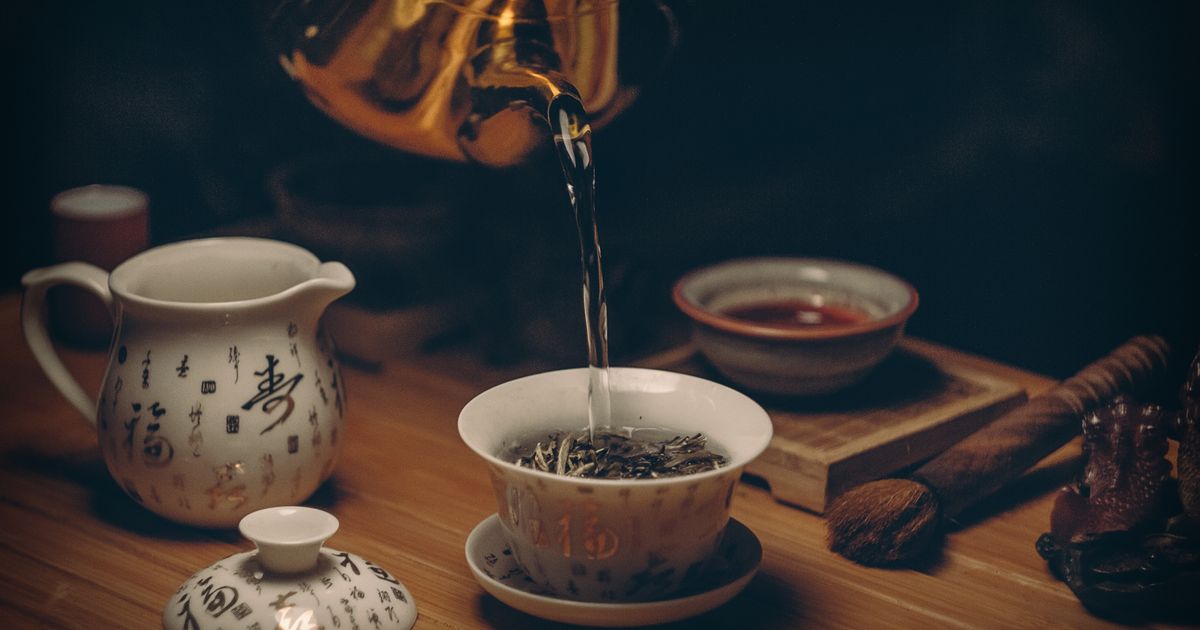
Vera Wong's Unsolicited Advice for Murderers by Jesse Q. Sutanto opens with a routine: a widowed tea shop owner in San Francisco's Chinatown, up before dawn, one regular customer, a son who lives too far away and calls too rarely. Then she comes downstairs and finds a dead man on her shop floor, and the routine becomes an investigation she appoints herself to run. This guide follows the shape of that takeover: a spoiler-free warm up, the suspects grouped by what Vera gives each of them, the tea and food that do the real work, and the ending held behind one warning.
Berkley published the novel on March 14, 2023, and Penguin Random House lists it at 352 pages. Sutanto, the author of Dial A for Aunties, writes Vera as a deliberate inversion of the cozy sleuth: where the genre's amateurs are usually diffident, Vera is a occupying force, and where they stumble on clues, she manufactures them by feeding people. A note on shape before you start: this guide keeps the novel's own social order, gathering the suspects around Vera's table rather than marching them past in a line, because the book's mystery is solved, insofar as it is solved, by hospitality rather than detection.
How to Use This Guide
Pour tea if your room is willing; this meeting runs on it. The warm up questions are safe for anyone who has met Vera and found the body, which happens early. The suspect questions and the section on mothers and sons assume the middle of the book, where the four suspects have each been fed, mothered, and partially cleared in Vera's mind if not in fact. The reveal section sits behind the spoiler marker and discusses the killer's identity and Vera's private justice. One caution that matters here more than in most mysteries: several members will have guessed the ending from the suspect table alone, so the leader should take a show of hands on finished status before the marker, not after.
Before the meeting: who is who
Vera Wong is the detective, a woman in her sixties who runs a tea shop that is grandly named and nearly empty, and who treats other people's lives as problems she is qualified to fix. Marshall Chen is the dead man, whose body Vera finds in her shop and whose flash drive she quietly takes from his hand. Julia is Marshall's wife, left with a small daughter and years of being belittled. Oliver is Marshall's twin brother, who grew up in the shadow of the favoured son. Riki and Sana are the two younger suspects Marshall cheated in business, one a programmer, one an artist. Alex is Vera's friend and only regular customer, the man who comes in daily to talk about his favourite son. Tilbert, called Tilly against his wishes, is Vera's son.
Warm up, no spoilers
- Vera is regimented, opinionated, and interfering, and also lonely and loving. Did you love her, or find her a meddlesome bulldozer, and how did that verdict steer your reading?
- Vera decides she will solve the case better than the police and pockets a piece of evidence. Where is the line for you between a charming amateur sleuth and a person obstructing an investigation?
- The story alternates among five points of view: Vera and her four suspects. What does the rotation give the mystery that Vera's eyes alone could not, and did any voice change how guilty its owner looked?
The suspects, and what Vera feeds them
- Each suspect had a real reason to hate Marshall. How does the novel complicate the difference between a good person and a bad one once you know what each was carrying?
- Vera investigates by cooking. She serves tea, makes meals, and mothers four people she officially suspects of murder. At what point does her investigation stop being an investigation and start being a rescue, and does she ever notice the change?
- Tea and food run through the book as comfort, ritual, and Vera's language for what she cannot say plainly. Which meal or cup of tea did the most work, and what was it really saying?
| Suspect | What Marshall did | What Vera gives them |
|---|
| Julia | Belittled her and walked out | Belief that she is capable |
| Oliver | Scapegoated him as the bad twin | A hearing at last |
| Riki | Cheated him over programming work | A family far from home |
| Sana | Stole the value of her art | An audience that takes her seriously |
Mothers, sons, and unsolicited advice
- Vera's advice is the title and the engine of the book. She dispenses it to suspects, to strangers, and in a steady stream to her son, who mostly ignores it. Is her advice mainly for the people receiving it, or is it how Vera repairs something in herself?
- Vera and Tilly love each other across a gap of distance and expectation. Whose account of that gap did you trust more, and did the book ask you to pick a side?
- By the middle of the book the suspects have become something like a family. What does the novel claim a family actually is: the people assigned to you, or the people who keep showing up at your table?
Spoilers begin here
Stop if you have not finished. The questions below discuss the ending directly.
Spoiler marker: everything past this line assumes the ending, so anyone protecting the last chapters should stop here and take the closing ritual instead.
The reveal and the last pages
- The killer turns out to be Alex, who learned late that his golden son Marshall was cruel and dishonest, and who served him tea carrying the allergen that killed him. Did the clues earn that reveal?
- Vera's idea of justice is not the legal system's idea. She protects people she has decided are hers, even when protection means keeping secrets from the police. Does the ending endorse her justice, excuse it, or quietly judge it?
- The title calls Vera's advice unsolicited. By the last pages, is it still unwanted? What does the novel finally argue about intervening in other people's lives before they ask you to?
Timing the Tea Service
Vera would insist the tea arrive on a schedule, so give it one. Pour the first cup as the warm-up begins, because a table with full cups talks more freely. Hold the second pour for the moment the spoiler marker passes; a small ceremony at the threshold tells the room the conversation is changing register. Save the last of the pot for the closing ritual, and let whoever makes the final point of the night also make the final pour.
Closing Ritual
End with the teapot, as the book insists. Ask each member to name one piece of advice they once received unasked, resented at the time, and later used, and to say who gave it, in a single breath. Then let the giver's side have its due: ask for one piece of advice each member has given that was ignored and should not have been. The two rounds together reproduce Vera's whole moral position, that intervening in other people's lives is presumptuous and indispensable at once, and the room will leave arguing about their own examples in the parking lot, which is where this novel wants its readers.
If Your Club Liked This One
Dial A for Aunties by Jesse Q. Sutanto (2021). A wedding photographer, a corpse, four meddling aunties, and a resort wedding that must go on. Read it for Sutanto's other great engine of family interference, funnier and faster than Vera, with the same conviction that aunties are a force of nature.
Finlay Donovan Is Killing It by Elle Cosimano (2021). A struggling novelist and single mother is mistaken for a contract killer and decides the money is too useful to refuse. It pairs with Vera on an amateur investigator whose real skills are domestic, and on crime as a solution to a cash flow problem.
Killers of a Certain Age by Deanna Raybourn (2022). Four retired assassins, all women in their sixties, are marked for death by their own agency. Choose it if your group loved Vera's competence most, and wants older women underestimated at everyone's peril for a second evening.
Themes to Keep in Play
Investigation as hospitality. Vera's methods are meals, errands, and unsolicited care, and the novel keeps asking whether those are detective techniques or simply what detection looks like when a woman does it with her actual skills. Test each breakthrough against that question.
The golden child ledger. Marshall was favored, funded, and forgiven in advance, and the book prices that favoritism across four damaged lives. Whenever a suspect's wound is discussed, ask who signed it.
Justice versus rescue. Vera protects her people from the legal system she claims to be assisting. Keep the two verbs separate in discussion, because the ending's warmth depends on blurring them, and the group should notice the blur even while enjoying it.
Running the Meeting: Timing and Trouble Spots
Ninety minutes is plenty, and two hours is comfortable if food appears. The warm up takes twenty minutes, the suspects and the mothers sections forty between them, a break for refills, then thirty behind the spoiler marker, and ten for the closing advice rounds. Trouble spots: first, the suspect table in this guide is a map, not a verdict sheet; keep members from treating Vera's gifts column as a clearance list. Second, Oliver's storyline, the unfavored twin, can pull the room into family confession; welcome it briefly, then return to the text, where Sutanto has already said the hard things funnier. Third, the reveal raises a genuine poisoning method and a real allergen; discuss the ethics the book raises, Vera's protection racket of love, rather than the mechanics, which deserve no airtime at all.
The Detective Who Cooks, in One Paragraph for the Leader
Leaders should name Sutanto's trick early: Vera solves the case by accident while succeeding at her actual project, which is assembling a family. Her detection is mostly wrong in method and right in direction, because feeding four suspects turns them into witnesses against loneliness rather than against each other, and the one person her hospitality cannot reach is the one it never occurs to her to feed as a suspect. That blind spot is the novel's design, not its flaw. Frame the evening around reach: whom does Vera's care extend to, in what order, and who stands outside the circle receiving only her courtesy? The reveal then reads as a failure of hospitality's intelligence rather than a twist for its own sake, and the ending's justice, Vera protecting her new family from the law, becomes the same force with its sign reversed: care that includes by excluding, all the way down.
Scene Anchors: Five Pages to Argue From
The body on the shop floor. Vera finds Marshall before the police find anything, and pockets evidence as naturally as she makes tea. Anchor every claim about her methods here, where charm and obstruction are the same gesture.
The flash drive. A dead man's secret passes into a teapot shaped keeping. Use it whenever the room debates whether Vera is helping the investigation she keeps raiding.
The first suspect dinner. Four people who hated the same man eat at their interrogator's table and begin, visibly, to thaw. It is the book's method in one scene.
Alex's daily visits. A lonely regular talks about his favorite son to the only person who listens. Return here in the final movement, when courtesy's limits become the plot.
The last tea service. Vera's justice is administered socially rather than legally. End the spoiler talk inside it, weighing warmth against law without pretending they reconcile.
One Question for the Whole Evening
If the room needs one governing question, ask this: whom does Vera's care fail to reach, and why those people? List her circle in order of admission, suspects, son, regulars, strangers, and notice where the line hardens. The novel's mystery, its comedy, and its quiet sadness all live on that border, and a group that can draw Vera's circle accurately has understood the book better than a group that merely guessed its killer.
More book club guides
Frequently asked questions
What is Vera Wong's Unsolicited Advice for Murderers about?
Vera Wong, a widowed tea shop owner in San Francisco's Chinatown, finds a dead man in her shop one morning and appoints herself the investigator. Her method is to feed and mother the four suspects, a widow, a twin brother, a programmer, and an artist, until the truth surfaces among the meals.
Who is Vera Wong?
She is Sutanto's detective: a woman in her sixties, regimented, opinionated, lonely, and loving, who runs a nearly empty tea shop, dispenses advice to everyone including her distant son Tilly, and treats other people's crises as her natural jurisdiction.
When was Vera Wong's Unsolicited Advice for Murderers published?
Berkley published it on March 14, 2023. Penguin Random House lists the book at 352 pages.
Does this guide spoil the ending of Vera Wong's Unsolicited Advice for Murderers?
The warm up, suspect, and family sections do not. Only the final section, behind a clear spoiler marker, names the killer and examines the private justice Vera arranges afterward.
Is Vera Wong's Unsolicited Advice for Murderers a good book club pick?
It is a reliable crowd pleaser with a real argument inside the comedy. Expect the best talk around Vera herself, loved or loathed, and around whether her protection of her new family is the book's happy ending or its quiet indictment.