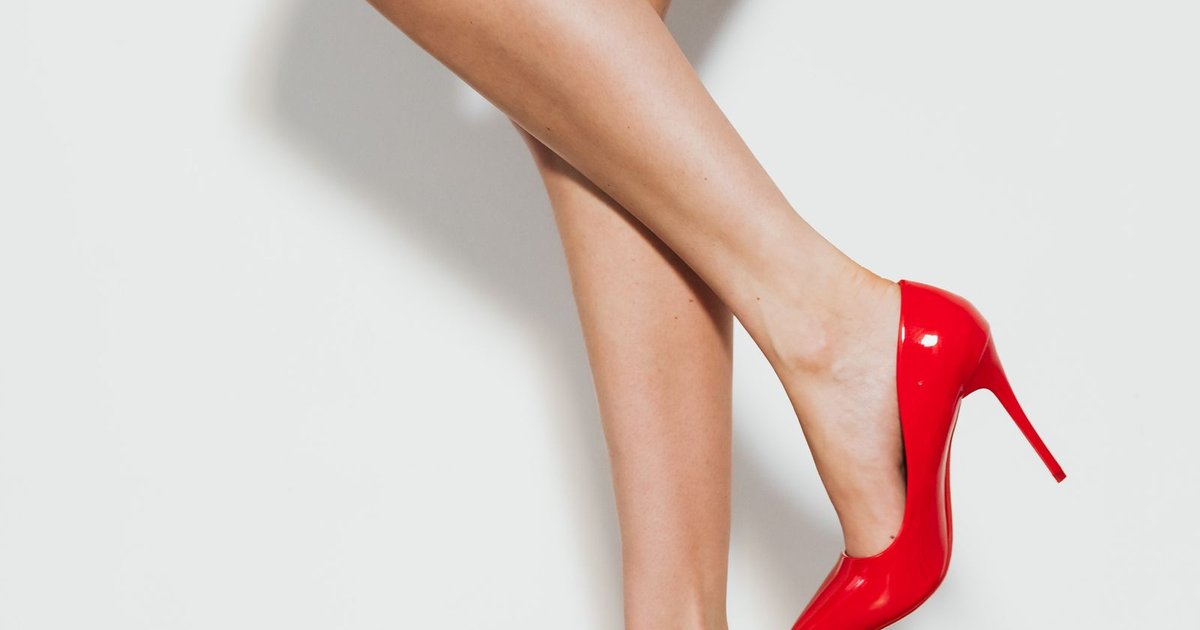
Someone Else's Shoes by Jojo Moyes, published by Pamela Dorman Books in 2023, is a comedy about two women in their forties whose lives collide through a gym bag. Sam, who works at a printing company where her job feels less secure each quarter, supports a household that includes a husband, Phil, sunk in depression after losing his own work, and parents who need her in the other direction. Nisha, the glamorous American wife of the wealthy businessman Carl, lives out of a London hotel penthouse in designer clothes she treats as armor. When Sam picks up the wrong gym bag, she finds a Chanel jacket and a pair of red crocodile Christian Louboutin shoes, and discovers, wearing them to a meeting she cannot afford to lose, that the world treats the woman in those shoes as a person worth hearing. Nisha, meanwhile, is cut off by Carl without warning, locked out of the penthouse and her own accounts, and takes the only work available to her: cleaning rooms in the hotel she used to command. This guide sequences the meeting in three movements: the swap, work and marriage and middle age, and, behind the spoiler marker, the ending for both women.
How to Use This Guide
Comedy first, but do not let the room mistake lightness for shallowness; this book's subjects are invisibility, money as control, and what women in their forties are permitted to want. The first movement covers the bag swap, Sam's borrowed confidence, and Nisha's fall down the service stairs, and it is safe for readers in the opening third. The second movement takes up Phil's depression, Carl's financial weaponry, and the friendships, Andrea's and Jasmine's, that actually hold these women up, and it assumes the middle chapters. The third movement, past the spoiler marker, handles the temptation in Sam's story, Nisha's son Ray, and the final act of restitution. An opening prompt works well for this title: ask everyone to arrive ready to name one garment that once changed how a room received them, because nearly every member has such a story and it tunes the room to the book's frequency at once.
Who Is Who: A Two Minute Refresher
Sam is the overstretched center of her family's gravity, an accounts and sales worker at a print firm, a wife managing her husband's depression, a daughter managing her parents, and a woman who has become invisible in every room she maintains. Nisha is Carl's wife, sharp, proud, frequently unkind, and absolutely unwilling to narrate herself as a victim even when her husband strips her of money, home, and access to her own clothes. Phil is Sam's husband, a formerly capable man flattened by unemployment into the sofa and silence, whose depression the novel treats as an illness rather than a character flaw. Carl is Nisha's husband, a rich man who uses money as both generosity and leash, and who attempts to end his marriage by financial ambush and a replacement wife. Andrea is Sam's best friend, loyal and funny while undergoing treatment for cancer. Jasmine is a hotel housekeeper who risks her own precarious position to help the fallen guest nobody else will touch. Ray is Nisha's son, a teenager caught inside his parents' divorce, whose loyalty becomes one of the book's tests of his mother.
Movement One: The Swap
- A mundane mistake at a gym, two similar bags, starts the entire machinery. How long did it take you to warm to each woman, Sam in her exhaustion and Nisha in her hauteur, and whose chapters did you find yourself anticipating more as the alternation settled in?
- Sam's invisibility is established in small humiliations rather than large ones, at work, at home, in mirrors. Choose the small moment that made it most real for you, and discuss how ordinary the book insists this condition is for women of her age and station.
- Sam knows the jacket and the red crocodile shoes are not hers, knows whose they must be, and wears them to the meeting anyway. Prosecute and defend that decision in turn, and be honest about whether your own verdict would survive a mortgage payment and a boss like hers.
- Nisha descends from the penthouse to the housekeeping rota of the same hotel, a fall the book measures in uniforms and service doors. What does she notice from the other side of that door that decades of wealth had completely hidden from her, about the building, its workers, and herself?
Movement Two: Work, Marriage, and Middle Age
- Wearing the borrowed clothes, Sam performs better at work and is treated better in return, and the novel declines to say which change causes the other. Argue the mechanism three ways, in Sam, in her audience, and in what the costume permits her to attempt, and decide which the book finally believes.
- Phil spends much of the novel on the sofa, and Sam's frustration with him is rendered without varnish. Assess the fairness of the portrait from both sides of that marriage, his illness and her abandonment inside it, and track where your own sympathy migrated across the chapters.
- Carl's control of Nisha operates through money administered as weather, accounts open or frozen at his discretion. How does the book show financial control working quietly inside a wealthy marriage, and how does Nisha's own history, her pride, her past, her bargains, explain what she tolerated and for how long?
- The marriages in this book mostly fail their women, while the friendships, Andrea's loyalty through chemotherapy, Jasmine's risk taking in the hotel, do not. What does female friendship supply each protagonist that marriage, in these pages, structurally cannot, and does the novel think that is a tragedy or a fact?
Movement Three: Temptation and Restitution
Spoiler marker: everything past this line assumes the ending, so anyone protecting the last chapters should stop here and take the closing ritual instead.
- As Sam's confidence returns, so does male attention, in the person of Joel, arriving precisely when her marriage is at its lowest ebb. Judge her choices by the book's own standards rather than the genre's, and decide whether where she and Phil end up feels honest or arranged.
- Nisha's relationship with Ray is tested by the divorce, by distance, and by a figure from her past whose return matters to them both. Did Nisha grow as a mother across the book, in your reading, and what did Ray actually need from her that money had previously been sent to say?
- In the final act the two women combine forces to put right what was done to them, with the shoes themselves as both evidence and emblem. Did that resolution feel earned by the preceding falls, or too neat for the mess the book had honestly made, and did its tidiness spoil the comedy or complete it?
- Choose the character you would follow one year past the last page, Sam, Nisha, Phil, or Jasmine, and state what you would most want to know about them, and what your choice reveals about which of the book's promises you actually believed.
Closing Ritual
End with the wardrobe, used honestly. Go around the table and let each member name one thing they own, a garment, a tool, a piece of furniture, a qualification, that changes how the world receives them when they deploy it, and one sentence about who they are when it is taken away. Keep it light, keep it quick, and let the laughter stand where it lands. The ritual usually discloses, without any heaviness, the book's whole thesis in the members' own inventories: that the self other people meet is partly a costume, and that the interesting question is never the costume but the woman who has learned what it costs to borrow one.
If Your Club Liked This One
Me Before You by Jojo Moyes. A young woman takes a job caring for a quadriplegic man and both lives are rerouted. It pairs with this novel on class crossing intimacy, work as the place women actually live, and Moyes's habit of smuggling serious questions inside accessible warmth.
Eleanor Oliphant Is Completely Fine by Gail Honeyman. A solitary Glasgow woman with a rigid routine and a hidden past is slowly reclaimed by small kindnesses. Read it next if your group responded to Sam's invisibility and wants the same theme played in a minor key, a pairing this site's Eleanor guide also makes.
Lessons in Chemistry by Bonnie Garmus. A chemist in the early nineteen sixties is pushed out of her laboratory and into a television kitchen she proceeds to subvert. It matches Moyes on women whose competence is misread by every institution around them and on comedy as the delivery system for fury.
Themes to Keep in Play
Costume and credit. The shoes work, which is the book's uncomfortable finding: the world really does extend credit to the woman wearing them. Keep asking whether Moyes is celebrating that fact, indicting it, or simply reporting it at novel length.
Money as a marital language. Carl speaks through accounts and Sam's household speaks through scarcity, and both marriages are fluent in everything except sentences. Track what gets said in currency whenever direct speech fails.
Anger in two registers. Nisha's fury is loud and Sam's is nearly silent, and the book declines to declare one healthier. Keep both registers in view and notice which one the plot rewards at each stage.
Running the Meeting: Timing and Trouble Spots
Give this comedy a brisk two hours and start with the clothing prompt from the guide's opening, which warms the room faster than any summary. Spend ten minutes on the refresher, twenty five on the swap, and thirty on work and marriage, then break before the spoiler marker. Allow thirty minutes for temptation and restitution and ten for the ritual. Trouble spots: first, Phil's depression and Andrea's cancer sit inside a comic frame, and members living either reality should be able to pass on the marriage questions without the room's temperature changing; announce that permission early. Second, Nisha's unlikeability at the start is the book's wager, and some members will refuse the bet; question one gives that refusal a legitimate hearing before loyalty is demanded. Third, class talk can turn abstract and British members and American members may read the hotel's hierarchy differently; keep the talk on Jasmine's specific choices, where the novel's class argument is actually made.
A Reverse Cinderella, in One Paragraph for the Leader
Leaders should name the fairy tale inversion the publisher advertises, because examining it organizes the whole evening: in Cinderella, the shoe identifies the rightful owner and restores her to the palace; in Moyes's version, the shoes are stolen property, they fit the wrong woman, and they work anyway. That anyway is the book's thesis and its discomfort. Sam does not become competent in the Louboutins; she was always competent, and the shoes merely purchase her a hearing that her own merits, in her own clothes, could not buy, which is either an indictment of every room she walks into or a practical manual for surviving them, and the novel declines, wisely, to choose for the reader. Meanwhile the shoes' true owner is learning the reverse lesson in a housekeeper's uniform, discovering what the world does to women it cannot see. Framing the meeting around that double education, one woman learning what visibility costs and the other learning what it is worth, lets the table treat the final restitution not as a caper but as the two lessons finally being spent in the same direction.
Scene Anchors: Five Pages to Argue From
The gym bags. Two similar bags, one hurried woman, and the whole plot walks out of a locker room. Every claim about fate in this book should acknowledge how administrative its accidents are.
The meeting in the shoes. Sam presents to clients while wearing another woman's confidence and watches the room reprice her in real time. It is the novel's experiment, conducted once, with controls.
The penthouse locked. Nisha returns to a hotel that no longer admits her to her own life. Anchor the money argument here, where financial control stops being subtext and becomes a key card that does not work.
Jasmine's risk. A housekeeper decides, against her own interest, to help the rude guest who has fallen into her corridor. Keep this choice in view whenever the room debates what the book believes people owe each other.
The shoes deployed. The red crocodile shoes reappear as evidence and emblem in the final act. End the spoiler discussion with their itinerary, which is the closest thing this comedy has to a thesis statement you can hold.
One Question for the Whole Evening
If the room needs a single spine, ask this: who gets to be visible in this book, and what does visibility cost the women who achieve it? Require each member to answer for one character, Sam in her borrowed plumage, Nisha in her uniform, Jasmine in her permanent invisibility, Andrea in her treatment, because the cast is arranged as a set of prices for the same good. The pattern across the answers is Moyes's real subject, and it will carry the ending argument, about whether restitution was justice or merely a better costume, further than any plot summary can.
More book club guides
Frequently asked questions
What is Someone Else's Shoes about?
Two London women in their forties, the overstretched Sam and the wealthy Nisha, collide when Sam accidentally takes Nisha's gym bag containing a Chanel jacket and red crocodile Louboutin shoes, just as Nisha's husband cuts her off from her money and her penthouse life.
Who wrote Someone Else's Shoes, and when was it published?
Jojo Moyes wrote it, and Pamela Dorman Books published it in 2023. Moyes is best known for Me Before You, and this novel returns to her characteristic pairing of women across a class divide, played here as comedy rather than romance.
Are the shoes in Someone Else's Shoes real designer shoes?
Within the fiction they are red crocodile Christian Louboutin shoes, chosen by Moyes as an instantly legible emblem of the life Nisha is losing and the confidence Sam borrows. The book's argument depends on their being unmistakable at a glance across a room.
Does this guide spoil the ending of Someone Else's Shoes?
Only the third movement does, behind a clear spoiler marker, covering Sam's temptation, Nisha's family reckoning, and the women's joint restitution. The swap and marriage movements stay within the book's first two thirds.
Is Someone Else's Shoes a good book club pick?
It is a reliably enjoyable one that smuggles in serious argument. Expect the liveliest debate over Phil, whether the novel is fair to a depressed husband, and over the shoes themselves, whether their power is a truth the book celebrates or a scandal it exposes.