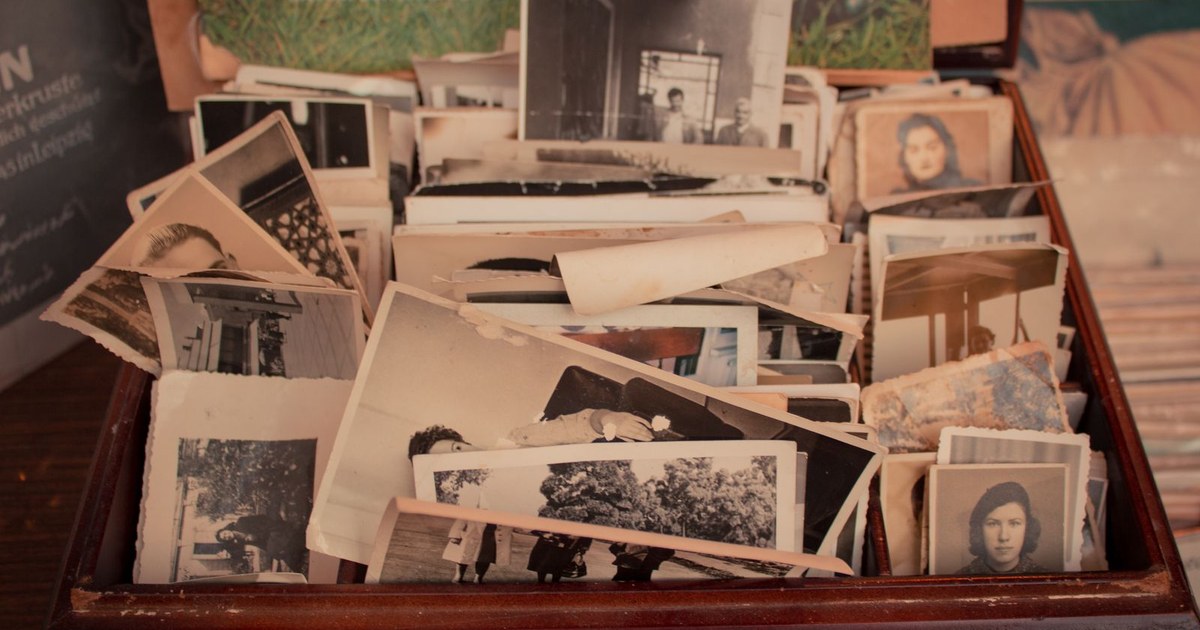
An Unfinished Love Story: A Personal History of the 1960s by Doris Kearns Goodwin, published by Simon & Schuster in April 2024, is a memoir built out of cardboard and memory. In his final years, Goodwin's husband Richard Goodwin, called Dick, joined her in opening the boxes of speeches, letters, and keepsakes they had saved from the decade when both of them worked close to power, Dick as a speechwriter and adviser to John F. Kennedy and Lyndon B. Johnson, Doris as a young aide to Johnson who later became his biographer. The result is two books in one binding: a history of the sixties told from inside the rooms, and a portrait of a long marriage conducted in conversation. Clubs take to it because nearly every member has a box somewhere, and because the book keeps asking what a country and a couple owe to their unfinished business. The questions below run in three movements, boxes and marriage first, the decade second, and grief and legacy last behind a spoiler marker.
How to Use This Guide
Assign one member to keep a rough timeline of the decade on a single sheet, since the memoir moves by artifact rather than by year and the room will occasionally lose its decade bearings. The first two movements stay with the marriage and the public events. The third movement sits behind a spoiler marker and discusses Dick's death and the book's ending openly, so members still reading can take the early questions safely and step out for the last half hour if they wish.
Who Is Who: A Two Minute Refresher
Doris Kearns Goodwin is the author, a presidential historian who turns her professional methods on her own household, acting as wife, witness, and narrator in the same paragraph. Richard Goodwin, called Dick throughout, is her husband, a speechwriter and adviser who served Kennedy first and Johnson after him, and whose habit of keeping paper is the reason the boxes exist. John F. Kennedy is the president of the promise, whose assassination shadows everything the couple saved. Lyndon B. Johnson is the president Doris knew at twenty four as a White House aide and spent years biographing afterward, and the man over whom husband and wife most productively disagree, since Dick served him and measured him against Kennedy daily.
Movement One: The Boxes and the Marriage
- The project begins as housekeeping and becomes an excavation: two partners in their later years opening what they saved. Why is the box a stronger organizing device than a chronology, and what can a physical object make two people say to each other that a direct question cannot?
- Goodwin writes with three loyalties running at once, to the record, to her husband, and to the reader. Find a passage where those loyalties pull in different directions. Which one wins, and does the book tell you it noticed the contest?
- Dick stood in the rooms as a speechwriter, shaping the words; Doris arrived in some of the same rooms as an observer who would later judge them. How does that difference in vantage explain the places where their memories of Johnson flatly refuse to match?
- The marriage on display is a working partnership built from talk, reading, editing, and argument. Which of its habits are portable to an ordinary household, and which depended entirely on two people whose work happened to be history itself?
Movement Two: The Decade and Its Presidents
- Read Kennedy and Johnson side by side through the couple's two sets of eyes. Dick measured presidents by the speeches they could carry; Doris measured them by temperament and appetite for risk. Which measure produces the fairer Johnson, and which produces the more forgiving Kennedy?
- The memoir sets intimate scenes against campaigns, civil rights struggles, and a war that split the country and eventually the couple's own dinner table talk. Where does the small scale genuinely clarify the large events, and where does proximity become a blindfold?
- The boxes let memory be audited against paper, drafts against recollections. Choose one moment where a document corrects what one of the Goodwins remembered. What does the correction suggest about why this couple, of all couples, kept everything?
- Doris entered the Johnson White House as a young woman in rooms that had almost no women in them, and the book threads her path quietly through the public story. What did the era charge her for admission, and which of those charges does she present as price and which as theft?
Movement Three: Grief, Legacy, and the Title
Spoiler marker: everything past this line assumes the ending, including Dick's death and the way the book closes.
- The box opening runs against a clock the couple cannot negotiate with, since Dick's declining health gives the project both its urgency and its stopping point. Knowing the end from the first pages, how did you read the happy scenes differently than you would have in a straight history?
- After Dick's death, finishing the book becomes Doris's way of continuing the conversation the boxes started. Is the finished memoir best described as an act of grief, an act of history, or an act of marriage, and what in the final chapters settles your answer?
- The title calls the love story unfinished, and the book applies the same word, quietly, to the decade itself, its reforms passed and its promises still outstanding. Which unfinishedness does the ending weigh more heavily, and does the book earn the parallel or merely assert it?
- Goodwin has spent a career arguing that character is destiny in presidents. Judged by her own standard, what does this memoir finally claim Dick Goodwin's character was, and would the speechwriter who kept every draft have accepted his wife's verdict?
Closing Ritual
The Goodwins' household ran on paper saved and reread. Close the meeting by asking each member to name one object from their own stored past, a letter, a program, a photograph, that they would want opened and talked over exactly this way, and to say in one sentence what conversation it would start. Keep it quick and keep it kind; the book's tenderness is the point of the exercise.
If Your Club Liked This One
Goodwin's Team of Rivals is the natural next meeting, her account of Lincoln's cabinet, where members can watch the same historian work at full distance instead of at her own kitchen table. No Ordinary Time, her portrait of Franklin and Eleanor Roosevelt on the home front, pairs marriage and public crisis in the same double frame this memoir uses. Clubs that want the decade from the other side of the podium can read Dick Goodwin's own Remembering America, his memoir of the same years, and compare husband and wife on the identical events.
Themes to Keep in Play
Paper is the first theme, treated by this book as the most honest form of memory. The Goodwins do not trust recollection, their own included, and the memoir keeps staging audits in which a draft or a letter corrects a story the couple had polished by retelling. A leader can reopen any drifting stretch by asking what the paper in the scene actually says. The second theme is argument as a marital technology. Dick and Doris disagree about Johnson for fifty years without the disagreement ever becoming contempt, because both of them argue from evidence and concede points on the record; the book is quietly a manual for that discipline. The third theme is the unfinished itself. The decade's business, voting rights defended, a war's lessons unlearned, a presidency cut short, sits beside a marriage ended by death rather than by completion, and the book's deepest claim is that both kinds of unfinished business are handed to whoever opens the boxes next.
Running the Meeting: Timing and Trouble Spots
Ninety minutes divides well: ten for the refresher and the timeline sheet, twenty five for the boxes and the marriage, thirty for the decade and its presidents, twenty for the fenced grief movement, and five for the ritual. Trouble spot one is the member who lived through the sixties and arrives with a memoir of their own; welcome two minutes of it, then return to the Goodwins, whose paper trail is the meeting's evidence. Trouble spot two is Johnson partisanship, which can split a room along lines drawn sixty years ago; the couple's own rule, argue from the document in front of you, is the leader's best gavel. Trouble spot three is the ending's sadness landing unevenly on members with recent losses of their own. The spoiler fence exists partly for them; say plainly before the third movement that stepping out is a respectable choice, and mean it.
The Historian at Her Own Kitchen Table, in One Paragraph for the Leader
Goodwin's earlier books stand at the usual biographer's distance, archives between her and her subjects. Here the archive is hers, the subject shared her house, and her professional habits, checking the draft against the memory, footnoting a marriage in effect if not in form, become the book's drama. Leaders can use that inversion whenever the room treats the memoir as simple reminiscence: ask what a historian gains and what she risks when the person who can correct her manuscript is also the person she is describing, and let the room notice how often Dick gets the last editorial word even in her book.
Scene Anchors: Five Pages to Argue From
First, the opening of the boxes themselves, two people in their later years deciding to look at everything they saved, the scene that sets the book's method and its stakes. Second, the speechwriting years with Kennedy, where Dick's drafts show history being composed at a desk before it was delivered from a podium. Third, the Johnson White House as Doris first knew it, a young aide watching a president at close range while her future husband served the same man from a different chair. Fourth, the couple's disagreements over Johnson's war, where the national argument and the marital one become the same conversation. Fifth, the final stretch of the project, when the box opening outlasts Dick and Doris finishes the inventory alone, held behind the fence. A room arguing from these five points covers the memoir's whole design without reducing it to a timeline.
One Question for the Whole Evening
If the evening runs short, begin here and follow the argument: what do the boxes prove that memory alone could not? Every movement feeds the question. The marriage movement shows paper starting conversations the couple had avoided for decades. The decade movement shows paper correcting both of them impartially, a draft embarrassing Dick, a letter vindicating Doris. The grief movement shows paper outlasting the person, which is either the book's consolation or its accusation. A room that answers honestly has discussed historiography, marriage, and mourning in a single conversation, which is exactly the triple subject Goodwin built.
Extension: Put a Speech on the Table
If the meeting has energy left, spend ten minutes on a single artifact of the kind the boxes hold: a famous speech of the decade, read aloud in the room from a printed text, with the draft history the memoir supplies as your guide. The exercise makes the Goodwins' working life tangible in a way summary cannot, because a speech is the rare historical document a book club can fully experience in real time, at the speed it was delivered. Ask the room to listen as Dick listened, for the sentence a president could not carry, and as Doris listens, for what the sentence reveals about the man who had to. Few extensions repay their minutes as reliably as this one.
More book club guides
Frequently asked questions
Is An Unfinished Love Story a memoir or a history book?
It is deliberately both. The frame is memoir, an aging couple opening their saved boxes, but the contents are primary source history, speeches, letters, and memoranda from the Kennedy and Johnson years, interpreted by a historian who was present for part of it and married to a man who was present for more.
Who was Richard Goodwin?
Richard Goodwin, called Dick in the book, was a speechwriter and adviser to Presidents Kennedy and Johnson and one of the notable staff voices of the sixties. He kept the papers, drafts, and keepsakes that became the boxes at the center of the memoir, and he was Doris Kearns Goodwin's husband.
Do these questions spoil the ending?
The first two movements discuss the boxes, the marriage, and the decade without dwelling on the ending. The third movement is fenced with a spoiler marker and covers Dick's death and the book's closing argument openly. Members still reading can take the early movements safely.
What should a club know about the 1960s before this meeting?
Very little is required. The guide's refresher covers the two presidents and the couple's roles, and the memoir itself explains each episode as a box brings it up. A one sheet timeline of the decade, prepared by a member, is the only homework that genuinely helps.
How long is An Unfinished Love Story?
The Simon & Schuster hardcover, published in April 2024 with the subtitle A Personal History of the 1960s, runs 480 pages. Most clubs find it reads faster than its length suggests, because the box by box structure breaks the decade into short, self contained episodes.