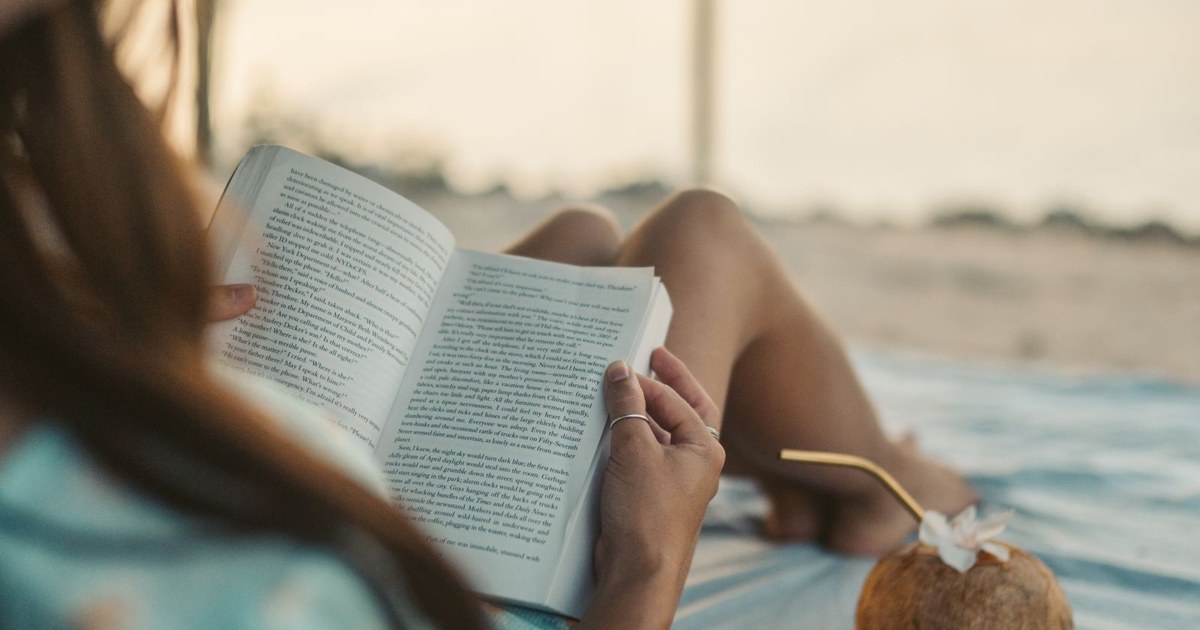
A summer book has a specific job: it must survive the beach bag, the delayed flight, and the hammock, and it must give a reader her evenings back after months of giving them to everyone else. The eight books below are the reliable summer stack, all with at least a few summers of word of mouth behind them, arranged from lightest to deepest so a reader can build her own season: a wonder, a wit, a romance of ideas, a story to argue about, and one memoir that readers press on friends like a recommendation for a person. Together they run 2,760 pages, which is one real summer of reading at a humane pace, and the calculator below turns that total into a plan.
The eight books, with honest notes
| Title | Author | Year | Pages |
|---|
| Remarkably Bright Creatures | Shelby Van Pelt | 2022 | 360 |
| The Midnight Library | Matt Haig | 2020 | 304 |
| Lessons in Chemistry | Bonnie Garmus | 2022 | 400 |
| The Vanishing Half | Brit Bennett | 2020 | 352 |
| Tomorrow, and Tomorrow, and Tomorrow | Gabrielle Zevin | 2022 | 416 |
| Klara and the Sun | Kazuo Ishiguro | 2021 | 320 |
| Educated | Tara Westover | 2018 | 352 |
| Crying in H Mart | Michelle Zauner | 2021 | 256 |
Page counts follow the same publisher edition convention used across this site, so totals stay comparable between lists.
Remarkably Bright Creatures (360 pages). The wonder. A widow working night shifts at an aquarium, a missing son, and a giant Pacific octopus named Marcellus who narrates some chapters and knows more than anyone. It sounds like a whimsy and reads like a grief novel with its sleeves rolled up. Start the summer here; it is the book on this list most often finished in two days.
The Midnight Library (304 pages). The thought experiment. Nora Seed, between life and death, tries the lives she might have lived, one per volume in a library that opens at midnight. The premise is a machine for generating regret and gratitude in alternating chapters, and readers argue about their own unlived lives for weeks after. The shortest novel here and the most discussed per page.
Lessons in Chemistry (400 pages). The wit. Elizabeth Zott, a chemist in 1960s California, becomes a television cooking host against her will and turns the show into a seminar on dignity. It is funny in the way angry books are funny when the anger is earned, and its dog, Six-Thirty, is the best supporting character on this list. Read it when the summer needs an argument with the world.
The Vanishing Half (352 pages). The story to argue about. Twin sisters from a small Southern town take opposite paths through American racial identity, one passing for white, one returning home, and their daughters' lives braid the question across a generation. It is the book club pick of the stack, the one that produces the longest conversations and the fewest easy conclusions.
Tomorrow, and Tomorrow, and Tomorrow (416 pages). The romance of ideas. Two friends meet over video games as children and spend thirty years making games and nearly understanding each other. You do not need to care about games; the book is about collaboration, ambition, and the specific grief of being known by someone who knew you young. The longest novel here, and the one readers most often reread.
Klara and the Sun (320 pages). The quiet one. Klara, an Artificial Friend, watches the world from a shop window and narrates a story about love and obsolescence in Ishiguro's flattest, most devastating voice. Read it mid-summer, somewhere quiet, and expect to sit still for a while after the last page. It pairs with nothing and follows anything.
Educated (352 pages). The memoir of escape. Tara Westover grew up in Idaho without school, doctors, or a birth certificate, in a family preparing for the end of the world, and educated herself into a Cambridge PhD. The summer's nonfiction anchor and its most argued-about book: readers debate memory, family loyalty, and what education costs the people it saves.
Crying in H Mart (256 pages). The memoir of grief and appetite. Michelle Zauner writes about her Korean mother's death through the food they shared and the grocery store where that food lives. It is short, specific, and devastating in the ordinary places, and it sends readers to call their mothers or to cook something from childhood. End the summer here, or begin it here if the year has already taken someone.
Building a summer stack of your own
Eight books is a season, and the order matters less than the alternation. Alternate a light book with a heavy one, a novel with a memoir, a book everyone has read with one nobody has. The calculator above uses this stack's real total, so set the pace by your actual summer: ten weeks at twenty pages a day finishes the whole list with a week to spare, and fifteen minutes a day, the smallest honest unit of reading, still clears five of the eight. The stack is a menu, not a contract. A summer in which you loved three books beats a summer in which you completed eight.
The one-book summer, and other honest formats
Not every summer holds eight books, and the stack serves smaller seasons well. For one book, take Remarkably Bright Creatures for restoration or The Vanishing Half for conversation. For two, pair Lessons in Chemistry with Crying in H Mart, wit with grief, the season's two weathers. For a book club's summer, The Midnight Library and Tomorrow, and Tomorrow, and Tomorrow generate the most reliable discussions per page. And for the reader returning after years away, start with The Midnight Library: it is short, propulsive, and explicitly about whether a life can be re-entered, which is the question she is asking the shelf.
Passing the stack on
Summer books are social objects. The best of these eight travel: lent to sisters, left in rental houses, pressed on coworkers in September. Buy the paperback of the one you loved most and give it away rather than shelving it; the stack renews itself that way, and next summer's list begins with whatever your friends hand back to you with their own insistence. That hand-back is the real recommendation engine behind every title here, and it has never once needed an algorithm.
The audiobook summer
Every book on this stack exists as an audiobook, and summer is the format's natural season: the drive to the coast, the long walk, the garden that needs an hour. Audio changes the arithmetic of the season, because listening hours hide inside other activities, and it changes the books themselves. Remarkably Bright Creatures gains a Marcellus whose dry delivery readers describe as the summer's best performance. Crying in H Mart, read in the author's own voice, becomes a different and more intimate book. The Midnight Library's premise, lives branching, suits the half-attention of a highway better than dense prose would. The practical rule is to keep one book in the ears and one in the bag, never the same title in both, and to let the walking book be the lighter one. A summer measured in both formats routinely doubles its pages without adding a single hour of sitting down.
The reread shelf
A word for the summer that is not about new books at all. Some years a reader returns to the stack she already loves, and the season's pleasure is recognition rather than discovery: the Vanishing Half's structure visible this time from the first chapter, Elizabeth Zott's jokes landing with the timing of old friendship, Klara's narration reread with the ending known, which transforms it entirely. Rereading is not a failed summer. It is the form summer reading takes when the year has been expensive, and its pleasures are real ones that no new release can schedule. Keep one beloved book in the bag beside the new stack, as ballast. The readers who sustain a lifetime habit are not the ones who conquer lists; they are the ones who always have a book, new or known, within reach of the hammock.
Keeping a summer book journal
One page per book, kept in a notebook or the phone's notes, transforms a summer's reading from a pile into a record. The entry needs only four things: the title, the dates, one sentence about what the book is doing, and one line copied out by hand, the sentence you would save if the book were burning. The discipline is tiny and the effects compound. The sentence about the book's doing forces the judgment that turns reading into taste. The copied line builds a commonplace book, a personal anthology that, by summer's end, reads like a letter from the season. And the journal solves the stack's social problem from the last section: when a friend asks in September what she should read, you will not say everything was good. You will hand her the journal, open at the page where your own handwriting gets emphatic, and lend her that book, which is how every title on this list became a summer institution in the first place.
Reading with a friend, at a distance
The stack's final use is social in a way that requires no club, no schedule, and no matching bookmarks: the two-person summer, in which friends in different cities read the same book in the same weeks and talk by phone, text, and letter as they go. The format forgives everything book clubs struggle with. Two readers can pause for a vacation without quorum anxiety, spoil freely once both have finished a chapter, and abandon a title by mutual shrug. Choose the order together from this list, alternate who picks, and keep one rule only: the conversation happens while both readers are inside the book, not after, because the pleasure being shared is simultaneity, the knowledge that the same storm scene is open on two nightstands in two time zones. Many such pairs began with a single lent paperback from the passing-on ritual described above. The stack, read this way, stops being a list and becomes a correspondence, which is what summer reading was for most of its history.
More reading lists
Frequently asked questions
What makes a book a good summer read?
Portability of attention: a book that can be entered quickly after a day away, left mid-chapter without penalty, and carried in a bag without breaking its spine or yours. Summer books also tend toward momentum and emotional clarity, not because summer readers are unserious but because summer reading happens in fragments, on towels and trains. Every book on this list was chosen to survive fragmentation and reward return.
How many books can I realistically read in a summer?
At fifteen minutes a day across ten weeks, roughly five average novels. At thirty minutes, the full eight-book stack here, 2,760 pages, with days off. The honest variable is not speed but return rate: a reader who comes back daily at any pace outreads a binge reader by August. Set the daily appointment, keep the book visible, and let the total take care of itself.
Can a book club use this stack for a whole summer?
Yes, and several are book club institutions by now. The Midnight Library and The Vanishing Half produce the most structured discussions, Tomorrow, and Tomorrow, and Tomorrow the most personal ones, and Educated the most divided, which many clubs count as a success. Crying in H Mart needs a content note for members in fresh grief; the rest of the stack is safe to assign cold.
Should I read these in the order listed?
The list runs lightest to deepest as a default season, but any order works, with one suggestion: do not put Klara and the Sun and Crying in H Mart in the same week unless the summer is going very well. Alternate weight and the season breathes. Many readers also save one title deliberately for the last week of August, as a way of marking the season's end.
Where can I get these books cheaply or free?
All eight are standard public library holdings in print, ebook, and audiobook, though summer demand creates holds, so place requests in June. Paperback editions of every title are widely available used, and the stack's older memoirs in particular circulate constantly through little free libraries and thrift shelves in summer. The audiobooks are excellent across the list and suit the season's driving.