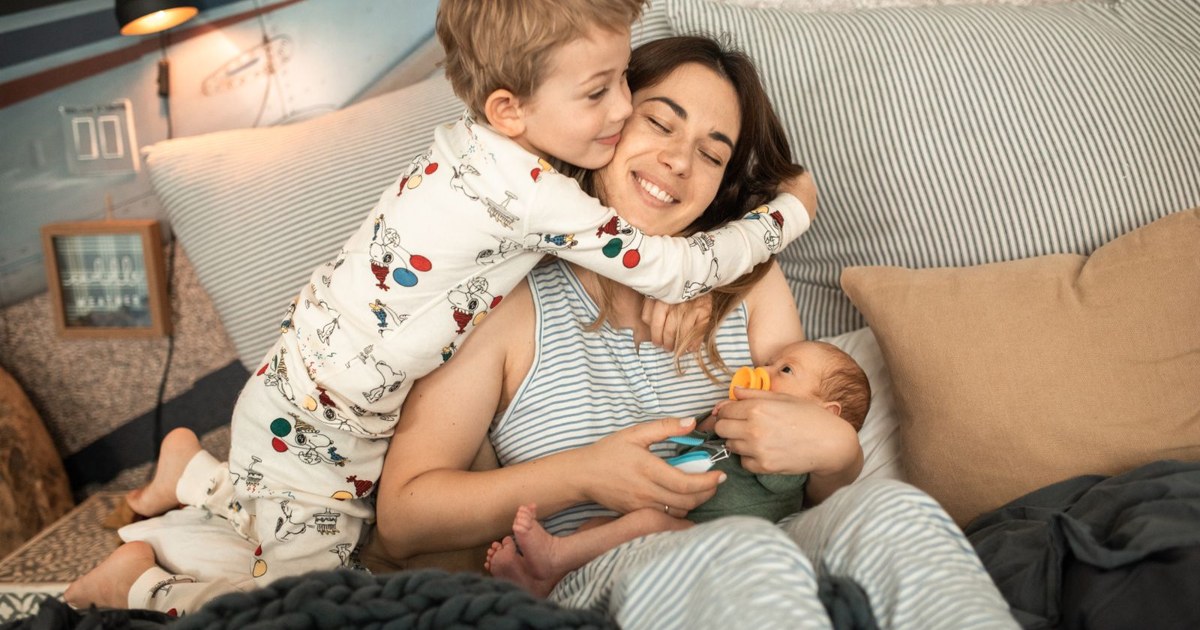
A toddler becoming a big brother is being promoted and demoted on the same day, and the books that help him are the ones honest about both halves. This page groups its picks by the job each book does in that order: first, pride in the new title, because a two year old needs a story in which big brother is a promotion he can feel; second, real helper jobs, sized for small hands and stated without fantasy, because toddlers believe what they can do; and third, honest room for jealousy, because the feelings will arrive whether or not the books admit them, and a book that admits them first becomes an ally. All of these are short, sturdy picture books built for repetition, and repetition is the treatment: the toddler who has heard the story forty times has rehearsed the baby's arrival forty times. Read them in the waiting months, not the waiting room.
Proud of the new title
I Am a Big Brother by Caroline Jayne Church (2015) is the gentlest first book here, a small rhyming board friendly story in which a boy's baby sibling arrives and his role is described in the warmest possible terms: he is the one who can sing, fetch, show, and be gentle, and the baby's love for him is the plot. For the youngest toddlers, eighteen months to two and a half, its brevity is the point; it can be read nightly for months without wearing out its welcome, and its refrain becomes family language. I'm a Big Brother by Joanna Cole, illustrated by Rosalinda Kightley (1997), is the facts forward companion. Cole, who wrote for children with a clinician's respect for accuracy, walks through what the new baby will look like, how small, how loud, how much sleeping and feeding will fill the house, and what a big brother can expect to feel and do. Its tone is plainer and its information denser, which suits the toddler who asks questions and the parent who wants true answers in a kind voice. Read Church for the feeling and Cole for the briefing; between them, most households are covered.
Real jobs a small boy can do
Babies Don't Eat Pizza by Dianne Danzig, illustrated by Debbie Tilley (2009), is the most useful book on this page, because its subject is the actual texture of life with a newborn, delivered with jokes a toddler can repeat. The baby cannot eat pizza, play catch, or do much of anything interesting yet, and the book says so, which toddlers find hilarious and relieving in equal measure; somebody has finally admitted it. Around that honesty it builds the helper curriculum: bringing the diaper, choosing the baby's socks, singing during changes, being the official shusher and fetcher. Every job named is a job a two or three year old can actually perform, and that realism is what separates this book from the shelf of titles that promise the toddler a playmate and deliver a sleeping stranger. Parents report that its title becomes the household's shorthand for the whole adjustment, deployed at moments of peak absurdity, which is what a family book is for.
Room for the hard feelings
Peter's Chair by Ezra Jack Keats (1967) is the classic of this shelf and the most psychologically exact book here. Peter's baby sister Susie has arrived, and his parents are painting his things, his crib, his chair, pink for her. Peter takes his chair, his dog Willie, and his grievances and runs away as far as the front stoop, until his mother calls him for supper and he discovers, trying to sit in the chair, that he has outgrown it. The jealousy is never scolded and never argued away; it is outgrown, on the page, in the boy's own body, and the ending, Peter helping paint the chair for Susie, is earned in a way that makes adults cry in libraries. The Berenstain Bears' New Baby by Stan and Jan Berenstain (1974) tells the same transition as a story of making room: Small Bear outgrows his bed, Papa builds a bigger one, and the old bed, like Peter's chair, is ready for the baby. Its framing of change as carpentry, practical, loving, and a little sad, suits the toddler who copes by understanding what happens next. You Were the First by Patricia MacLachlan (2013) closes the page as the book to read after the arrival, when the pride has been spent and the toddler needs the other assurance: that before the baby, there was him, first, and that the firsts were witnessed and are remembered. It is a love letter disguised as a picture book, and it is the one parents buy a second copy of.
The list at a glance
| Need | Start with | Why |
|---|
| Youngest toddler, first talk | I Am a Big Brother | Short, rhyming, pure reassurance |
| The waiting months | I'm a Big Brother | Plain facts in a direct voice |
| A boy who needs a job | Babies Don't Eat Pizza | Real helper tasks, honestly told |
| Jealousy has arrived | Peter's Chair | The feeling, respected and resolved |
| A familiar family story | The Berenstain Bears' New Baby | Change framed as making room |
| After the baby comes | You Were the First | The first child, remembered in detail |
How to use these books in the waiting months
Timing is a tool. Start the pride books early, when the pregnancy is being talked about openly, and let the toddler's questions set the pace; a two year old needs the headline, a baby is coming and you will be its brother, repeated calmly, not a syllabus. Save the helper book for the last stretch, when the jobs it names are about to become real, and practice the jobs with a doll or a stuffed animal in the meantime, not as a lesson but as a game the toddler directs. Keep Peter's Chair in reserve for the arrival itself and the weeks after, when the jealousy it dignifies is actually in the house; read too early, it is a story about a chair, read on time, it is a mirror. One caution applies to the whole shelf: do not oversell. Adults, anxious to be kind, promise the toddler a playmate, a best friend, endless fun, and the newborn, who sleeps, feeds, and cries, betrays the brochure within a day. The books here were chosen because they do not oversell. They promise a baby, a title, some jobs, and some feelings, and the baby, remarkably, delivers all four.
The grandparents' briefing, and other logistics
A new baby rearranges more adults than the parents, and the toddler's world includes people whose instincts, however loving, can sand the edges off everything the books are building. The classic offenses are small: the relative who tells the big brother he is too old for his blanket now, who teases that the baby will take his toys, who performs the mock lament, poor you, no longer the baby, in front of him. None of it is malice; all of it is script, inherited from a era that treated sibling adjustment as comedy. The repair is a briefing, given early and kindly: he is learning a new title and is proud of it, we do not tease about replacement, his things and his comforts are not up for review, and the most helpful sentence anyone can say to him is a report of the baby's admiration, real or reasonably inferred. Grandparents given a role in the preparation, a book to be their book with him, a job at the homecoming, usually become the adjustment's strongest allies, because the same energy that produced the teasing produces, once aimed, the steadiest reinforcement a toddler can get. Aim it before the birth, in person, with the books in hand.
The first gift, the first outing, and other small ceremonies
Households underestimate ceremony because adults experience the season as logistics, but toddlers file their lives by events, and a few small ones, deliberately made, give the adjustment landmarks. The first gift runs both ways in the better traditions: a present for the big brother at the meeting, from the baby, and a present chosen by him for the baby, however small, because giving installs him in the story as an agent rather than an audience. The first outing as a family of the new size deserves the same treatment, somewhere he loves, at his pace, with the baby as passenger rather than purpose, so that his map of the family's pleasures is redrawn with the baby inside it rather than beside it. And the first time he makes the baby laugh, which will happen, on accident, gloriously, deserves to be marked aloud and retold at dinner, because it is the founding story of the pair, the moment the small stranger became someone whose joy he could cause. Families who narrate that moment are doing precisely what MacLachlan's book does on the page: keeping the record, out loud, of what he is to this family, which no arrival can revise.
What the toddler can actually do for the baby: a real job list
Helper rhetoric fails when the jobs are fake, and toddlers audit jobs ruthlessly, so the household needs real ones, sized to real hands. A two or three year old can fetch the diaper and the wipes and be genuinely faster than an adult holding a baby; can choose the baby's socks from two offered, a decision with visible consequences; can operate the music, the specific song that settles her, becoming the household's keeper of it; can be in charge of the tummy time audience, lying face to face where the baby works hardest to lift her head for an audience of him; and can deliver the evening report to the other parent, what she did today, in his words, as the family's correspondent. Each job is real, each is witnessed, and together they compose the toddler's actual answer to the question the whole season asks him, which is not whether he is displaced but what his office is in the new regime. Give him the office early, staff it with the books from this page, and the title big brother stops being a consolation and becomes a post he holds.
If the baby comes early, or the plan otherwise breaks
Birth plans break, babies arrive early, hospital stays lengthen, and the toddler's preparation must survive contact with the unplanned. The books' sequence compresses without collapsing: the pride title and the facts title can be read in the same week, the helper jobs can be taught at the hospital's visiting hour as well as at home, and the honest title, kept in reserve, matters more, not less, when the arrival has been frightening or strange. What the toddler needs in the broken plan is not the schedule but the steadiness, one adult whose account of events stays the same across tellings, the books read in the same voice, his chair and his bedtime where they always were. Preparation was never really about the calendar. It was about installing the story before the event, and a story installed in a rush is still installed.
More recommendations
Frequently asked questions
When should we start reading big brother books?
When the pregnancy becomes regular conversation at home, usually in the second half, and earlier if the toddler is already asking about the changes he can see. Start with the pride books, add the helper book near the end, and keep the jealousy book for after the birth.
Which book is best for a two year old?
I Am a Big Brother for its brevity and warmth, with Babies Don't Eat Pizza as he approaches three and can relish its jokes and jobs. A two year old's attention is the constraint; short books read forty times beat long books read twice.
My toddler says he does not want the baby. Which book helps?
Peter's Chair, read without commentary. It is the one book here that lets the older child keep his grievance, sit with it on the stoop, and set it down himself. Avoid arguing him out of the feeling with any book; the feeling is information, not defiance.
Should the book say brother specifically?
For a toddler, yes, where you can manage it. The title is the promotion, and a book that names him a big brother in so many words gives him language for his new job. The feelings books, Peter's Chair above all, work for any older sibling regardless of the words on the cover.
What if the baby has already arrived and we missed the reading?
Start now, with You Were the First and Peter's Chair. The waiting months are helpful but not essential; the conversations these books open, pride, jobs, jealousy, being first, are the conversations of the whole first year, and a book opened in week three is right on time.