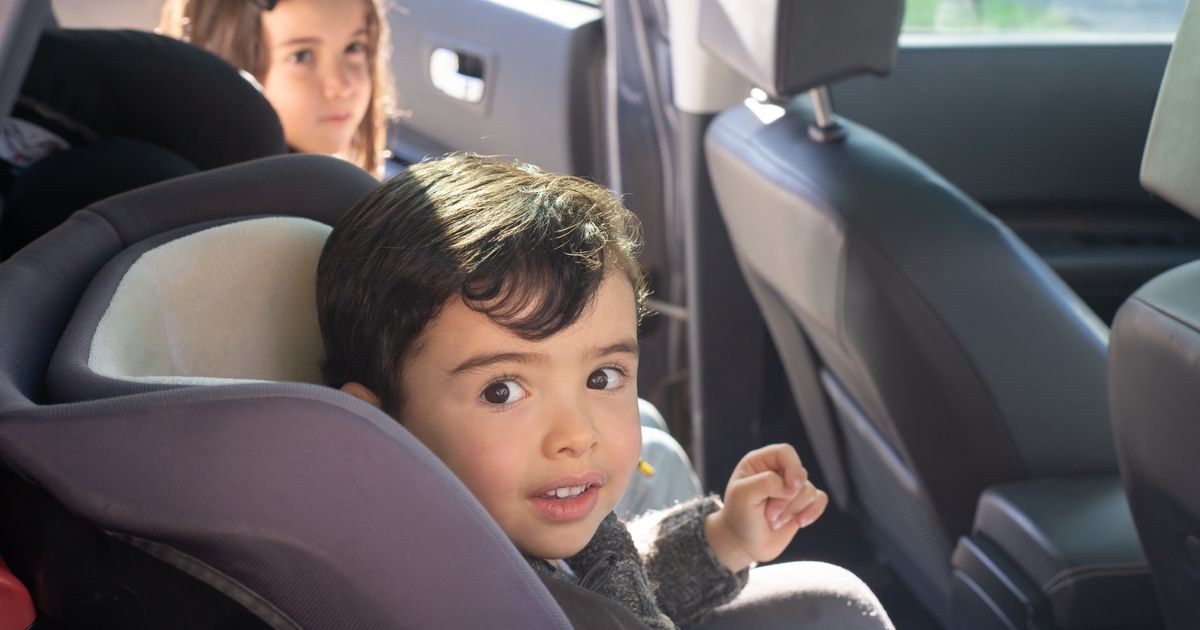
The right audiobook can hold a car full of children quieter than any screen, and the wrong one can empty a story's magic in twenty minutes. Road trip audio has its own rules: it must survive engine noise, divided attention, a sleeping toddler in the back and a carsick reader who cannot look at a page, and it must please the driver, who is also listening, at least a little. This page organizes eight proven titles by the length of drive they suit, from the one hour hop to the full day haul, with notes on narration, the quality that makes or breaks audio, and a practical section on downloads, libraries, and keeping the peace between siblings. All running times are approximate, because editions and playback speeds vary, and approximate is all a journey plan needs.
Short hops: about one to two hours
How to Train Your Dragon by Cressida Cowell, narrated by David Tennant, is the short hop champion. Tennant performs the whole of Hiccup's world, Vikings, dragons, and a great deal of shouting, with an actor's full toolkit, and the first book's modest length fits the drive to grandparents or the coast without leaving the story stranded mid quest at arrival. The Wild Robot by Peter Brown suits the same window at a gentler temperature: Roz the robot's island survival, read calmly, holds mixed ages without the battle volume that wakes sleeping passengers. Both titles share the short hop virtues that matter: a story complete in itself, chapters short enough that a fuel stop never strands anyone mid scene, and tones warm enough that the car arrives in a better mood than it left.
Half day drives: about three to five hours
Matilda by Roald Dahl, narrated by Kate Winslet, is the half day standard against which family audio is judged. Winslet gives every character a distinct life, Miss Trunchbull at terrifying full volume, and Dahl's plot, a bookish girl, dreadful parents, one kind teacher, revenge by intellect, plays to every age in the car simultaneously, which is the rarest property in family listening. Charlotte's Web by E. B. White, in the author's own recording and in modern cast editions, covers the same window at a slower, more golden pace: White reading his own sentences remains one of the treasures of children's audio, and the story's gentleness suits cars carrying younger children or anyone travelling through evening. Holes by Louis Sachar fills the window for the older end of the family, its braided timelines giving back seat listeners a genuine puzzle to argue about at rest stops.
The full day haul: six hours and beyond
The Hobbit by J. R. R. Tolkien, narrated by Andy Serkis, is the long haul masterpiece of the current era. Serkis, who played Gollum in the films, performs the entire book as a one man theatre, songs included, and Bilbo's journey has the episodic structure road trips want: a company assembled, a sequence of self contained perils, trolls, goblins, spiders, a dragon, each landing like an episode as the miles pass. Harry Potter and the Sorcerer's Stone by J. K. Rowling, in the Jim Dale and Stephen Fry editions beloved on opposite sides of the Atlantic, covers a full day with a boarding school's worth of voices and a story engineered in chapters that end on hooks. The Lightning Thief by Rick Riordan, narrated by Jesse Bernstein, brings the same distance home at a faster, funnier clip, and its quest structure, one monster and one state at a time, syncs almost eerily with an actual road trip unfolding outside the windows.
| Drive length | First choice | Also strong | Best for ages |
|---|
| About 1 to 2 hours | How to Train Your Dragon, read by David Tennant | The Wild Robot | 5 to 10 |
| About 3 to 5 hours | Matilda, read by Kate Winslet | Charlotte's Web, Holes | 4 to 12 |
| Six hours and up | The Hobbit, read by Andy Serkis | Harry Potter and the Sorcerer's Stone, The Lightning Thief | 7 to adult |
Why narration is the whole game
In print, a weak chapter can be skimmed; in audio, a weak narrator cannot be escaped, which is why this page names narrators as prominently as authors. A great family narrator does three things: separates characters by voice so clearly that a half listening child can follow who is speaking, paces the action so tension survives the motorway's monotony, and respects the jokes, landing them dry rather than underlined. Sample before you commit. Every audiobook platform offers a free sample of several minutes, and five minutes in a quiet kitchen predicts five hours in a loud car better than any review. Listen for clarity at low volume, because road listening happens at low volume in traffic and at high volume at speed, and a narrator who mumbles or whispers dramatically will be lost under tyre noise exactly when the story tightens.
Libraries, downloads, and the offline rule
The economics of family audio run through the public library. Library apps lend audiobooks free, including most titles on this page, and a library card per child multiplies the family's borrowing power across a long trip. Two disciplines protect the journey. First, download everything before departure, completely, and test the first minute of each title in the driveway, because streaming dies in the first tunnel and a download that turns out to be a sample dies at minute five of the motorway. Second, load more than the plan requires: one finished early book, one rejected book, and the trip still has listening in reserve, ideally the next volume of whatever series the car has just fallen for. Keep a cheap pair of wired headphones per child as insurance for the hour when tastes diverge, and agree the driver's veto in advance: the person keeping the car on the road may retire any title, no appeal, because an irritated driver is the one bad review that matters.
Keeping the peace: choosing together
The politics of the shared speaker deserve one honest paragraph. Rotate choosing rights by leg of the journey, publish the rotation before departure, and give the youngest listener the first pick, because the youngest tolerance is the car's scarcest resource. Favour titles with cross age architecture, Dahl and Rowling and Tolkien all write jokes at two altitudes, and park each child's solo listening for the trip's final hour, when communal patience is spent. If a title fails in the first twenty minutes, retire it without a post mortem; the reserve shelf exists for exactly this, and a family that treats a failed audiobook as data rather than defeat will, within a few trips, know its own taste with unusual precision. The goal is not to finish books. The goal is to arrive with the car still fond of each other and asking what happens next, and the titles above have been finishing that job for families for years.
A worked example: one family, one seven hour drive
Consider a family of four, children aged six and ten, driving seven hours with two planned stops. The library haul, downloaded and tested the night before, holds Matilda, How to Train Your Dragon, and the first Harry Potter, three titles for a trip that needs perhaps two. The six year old's first pick opens the journey: Matilda, because the youngest tolerance governs the first hour, when everyone is fresh and the story must establish that this car is a listening car. Matilda runs through the first stop and into the second leg, finishing mid afternoon to genuine applause. The ten year old's pick takes the long middle: the Sorcerer's Stone, whose early chapters are all wonder and no peril, timed so the journey's most dramatic stretches arrive with the daylight still good. Dragon stays in reserve and becomes, at the destination, the holiday's bedtime listening, which extends the trip's best habit into the stay itself. Total spend: nothing. Total screens: none. Total arguments about what to play: one, settled by the published rotation. This is not an idealized family; it is an ordinary one with a downloaded plan, which is the entire secret.
After the trip: keeping the story going
A road trip audiobook does not have to end at the driveway. The story a family shared at speed becomes family property, quoted at breakfast, argued about on walks, and the wisest move is to feed it rather than file it. Put the print book on the kitchen table and watch who picks it up. Queue the sequel for the next journey and say so, because anticipation is half the pleasure and children plan around a promised story for weeks. If the trip's title was borrowed, consider buying the family's copy secondhand, inscribed with the journey's date and route; few souvenirs carry as much of a holiday per square inch. And keep the reserve habit at home: a downloaded audiobook ready on a parent's phone turns traffic jams, waiting rooms, and delayed trains into continuations of the same culture, one in which stories, not screens, are what this family does with enforced idle time.
One more shelf: podcasts and story collections for variety
Some journeys are better served by variety than by one long arc. Story podcasts and short story collections let a car graze: one tale per leg, with natural stopping points at every fuel station, which suits very young children whose attention runs in twenty minute units and families who like to vote on what comes next. Collections of myths, funny poems read aloud, and mystery shorts all travel well, and a mixed playlist, a chapter of the main book, a podcast episode, a chapter more, mirrors how families actually snack on entertainment. The planning rule is unchanged: download everything, sample the narration, and keep the rotation published. Variety is a seasoning on this page, not the main course, because the deep pleasure of road audio is the long shared story, but a wise driver packs both.
Carsickness, headphones, and the practical kit
One practical fact decides many families' format before taste gets a vote: a child who gets carsick cannot read print in a moving car, and audio is not a preference for that child but the only library that travels. Pack the kit with the same care as the playlist. A headphone splitter lets two children share one device without negotiation; volume limited headphones protect young ears on long hauls; and a cheap wired backup pair rescues the day a wireless battery dies somewhere past the last town. Seat the most sickness prone listener in the middle of the back seat, where the road moves least and a horizon view is possible during breaks in the story. Download a short, funny standby episode for the final thirty minutes, when attention frays and arrival energy rises, and the practical kit has done what it exists to do: disappear, leaving only the story.
Frequently asked questions
What is the best audiobook for a mixed age car?
Matilda, narrated by Kate Winslet, is the most reliable mixed age choice: a story a five year old can follow, jokes a twelve year old respects, and a performance adults genuinely enjoy. For cars skewed older, The Hobbit read by Andy Serkis takes the title.
How do we listen without paying for every book?
Use the public library's app with a library card for each family member, place holds a few weeks before the trip, and download everything fully before departure. A single long trip's listening, bought outright, can cost more than the fuel; borrowed, it costs nothing.
Should children follow along in a print copy?
It helps some children enormously, especially new readers and children who lose the thread in pure audio, and it does no harm to the rest. Pack one print copy of the main title as shared equipment, and let whoever wants the words take them. Watching the words while hearing them, at a narrator's pace, is quietly excellent fluency practice, and several children in every family discover, somewhere around hour three, that they have been reading without deciding to.
What if a child gets carsick?
Audio is the carsick child's best format, since it asks nothing of the eyes. Seat the child where the road is visible, keep the story running rather than screens or print, and favour calmer titles, Charlotte's Web over battle heavy ones, on winding stretches. Many carsick children find that a story they care about measurably settles a journey, because attention anchored in a narrative wanders less to the stomach.
How long are the audiobooks on this page?
Approximately, and editions vary: the short hop titles run about one to two hours, Matilda and its shelf about three to five, and The Hobbit, the Sorcerer's Stone, and The Lightning Thief six hours and upward. Treat the table as planning guidance, not a timetable. Playback speed is the family's private adjustment: most children happily listen at standard speed, while experienced young listeners sometimes prefer a slight increase on a familiar reread, which can trim a long book neatly into a shorter drive.