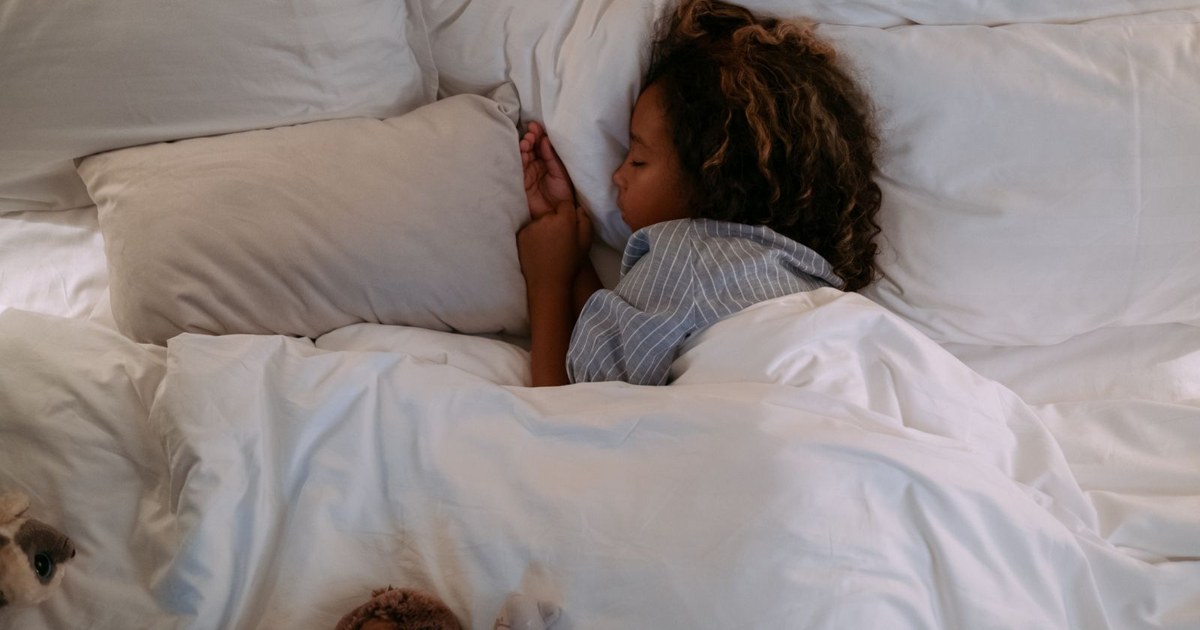
Fear of the dark is not one fear, and the book that cures it depends on which one lives in your house. For some children the dark itself is the problem, a substance that seems to enter the room and change it. For others the dark is merely where the monsters are stored. A third group is not frightened of anything in particular; they are simply awake to the fact that the night is large, unknown, and full of sounds the day explains and the dark does not. This page groups its picks by the fear itself, gives each book a gentleness note, because a story that empowers one child can wallpaper another child's ceiling with new worries, and ends with the practical shelf: what to do on the nights when no book is enough. Preview every book here in daylight first. That instruction is printed on this page twice, on purpose.
Meet the dark itself
The Dark by Lemony Snicket, illustrated by Jon Klassen (2013), is the definitive book for the child who fears the dark as a presence. Laszlo is afraid of the dark, which lives in his basement, until the night his nightlight fails and the dark visits his room and speaks, politely, reasonably, and leads him downstairs to show him what it keeps there. The book's respect is its power: the dark is never mocked, never banished, and never lied about, and Laszlo ends not by defeating it but by being on speaking terms with it. Klassen's ink heavy pages make it visually the darkest book here, which older preschoolers relish and some three year olds find too much; the gentleness note is calm, respectful, a little serious. Can't You Sleep, Little Bear? by Martin Waddell, illustrated by Barbara Firth (1988), is the gentlest book on this page and the right first move for a very young child. Little Bear cannot sleep because of the dark outside the cave, and Big Bear brings lantern after lantern, each bigger, until the only remaining answer is to go outside together and meet the dark itself, which turns out to be full of moon and stars and nothing that wishes him harm. It models the adult's correct role: patient, unmocking, willing to enlarge the light and then, finally, to accompany.
Outwit the monsters
There's a Nightmare in My Closet by Mercer Mayer (1968) has been retiring bedroom monsters for over fifty years on a simple trade: the boy narrator, tired of being afraid, decides to meet the nightmare with a toy gun, a helmet, and a plan, and the nightmare, confronted, dissolves into tears and has to be comforted into the bed itself. The reversal, the monster more frightened than the child, hands the reader the controls. The gentleness note matters here: in a household mid monster phase, read it in daylight first, because naming the closet's occupant can furnish a fear that was previously vague, and some children need the daylight reading twice before it earns a bedtime slot. Go Away, Big Green Monster! by Ed Emberley (1992) is engineering disguised as a book. Die cut pages build a monster face feature by feature, yellow eyes, green nose, sharp teeth, and then dismiss it feature by feature, at the child's command, ending with the instruction not to come back until told. For a toddler or young preschooler the control is the medicine: the child operates the monster's existence with her own hands. The Berenstain Bears in the Dark by Stan and Jan Berenstain (1982) is the practical entry, the one to read after a scary story or an older sibling's teasing has backfired at bedtime. Brother Bear's imagination runs the house all night until Papa installs the book's real curriculum: a nightlight, a checked room, and the demonstration that the terrifying shape is the ordinary coat rack, seen plainly.
Discover what the night is for
The Owl Who Was Afraid of the Dark by Jill Tomlinson (1968) is the chapter book of the shelf, for the older child who has outgrown picture book reassurance and knows it. Plop, a baby barn owl, is supposed to be nocturnal and is terrified of the dark, and chapter by chapter he interviews the night's citizens, a boy waiting for fireworks, an old lady, a camper, a cat, each of whom finds the dark a different good thing: exciting, kind, fun, beautiful. The argument accumulates rather than declares, and Plop's conversion is earned across seven nights of evidence. The Darkest Dark by Chris Hadfield (2016), drawn from the astronaut's own childhood, is the true story entry. Young Chris is afraid of the dark in 1969, watches the moon landing, and discovers that the darkest dark of all, space, is where his ambitions live; the fear is not cured but outbid. For the fact minded child who sees through fictional reassurance, a real astronaut's real fear carries a weight no bear can match. Orion and the Dark by Emma Yarlett (2014) closes the page with pure invention: Orion's fears are itemized, the dark, monsters, spiders, the closet, and then the Dark itself climbs in the window as a large blue friendly creature and takes him on a tour of every feared place, defusing each by showing it from inside. It is the most exuberant book here and the natural graduation gift when the fear is beaten and the family wants a trophy.
The list at a glance
| Fear | Start with | Gentleness |
|---|
| The dark itself | The Dark | Calm, respectful, a little serious |
| A very young child | Can't You Sleep, Little Bear? | The gentlest book here |
| Monsters in the room | There's a Nightmare in My Closet | Funny; try daylight first in a monster phase |
| A child who needs control | Go Away, Big Green Monster! | Interactive; the child dismisses the monster |
| A scary story backfired | The Berenstain Bears in the Dark | Practical family fix |
| An older child | The Owl Who Was Afraid of the Dark | A chapter book, decided in stages |
| A fact minded child | The Darkest Dark | A true story, fear included |
Beyond the books: the night routine that holds
Books work inside a routine or they barely work at all. The routine that supports them is boring on purpose: the same order of bath, teeth, book, light, at the same times, because predictability is itself an anxiolytic and a child who knows the sequence spends no courage wondering what happens next. Light deserves engineering rather than debate. A dim, warm nightlight the child chooses, placed to light the path to the door rather than the ceiling, respects the fear without staging a nightly referendum on it, and a small torch or a string of low lights the child controls extends the Go Away, Big Green Monster principle into hardware: control is the medicine, in objects as in stories. Check the room once, together, as a ritual with a fixed script, closet, under bed, window, done, and then do not recheck on demand, because the tenth check teaches that checking is what stands between the child and the monsters. Retire scary inputs upstream: an older sibling's ghost stories and a frightening video at 6 p.m. will defeat the finest book at 7, and the Berenstain entry on this page exists precisely for the evenings when that rule was broken. Finally, measure progress in weeks. A fear built over a season rarely leaves in a night, and the honest trajectory, terror, protest, negotiation, boredom, is success wearing its working clothes.
When fear of the dark is a referral, not a reading list
Most fear of the dark is developmental weather, arriving around the preschool years when imagination outruns logic, and leaving as reasoning catches up. Some presentations deserve professional eyes. Fear that is expanding rather than shrinking, colonizing daytime, car rides, and classrooms, fear that arrives suddenly after an event the family can name, fear accompanied by regression, by a child who cannot be comforted at all, or by sleep so broken that the household is ill with it, belongs with the pediatrician, who can separate anxiety that needs treatment from darkness that needs a nightlight. This page's books are for the ordinary fear, which is most of it, and they are good at their job. Let them do it, and let people do the rest.
The room itself: light, sound, and the geography of safe
Books do half this page's work; the room does the other half, and small changes there outperform large speeches. Light first: the goal is not darkness heroically endured but a gradient the child controls, a dim warm light he can switch himself, bright enough to check the room's corners, dim enough to sleep in, because control is the active ingredient and a child who can banish the dark with his own hand is rehearsing mastery every night. Sound second: a quiet house amplifies every settling creak into an event, and a low, boring, continuous sound, a fan, soft music on a timer, gives the imagination less silence to furnish. Geography third: arrange the room so the bed faces the door, the closet closes fully, and the path to the parents' room is walkable in the dark without obstacles, because the child's mental map of escape and rescue is part of his felt safety, and a midnight walk to your door that he can perform calmly is a success to praise, not a failure to forbid. Stuffed sentries, a designated guardian toy posted at the door, work by the same logic as the magic made visible in these books: they give the child's own courage an address. None of this is coddling. It is engineering the environment so that bravery is practiced in doses the child can win, which is how all durable courage, at every age, is actually built.
When the fear is really about something else
A share of dark fears are imports: the new sibling, the parents' argument overheard, the move, the story a cousin told, arriving at bedtime because bedtime is when the mind audits the day. The tell is timing: a fear that ignites alongside a life change, or one that yields instantly to company but not to light, is often asking for reassurance about the change in the only vocabulary available at 8 p.m. The books still help, because they give the evening a calm script, but the real intervention is daylight sized: name the change, answer its questions at breakfast, and let the bedtime routine stay boringly about sleep. Parents who keep a loose log for a fortnight, what the day held and how the night went, usually see the pattern themselves, and seeing it is most of the cure.
Siblings, sleepovers, and the fear away from home
The fear that is beaten in his own room may reappear in his sister's, at a grandparent's house, or on the first sleepover, because courage learned in one geography does not transfer automatically to another. Treat each new room as a smaller, faster version of the original campaign: a preview in daylight, the room checked together once, his own nightlight and guardian toy traveling with him, and the host adult briefed on the script so the comfort arrives in familiar words. Sleepovers deserve a rehearsal, a night at the grandparents' first, close and forgiving, before a friend's house across town, and a standing arrangement that fetching him at midnight is a neutral event, not a defeat to be relived at breakfast. Children fetched once without shame attempt again sooner than children who endure a bad night to avoid the shame, and the second attempt, better prepared, is usually the one that takes.
Frequently asked questions
Which book is best for a three year old afraid of the dark?
Can't You Sleep, Little Bear? for the story, and Go Away, Big Green Monster! for the hands. The bear book is the gentlest narrative here, and Emberley's die cut monster hands a very young child physical control of the thing she fears. Read both in daylight first.
Will a monster book make the fear worse?
It can, briefly, if it furnishes a vague fear with a detailed face. That is why this page gives gentleness notes and insists on daylight previews. In practice, most children use monster books the way the authors intended: as rehearsals in which they hold the controls and the monster loses.
Should I leave a nightlight on all night?
Yes, if it helps, and without treating it as a defeat. A dim warm light, chosen by the child and aimed low, is a tool like any other. The goal is sleep, not darkness training, and children retire their own nightlights when the fear retires, usually without announcing it.
My child is eight and still afraid. Is that unusual?
Less than you think. The Owl Who Was Afraid of the Dark and The Darkest Dark exist for exactly this reader: old enough to be embarrassed by the fear and by babyish books about it. Offer the chapter book or the astronaut's true story, and drop the subject in daylight hours.
How long should I keep reading these books?
As long as the child asks. Repetition is the mechanism, not a symptom: each rereading is a rehearsal the child controls. Families usually find the requests taper on their own over a season, replaced first by the routine, and then by nothing at all.