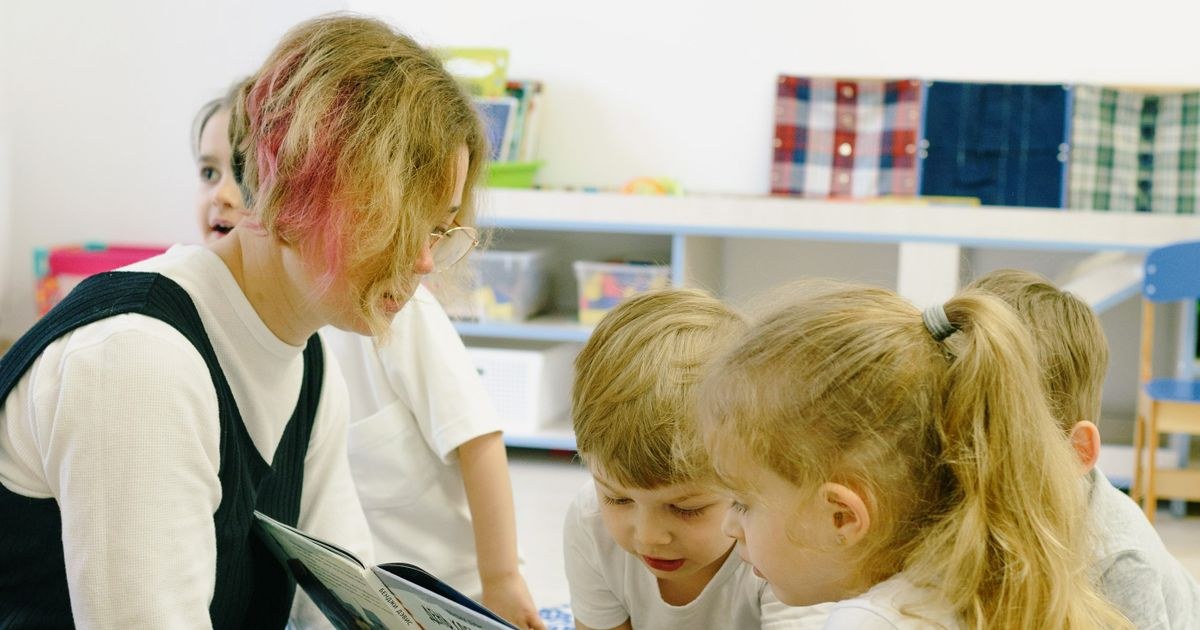
Knowing which strategies readers need is only half a teacher's problem. The other half is delivery: how does an invisible mental act, performed silently by an expert, become a habit inside thirty other minds? This page is about the teaching methods themselves, the delivery systems comprehension research keeps validating. Explicit instruction, think aloud modelling, gradual release of responsibility, reciprocal teaching, and structured discussion each do a different job, and a strong comprehension programme is mostly a matter of running them in the right combination, at the right grain, for long enough.
Method one: explicit instruction, the naming of the invisible
Explicit instruction means the teacher says, out loud and in advance, what the strategy is, when a reader uses it, and why it helps, before anyone is asked to perform it. This sounds obvious and is routinely skipped, because expert teachers perform strategies so fluently that they forget the moves are invisible to novices. A student cannot imitate what she cannot see, and she cannot see a prediction, an inference, or an act of monitoring unless someone externalizes it. The explicit opening takes three minutes: name the move, define it in one sentence a child can repeat, state the trigger that calls for it, and promise the payoff. Skip those three minutes and the lesson that follows becomes mimicry; keep them and every later stage has a handle to hold.
Method two: the think aloud, teaching's X-ray
The think aloud is the workhorse method, the one every other method leans on. The teacher reads a real text aloud and, at planned stopping points, voices her own thinking in the first person: I notice I am confused here, so I am going back to the start of the paragraph. Done well, it is an X-ray of expert reading, showing not just the moves but the decision points between them, including false starts and repairs. Done badly, it is a performance of perfect reading that teaches nothing except that the teacher is good at this. Script your stopping points in advance, choose a text with a genuine difficulty in it, and let students hear you struggle productively at least once per session. The struggle is the curriculum. A think aloud in which nothing ever goes wrong teaches students that confusion is a personal defect rather than a normal event with a known response.
Method three: gradual release of responsibility
Understanding deepens when support fades in stages rather than vanishing at the classroom door. The gradual release model, described by Pearson and Gallagher in 1983 and refined by decades of classroom research since, sequences responsibility in a deliberate handover. The teacher performs while students watch. Then teacher and class perform together, the teacher steering. Then students perform in pairs and small groups while the teacher circulates and corrects. Finally the student performs alone, inside ordinary reading, where the teacher checks for the strategy in real work rather than in exercises. Each stage exists because the next one fails without it. Classes released too early practise their misconceptions; classes never released become audiences. The model's discipline is diagnostic: when independent use collapses, the repair is almost always to step back exactly one stage, not to reteach the whole sequence.
| Stage | Teacher does | Students do | Watch for |
|---|
| Modelling | Reads and thinks aloud at planned stops | Listen, then name the moves they heard | Whether students can label the move unaided |
| Shared practice | Leads the text, supplies prompts | Supply the moves with support | Who volunteers, who only echoes |
| Guided practice | Circulates, questions, corrects | Work in pairs on fresh text | Whether pairs repair breakdowns or slide past them |
| Independent use | Sets real reading, samples the results | Read alone, strategy unannounced | Whether the move appears without being asked for |
Method four: reciprocal teaching, the strategy quartet in dialogue
Reciprocal teaching, developed by Palincsar and Brown and first reported in 1984, packages four strategies, predicting, questioning, clarifying, and summarizing, into a structured discussion in which students take turns leading. The teacher begins as discussion leader, modelling how a leader poses a question, invites a prediction, calls for a clarification, and closes with a summary. Leadership then rotates, student by student, passage by passage, with the teacher coaching from the side. Its power is compression: one routine practises four strategies, the talk format forces every move into the open where peers can hear and copy it, and the leader's chair teaches the metacognitive habit of running the whole repertoire at once. It works best in small groups, on texts just hard enough to need all four moves, after each strategy has been introduced explicitly on its own.
Method five: structured discussion and text dependent questions
Discussion teaches comprehension when its questions are engineered rather than improvised. A text dependent question can only be answered by returning to the passage, which makes evidence handling a habit instead of a slogan. Sequence discussion questions the way the text itself unfolds: first what the text says, then how it says it, then what it means and whether it convinces. Keep personal response for last, where it belongs, after the text has been heard on its own terms. The teacher's craft moves inside discussion are revoicing, repeating a student's answer in sharper language and handing it back for confirmation, and pressing for evidence with the four most useful words in the comprehension classroom: where does it say? A discussion run this way is not a break from instruction. It is instruction, at the exact point where strategies meet other minds.
The assessment loop that closes the system
Methods without feedback drift, so the delivery system needs a light, constant check on whether strategies are transferring into unassisted reading. The most informative instruments are small: a two sentence exit retelling after a lesson, a margin note sampled during independent reading, a termly sit down with a handful of students reading unfamiliar text aloud while the teacher listens for strategy use rather than accuracy alone. Sort what you collect into three piles, secure, emerging, absent, and let the piles plan next week's groupings. The loop's rule is proportionality: assessment should take minutes, happen inside real reading, and change tomorrow's teaching visibly, or students learn that the checks are theatre and perform accordingly.
A worked week: one strategy, five days, all five methods
Monday opens with explicit instruction: inferring is named, defined, and given its trigger, the moment a text shows behaviour and withholds motive. The teacher then thinks aloud over a story opening, voicing two inferences and the clues under them. Tuesday is shared practice on a fresh passage, the class supplying inferences while the teacher presses for evidence. Wednesday moves to guided pairs, each pair annotating a short scene with clue and conclusion in two colours. Thursday runs a reciprocal teaching group for the students ready to lead, while the teacher takes a guided group of those still shaky back one stage. Friday is independent reading with a single exit task: write one inference from your own book and the clue that carries it. Five days, five methods, one strategy, and evidence by Friday of who owns it and who needs another guided round.
Where each method earns its keep, and where it fails
No method on this page is a complete programme, and naming their failure modes is part of using them well. Explicit instruction fails when it becomes lecture, naming without ever showing. Think alouds fail when they are polished performances with the difficulty edited out. Gradual release fails at both ends, the permanent model and the premature release. Reciprocal teaching fails when it is launched before its four strategies have been introduced separately, because students cannot rotate leadership of moves they do not yet possess. Discussion fails when its questions drift to opinion before the text has been established. A teacher who knows the failure modes can audit a stalled unit in minutes: find the stage that was skipped or the method that decayed into its caricature, repair that joint, and the system usually restarts without drama.
Planning a think aloud, line by line
Because a think aloud exposes thinking, it repays the same planning a demonstration in science would get. Choose the passage for its teaching content, not its beauty: you want one place where the strategy clearly pays off and one place where reading genuinely snags, because students learn as much from watching a repair as from watching a success. Mark three to five stopping points in the margin, no more, since a think aloud interrupted every sentence becomes a lecture with illustrations. At each stop, plan the sentence stem you will use, I am noticing, I am wondering, this reminds me, and vary them across sessions so students absorb a vocabulary for their own inner talk. Decide in advance which student contribution you will invite and when; a think aloud with no student voice in it trains spectators. Finally, keep the whole demonstration under fifteen minutes. Attention is the method's fuel, and a tight, well aimed modelling session that ends while the class still wants more will outperform a comprehensive one every time.
Texts and groupings: the practical machinery
Methods run on texts, and the wrong text quietly defeats the right method. For modelling, choose passages a fraction above the class's comfort level, hard enough to need the strategy, short enough to finish inside the session. For guided practice, each group needs text at its own working level, which means the same strategy will be running on three different books around the room, and that is correct rather than chaotic. For reciprocal teaching, short self contained passages beat long chapters, because the leadership rotation needs a fresh start every few pages. Groupings should follow the assessment piles and change as the piles change: a student secure in clarifying but absent in inferring belongs in different company for different units, and fixed year long groups quietly forbid that flexibility. Keep groups small enough for every voice to be heard weekly, keep membership visibly temporary, and tell students the truth about the system: groups exist to aim teaching, and moving between them is the system working, not a verdict on anyone.
The anatomy of one complete strategy lesson
It helps to see the methods assembled into a single ordinary lesson, because in real classrooms they are not separate programmes but movements inside one hour. Open with two minutes of explicit framing: the strategy's name, its trigger, and a reminder of where it sits in the repertoire the class is building. Move into eight to ten minutes of modelling on a shared text, thinking aloud at the planned stops and letting one false start survive into the open. Hand over to shared practice for ten minutes, the class supplying the moves while you steer and press for evidence. Release pairs onto fresh text for fifteen minutes of guided practice while you circulate with a clipboard, listening for the strategy and noting who needs another guided round. Close with a two minute independent proof, an exit sentence or a margin note, collected and sorted that evening. Forty minutes, five methods, one strategy, and a paper trail that plans tomorrow. Teachers who run this anatomy consistently discover that the methods stop feeling like initiatives and start feeling like weather: simply the climate in which comprehension gets taught in their room.
Coaching the methods: a note for mentors and department heads
Teachers learning these methods need the same gradual release their students do, and mentors who lecture about modelling without modelling commit the programme's favourite irony. Coach in the same anatomy: name the method explicitly, demonstrate it in a real classroom while the observing teacher watches with a focus question, practise it together in a co taught lesson, then observe the guided attempt and debrief against evidence. Keep the observation lens narrow, one method, one stage, one question, because feedback that covers everything changes nothing. The two coaching conversations that matter most come after a think aloud and after a release: in the first, ask where the genuine difficulty was and whether students heard it; in the second, ask which students the teacher now believes own the strategy and what evidence settled it. A department that talks this way, term after term, builds the shared professional language that lets strategies survive staff changes, which is the institutional version of the transfer problem this whole page exists to solve.
More reading skills guides
Frequently asked questions
What is the most important teaching method for comprehension?
The think aloud, because every other method depends on students first seeing expert thinking made audible. Explicit naming gives the moves labels; the think aloud gives them a visible life.
How long should gradual release take for one strategy?
Weeks, not days. Modelling and shared practice may take several sessions each, guided practice longer, and independent use should be expected and checked for across the rest of the term.
What is reciprocal teaching in simple terms?
A small group discussion routine in which students take turns leading, using four strategies in rotation: predicting, questioning, clarifying, and summarizing, while the teacher coaches from the side.
Can these methods work with a whole class of thirty?
Yes, with staging. Modelling and explicit instruction suit the whole class. Reciprocal teaching and guided practice work in small groups, so a class rotates through them across a week.
How do I know a method is working?
Look for the strategy appearing uninvited in students' ordinary reading: an unprompted clarification, an inference defended with a clue, a summary offered without being requested. Transfer, not lesson performance, is the evidence.