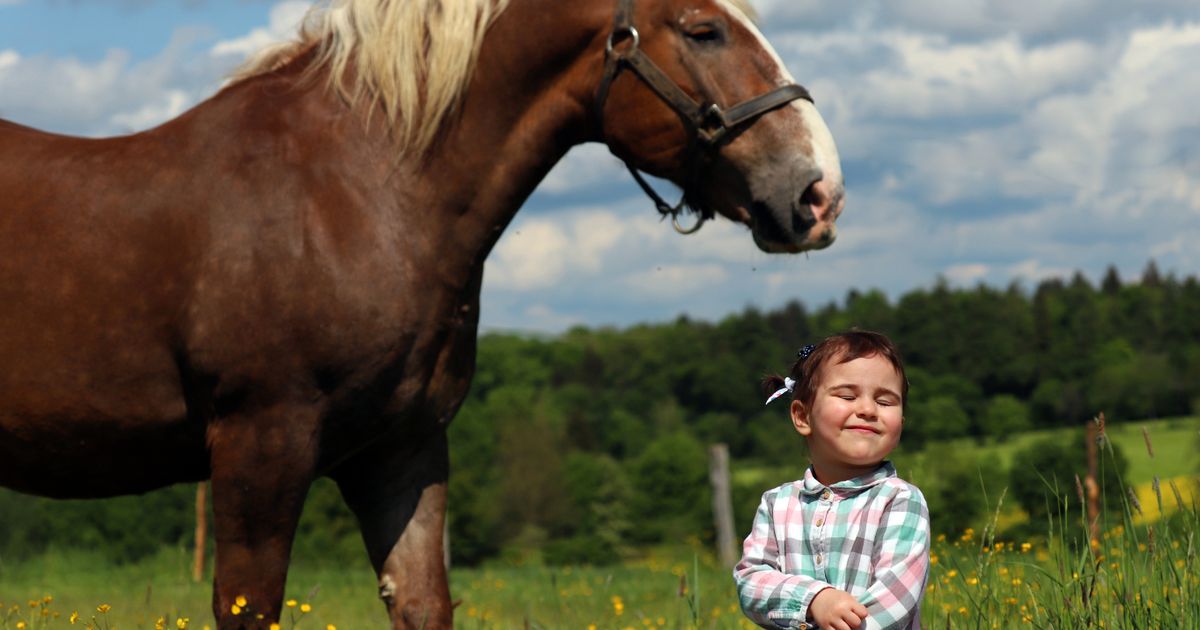
This page has one job and a firm boundary: early chapter books about horses, for readers of about five to eight, taking their first independent steps. Not the whole horse shelf, not the great middle grade horse novels waiting a few years out, only the first step, the books where a horse mad child who can newly read meets short chapters, friendly print, and ponies sized to her current stamina. The picks below are grouped by the kind of horse child you have: the lesson barn beginner, who wants the stable she knows; the cowgirl, who wants a ranch and a hat; and the gentle dreamer, who wants a pony of her own in a field she can picture. A three book starter order follows, and the page ends by marking the exact point where this shelf hands over to the bigger horse books, because knowing where a shelf ends is part of serving the reader on it.
For the lesson barn beginner
Pony Scouts by Catherine Hapka follows a group of girls at a riding stable, learning to groom, tack up, and ride, in chapters built around one lesson or stable job at a time. Its great virtue for this reader is recognition: the barn smells, the brushes have names, the ponies have opinions, and a child who takes lessons will find her Saturday mornings in print, at a length her weekday reading can handle. Bramble and Maggie by Jessie Haas, illustrated by Alison Friend, gives the beginner her wish in story form: Maggie wants a horse, Bramble, a horse with a mind of his own, wants a person, and their negotiations, funny, warm, and conducted with mutual respect, run through short chapters that a new reader can finish in a few sittings. Haas knows horses deeply and never writes down to either species, which is why horse parents end up reading over shoulders. Winnie the Early Years by Dandi Daley Mackall takes the heroine of a longer horse series back to childhood, in slimmer volumes designed for this exact reader: Winnie, already horse obsessed, already gentling problems nobody else can solve, at an age and a length the early reader can manage alone.
For the cowgirl
Cowgirl Kate and Cocoa by Erica Silverman, illustrated by Betsy Lewin, is the shelf's purest pleasure: Kate, a cowgirl in boots and hat, and Cocoa, her horse, whose love of food is matched only by his love of Kate, in short episodic chapters full of ranch humor and repetition that helps a new reader along. It won a Geisel Honor, the early reader award, and it is the book this page hands to the youngest horse readers, the five and six year olds whose chapter book careers are just saddling up. The later volumes keep the partnership and raise the stakes gently, a lost calf, a night away, a horse show, so a child can stay with Kate and Cocoa for a whole season of reading growth without changing shelves.
For the pony of her own
Pony Pals by Jeanne Betancourt is the series engine of this shelf: three girls, Lulu, Anna, and Pam, a pony club in all but name, and a problem per book, a pony in trouble, a show to prepare for, a mystery at the stable, solved by friendship and horse sense. The chapters run a little longer than the cowgirl books, the print a little denser, and the series runs long enough to carry a reader from the middle of this shelf to its end, which is what series are for. A child who bonds with the Pony Pals in October may still be reading them in May, measurably stronger, without ever having felt the shelf change under her feet.
The picks at a glance
| Book | Author | Reader it fits | The horse world inside |
|---|
| Pony Scouts | Catherine Hapka | Lesson barn beginner | Riding stable, lessons, pony care |
| Bramble and Maggie | Jessie Haas | Beginner who dreams | A girl, a horse, a negotiation |
| Winnie the Early Years | Dandi Daley Mackall | Beginner, series ready | A young horse gentler's first cases |
| Cowgirl Kate and Cocoa | Erica Silverman | Youngest readers | Ranch humor, a horse who loves snacks |
| Pony Pals | Jeanne Betancourt | Growing reader | Three friends, a problem per book |
A three book starter order
Start with Cowgirl Kate and Cocoa, whatever the child's exact age inside the band, because its chapters are the shortest, its pictures the friendliest, and its success rate with brand new readers is the highest on the shelf. Move next to Bramble and Maggie, where the emotional story deepens, a horse choosing his person is a plot a six year old feels in her chest, while the reading load stays kind. Third, open the series door with whichever world matches the child: Pony Scouts for the lesson taker, Winnie the Early Years for the dreamer, Pony Pals for the reader ready to live inside a long series. After the third book, the child's own requests take over the ordering, and the adult's job reduces to keeping the pile stocked and the library card unexpired.
Where this shelf hands over
The handover signs are consistent: the child finishes a Pony Pals book in two sittings and complains it ended, reads the horse facts in the back matter as eagerly as the story, and starts asking for books about specific breeds, events, or a horse of her own with a biography attached. At that point she is ready for the full horse shelf this site keeps elsewhere, longer early novels, horse nonfiction with real photography, and in a year or two the middle grade classics of the horse canon. Do not rush the handover for the sake of prestige. The early shelf's short chapters and kind print are where fluency is built, and a horse child who reads twenty of these has done more for her reading life than one who struggled through three famous novels too early. The big horse books are patient. They have waited for every horse girl since before her grandmother was born, and they will be there, glossy and enormous, when she arrives at their shelf on her own strong legs.
Reading the barn: what these books quietly teach
Beyond the reading practice, the early horse shelf does a second kind of teaching that explains its grip on children. These books are manuals in disguise. A child who works through Pony Scouts has absorbed the order of grooming tools, the names of brushes and gaits, and the etiquette of the barn aisle, and she arrives at her next real lesson measurably more fluent than a child who only rides. Bramble and Maggie teaches the harder curriculum, that a horse is a mind, with preferences and veto powers, and that horsemanship is negotiation rather than control. Even Cowgirl Kate and Cocoa, the shelf's comedy, is precise about feeding, cooling out, and the daily arithmetic of care. This is why horse children reread these books past the point where the reading level challenges them: they are studying. Parents who notice the studying can feed it directly, with the nonfiction early readers and horse care guides shelved beside these stories at most libraries, but the fiction should keep first place in the pile. Facts learned inside a story, attached to a pony the reader loves, are the facts that survive to the barn.
For the horse child who is not yet reading alone
Everything on this page also works read aloud, and for the four and five year old horse devotee, read aloud is the correct delivery system. Cowgirl Kate and Cocoa and Bramble and Maggie, in particular, were plainly built by their creators to survive an adult voice: the humor lands at two levels, the chapters end at natural stopping points, and the illustrations give a lap listener plenty to study while the words go by. Reading them aloud now buys two things at once, the stories themselves, banked early, and a set of familiar books waiting on the shelf for the day decoding arrives, when a child will choose, as her first solo book, the one she already loves and half remembers. That choice is the easiest first finish line in all of children's reading, and the horse shelf, more than most, is stocked with books worth loving twice.
A word about realism, fantasy, and talking ponies
Parents occasionally worry that the shelf's charm, Cocoa's opinions, the ponies' comic timing, amounts to misinformation for a child who will handle real horses. The worry misreads how children file fiction. A six year old who laughs at Cocoa's snack diplomacy does not expect her lesson pony to negotiate; she expects him to have preferences, which is true, and to be understandable, which is the beginning of horsemanship. The realism that matters at this age is not zoological but ethical: horses in these books are fed before they are ridden, cooled before they are stalled, forgiven their moods, and never treated as bicycles with hair. A shelf that teaches that ethic while it teaches reading is doing double duty, and the fantasy elements are the sugar on a genuinely nourishing feed.
Boys, horses, and this shelf
A word for the families of horse mad boys, who exist in every barn and are underserved by the covers of this entire genre. The early chapter shelf skews toward girl protagonists, reflecting its market, but the books themselves, the grooming, the riding, the ponies with opinions, the work and the humor, are not gendered in content, and boys who are handed Bramble and Maggie or the Pony Scouts without commentary about their covers tend to read them exactly as girls do: for the horses. If a particular boy is cover sensitive, the library's horse nonfiction early readers, heavy with photography of real horses in real work, make an excellent bridge into the fiction. What matters is not to let packaging decide that a whole subject belongs to one half of the stable yard. Horsemanship never believed that, and neither, on inspection, do the books.
Pairing the books with the barn
The shelf works hardest in families that connect it, lightly, to real horses. A child who reads Pony Scouts the week she learns to pick out a hoof reads the chapter with her hands remembering the tool, and the vocabulary, currycomb, girth, trot poles, stops being print and becomes equipment. Riding instructors have noticed the effect for years: the readers arrive knowing the words, and knowing the words makes them braver in the saddle, because a lesson is mostly listening and the listening is mostly vocabulary. The pairing runs the other way too. A hard day at the barn, a fall, a pony who would not listen, sends a child back to Bramble and Maggie with new understanding of what Maggie's patience costs. None of this requires a horse of your own. A monthly visit to a stable open day, a grooming session at a rescue, even a reliably good live webcam from a foaling barn gives the books their referents. What it requires is only the adult's recognition that for this reader, books and horses are one subject wearing two coats, and that feeding either side feeds both.
Frequently asked questions
What age are early chapter books about horses for?
About five to eight, matched by reading stamina more than birthday. Cowgirl Kate and Cocoa serves the youngest end, Pony Pals the oldest, and most horse children will cross the whole shelf in a year or two.
My child loves horses but is a brand new reader. Where do we start?
Cowgirl Kate and Cocoa. Its chapters are short, its illustrations carry real weight, and its humor survives being read at a decoding pace, which is the combination a first solo horse book needs.
Are these books accurate about horse care?
Remarkably, mostly yes. Hapka, Haas, and Mackall all write from real barn knowledge, and children who ride will find their routines respected rather than decorated. The talking level varies, Cocoa has opinions, but the care is honest.
Should we read the series in order?
For Pony Pals and Pony Scouts, each book stands alone well enough that a library's available volume is the right volume. Winnie the Early Years rewards starting at the beginning, as Winnie's cases build her reputation.
What comes after this shelf?
The full horse shelf: longer early novels, horse nonfiction, and then the middle grade horse classics. The handover signs are listed on this page; when they appear, the bigger books will feel like a promotion rather than a push.